Baked Chicken and Vegetables: Sheet Pan Dinner
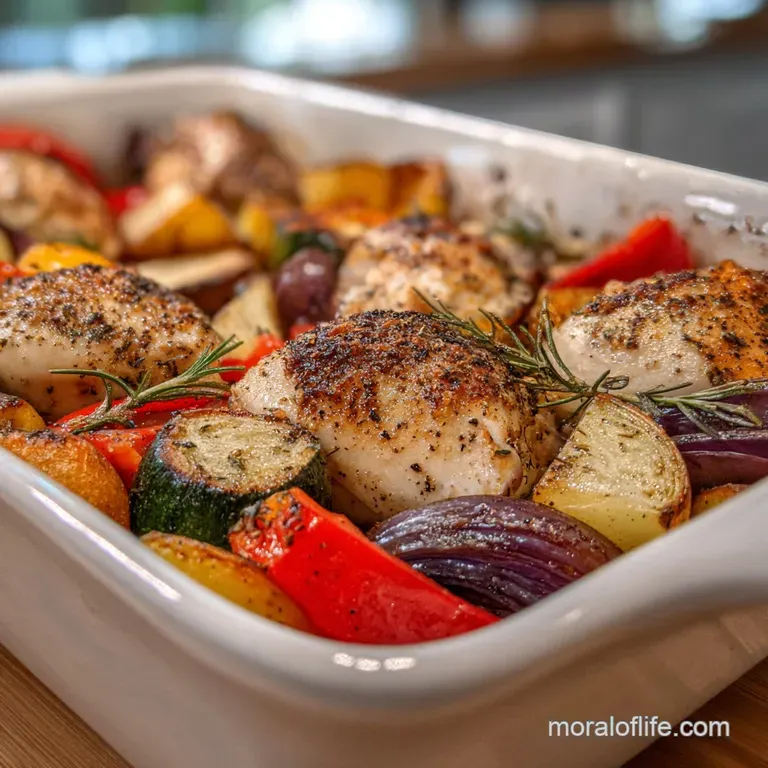
- Time: Active 20 minutes, Passive 40 minutes, Total 1 hours
- Flavor/Texture Hook: Crispy skin and honey balsamic glazed vegetables
- Perfect for: Beginner friendly weeknight meal prep
- Reliable Sheet Pan Baked Chicken and Vegetables for Busy Nights
- What Sets This Comforting Weeknight Sheet Pan Meal Apart
- Planning Your Time for This Dependable Chicken Dinner
- Deep Dive Into the Component Analysis of Every Ingredient
- Essential Kitchen Tools for Achieving That Golden Oven Roast
- Step-by-Step Guide to the Most Consistent Roasting Results
- Common Errors and Practical Solutions for Better Sheet Pan Meals
- Clever Ways to Swap Ingredients and Keep It Fresh
- Best Practices for Keeping Your Leftovers Fresh and Safe
- Serving Suggestions and Perfectly Balanced Flavor Pairings
- High in Sodium
- Recipe FAQs
- 📝 Recipe Card
Reliable Sheet Pan Baked Chicken and Vegetables for Busy Nights
There is nothing quite like the sound of chicken skin crackling as it comes out of the oven. You know that specific sizzle, right? It's that "dinner is actually ready" signal that makes everyone drift into the kitchen.
Honestly, for the longest time, I struggled with sheet pan meals because the vegetables would turn into a mushy puddle while the meat was still raw in the middle. I almost gave up on the whole concept until I realized I was just crowding the pan and ignoring the physics of heat.
Now, this Baked Chicken and Vegetables recipe is my absolute go to for what I call a "normal Tuesday." We've all been there where you want something that feels like a real Sunday roast but you only have the energy for one pan. This is that meal.
It’s dependable, it’s comforting, and once you get the layering right, you’ll repeat it with confidence every single week. Trust me on this, once you see those Yukon Golds getting those crispy, golden edges, there's no going back to plain boiled sides.
The beauty here isn't just in the ease, it's in the way the flavors actually talk to each other. We aren't just throwing things on a tray; we're creating a little ecosystem where the chicken fat renders down to coat the carrots and onions.
It’s a low effort, high reward situation that has saved my sanity more times than I can count. Let's get into how we make this work every single time without the soggy mess.
What Sets This Comforting Weeknight Sheet Pan Meal Apart
The secret to why this actually works lies in the balance of moisture and dry heat. When we roast at high temperatures, we are fighting against the steam that naturally escapes from the vegetables.
If that steam gets trapped, you end up with "sad veggies." By using the right spacing and a hint of honey and balsamic, we encourage caramelization rather than boiling. It’s a total shift in how the ingredients react to the oven’s environment.
- Maillard Reaction: High heat transforms the proteins in the chicken skin and the sugars in the balsamic into a complex, savory crust.
- Thermal Conductivity: Using a heavy rimmed baking sheet allows for even heat distribution, ensuring the underside of the potatoes gets as much love as the top.
- Lipid Infusion: As the bone in thighs cook, the rendered fat (schmaltz) bastes the vegetables, providing a depth of flavor that oil alone cannot achieve.
- Acid Base Balance: The aged balsamic vinegar cuts through the richness of the chicken fat, preventing the dish from feeling heavy or greasy.
| Cooking Method | Time | Texture Outcome | Best For |
|---|---|---|---|
| Standard Oven | 40 minutes | Crispy skin, tender crisp veggies | Traditional family dinners |
| Convection/Fan | 30 minutes | Extra crunchy exterior, drier veggies | Maximum crispiness seekers |
| Air Fryer | 22 minutes | Shatter crisp skin, charred edges | Small batches (1-2 people) |
Choosing the right method depends on your equipment, but for the full 4 serving experience, the standard oven on a large sheet pan is king. If you ever find yourself with just a couple of breasts instead of thighs, you might want to try an Air Fryer Chicken Breast recipe to keep things juicy, as lean meat behaves differently under intense heat. For this specific bone in thigh recipe, though, we want that steady, surrounding heat of a traditional oven to really melt the connective tissue.
Planning Your Time for This Dependable Chicken Dinner
Success with this Baked Chicken and Vegetables recipe comes down to your prep flow. I like to think of it in three distinct phases: the "Chop and Toss," the "Active Roast," and the "Finishing Flash." You aren't just hovering over a stove; you’re managing a timeline that lets the oven do the heavy lifting while you perhaps enjoy a glass of something cold or finally tackle that pile of mail on the counter.
| Servings | Chicken Quantity | Potato Weight | Pan Size |
|---|---|---|---|
| 2 People | 2 Thighs (0.75 lb) | 0.5 lb | Quarter Sheet |
| 4 People | 4 Thighs (1.5 lb) | 1 lb | Half Sheet (13x18) |
| 6 People | 6 Thighs (2.25 lb) | 1.5 lb | Two Half Sheets |
When you're scaling this up for a larger family, the most important thing to remember is that two pans are better than one crowded pan. If the potatoes are touching each other too much, they will steam.
I've made the mistake of trying to cram 6 thighs onto one tray, and the result was a velvety mess but not in the good way. Give those ingredients some breathing room so the dry air can circulate and create those crispy bits we all fight over at the table.
Deep Dive Into the Component Analysis of Every Ingredient
Understanding your ingredients is the difference between a meal that’s "fine" and one that’s requested for every birthday. We aren't using fancy ingredients here; we're using dependable staples that, when treated with a little science, become something spectacular.
For instance, choosing Yukon Gold potatoes over Russets is a deliberate move for texture.
| Ingredient | Science Role | Pro Secret |
|---|---|---|
| Bone in Thighs | Fat Reservoir | Keep the skin on to protect the meat from drying out during the long roast. |
| Aged Balsamic | pH Balancer | The sugar content aids in browning while the acid tenderizes the vegetable fibers. |
| Yukon Gold | Starch Stability | These have a medium starch content, meaning they hold their shape but still get creamy inside. |
| Smoked Paprika | Flavor Depth | Provides a "grilled" aroma without needing an actual fire, adding color to the skin. |
The aged balsamic vinegar is a heavy hitter here. Unlike cheap, thin vinegar, aged balsamic has a higher sugar to acid ratio. This means it thickens into a glaze almost instantly once the oven heat hits it. If you only have the thin stuff, add an extra teaspoon of honey to compensate.
Also, don't skimp on the fresh rosemary. The oils in the rosemary are fat soluble, so they infuse into the olive oil and chicken fat, spreading that woody, piney aroma through every single bite of the broccoli and carrots.
Essential Kitchen Tools for Achieving That Golden Oven Roast
You don't need a professional kitchen, but a few specific tools make this Baked Chicken and Vegetables much easier to pull off. First and foremost, a heavy duty rimmed baking sheet (often called a half sheet pan) is non negotiable.
Thin pans warp in high heat, which causes your oil and juices to pool in one corner, leaving half your dinner dry and the other half soggy.
I also highly recommend a solid chef's knife for those carrots and potatoes. If your cuts are uneven, your cooking will be uneven. It's that simple. If you're looking for a similar flavor profile but want to use your broiler for a faster char, you might find my Broiled Chicken Thighs recipe helpful for those nights when 40 minutes feels like an eternity. But for today, we are sticking to the steady roast for that deep, developed flavor.
- Half Sheet Pan: 13x18 inches provides enough surface area for 4 servings.
- Large Mixing Bowl: Toss your veggies here first rather than on the pan to ensure every inch is coated in seasoning.
- Digital Meat Thermometer: The only way to know for sure that your chicken is safe and juicy.
- Parchment Paper: Makes cleanup a dream and prevents the honey balsamic from sticking to the metal.
step-by-step Guide to the Most Consistent Roasting Results
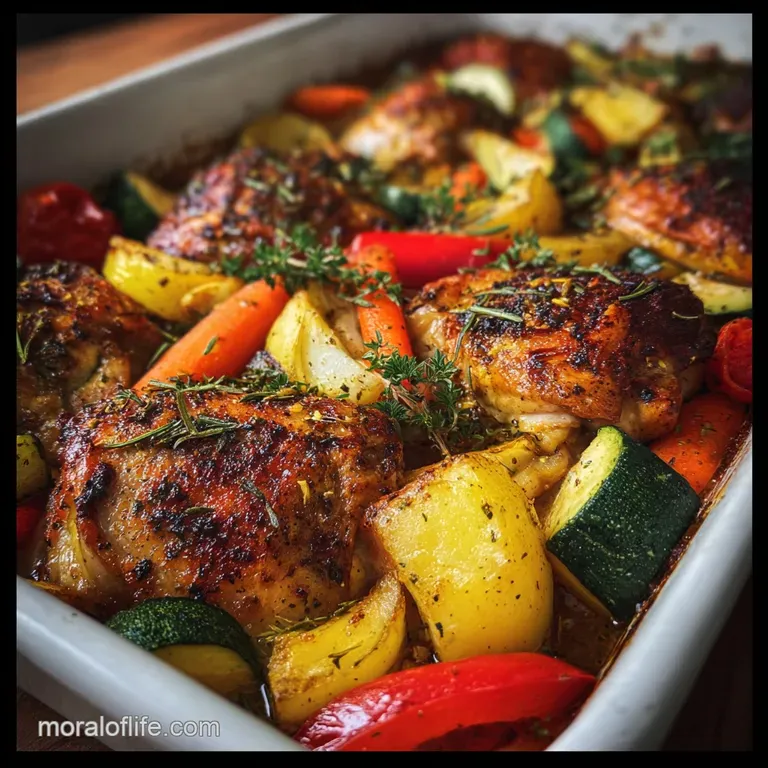
1. The over High heat Prep
Preheat your oven to 400°F. Note: This high temperature is vital for rendering the chicken fat quickly before the meat overcooks. Line your sheet pan with parchment paper or a silicone mat.
2. The Drying Phase
Pat the 1.5 lb chicken thighs completely dry with paper towels. Note: Moisture is the enemy of crispiness; any water on the skin will cause it to steam.
3. The Vegetable Foundation
In a large bowl, combine the 1 lb cubed potatoes, sliced carrots, and red onion wedges. Note: Keep the onion wedges thick so they don't burn before the potatoes soften.
4. The Flavor Infusion
Whisk together the 3 tbsp olive oil, 1 tbsp balsamic, 1 tsp honey, minced garlic, rosemary, smoked paprika, salt, and pepper.
5. The Coating Process
Drizzle half of the dressing over the vegetables and toss until every piece looks glossy and coated. Spread them out on the prepared sheet pan, leaving spaces for the chicken.
6. The Protein Seasoning
Rub the remaining dressing all over the chicken thighs, making sure to get under the skin if possible. Place the chicken skin side up on the pan.
7. The Strategic Roast
Bake for 20 minutes. You should hear a steady sizzle and smell the rosemary.
8. The Green Addition
Add the 1 cup of broccoli florets to the pan, nestling them between the chicken and potatoes. Note: Broccoli cooks faster than root vegetables, so adding it late prevents it from turning to mush.
9. The Final Stretch
Roast for another 15 to 20 minutes until the chicken skin is dark golden and the internal temp hits 165°F.
10. The Rest
Remove from the oven and let the pan sit for 5 minutes. The juices will redistribute, ensuring the meat stays velvety when you bite into it.
Common Errors and Practical Solutions for Better Sheet Pan Meals
Why Your Vegetables Are Soggy
This is the number one complaint with Baked Chicken and Vegetables. Usually, it's caused by overcrowding. When vegetables are packed too tightly, the moisture they release has nowhere to go but up, effectively steaming the food next to it. Another culprit is not drying the chicken.
If the chicken is wet, it drops water onto the tray, creating a braising environment instead of a roasting one.
Why Your Garlic Is Bitter
Garlic burns much faster than potatoes or carrots. If you mince it too finely or put it on top of the chicken where it's exposed to direct heat, it will turn black and acrid. I always make sure the garlic is mixed into the oil/balsamic slurry, which helps insulate it from the dry air, or I tuck the bits under the vegetables.
| Problem | Root Cause | Solution |
|---|---|---|
| Rubbery Skin | Oven temp too low | Ensure your oven is fully preheated to 400°F before the pan goes in. |
| Raw Potatoes | Cubes too large | Cut potatoes into 1 inch cubes; any larger and they won't finish with the chicken. |
| Burnt Broccoli | Added too early | Only add greens in the last 15-20 minutes of cooking. |
Common Mistakes Checklist
- ✓ Never skip the pat dry step for the chicken skin.
- ✓ Use a large enough pan; if ingredients are overlapping, use two pans.
- ✓ Cut your carrots and potatoes to the specified sizes for even cooking.
- ✓ Check the internal temperature of the chicken at the thickest part, not touching the bone.
- ✓ Let the oven reach the full temperature before sliding the tray in don't rush the preheat.
Clever Ways to Swap Ingredients and Keep It Fresh
Sometimes you open the fridge and realize you’re out of Yukon Golds, or maybe you want a lighter version of this Chicken and Vegetables dish. The good news is that this formula is incredibly flexible. You can swap the root vegetables for almost anything, as long as you keep the cooking times in mind.
Dense veggies take longer; watery veggies (like zucchini) take very little time.
| Original Ingredient | Substitute | Why It Works |
|---|---|---|
| Yukon Gold Potatoes | Sweet Potatoes | Similar cook time; adds a boost of Vitamin A and natural sweetness. |
| Aged Balsamic | Lemon Juice | Provides acid but changes flavor to "bright/citrus." Note: Less caramelization. |
| Chicken Thighs | Chicken Drumsticks | Same fat content and cook time. Great for kids. |
If you want to try something with a completely different flavor profile, you might enjoy an Iranian Food Recipe which uses saffron and lemon for a more aromatic, floral experience. But for a standard pantry raid night, sticking to the balsamic and rosemary is a safe and satisfying bet.
1. The Mediterranean Variation
Swap the rosemary for dried oregano and replace the balsamic with red wine vinegar. Throw in some halved cherry tomatoes and Kalamata olives during the last 10 minutes. Serve with a dollop of feta cheese on top for a tangy, salty finish.
2. The Low Carb Swap
If you're watching your starch intake, replace the 1 lb of potatoes with cauliflower florets and extra broccoli. Since cauliflower roasts faster than potatoes, you can put it all in at the beginning. Just be sure to cut the cauliflower into large chunks so they don't disintegrate.
Best Practices for Keeping Your Leftovers Fresh and Safe
Storing Baked Chicken and Vegetables correctly is the key to enjoying it for lunch the next day. The chicken stays remarkably juicy thanks to the bone in preparation, and the vegetables actually soak up more of the dressing as they sit.
Storage: Keep leftovers in an airtight container in the fridge for up to 4 days. When reheating, I highly recommend using a toaster oven or an air fryer. Microwave reheating will make the skin rubbery, but 5 minutes in a hot air fryer will bring that "shatter" back to the skin almost perfectly.
Freezing: You can freeze the cooked chicken for up to 3 months, but I don't recommend freezing the roasted potatoes or broccoli. Potatoes tend to get grainy and "mealy" when frozen and thawed, and the broccoli will lose its structural integrity.
Zero Waste Tip: Don't throw away those chicken bones! If you have a few thighs' worth of bones left over, toss them into a freezer bag. Once you have a few bags, you can make a rich, roasted chicken stock.
Also, if you have leftover red onion ends or carrot peels, they are perfect for that same stock pot. Nothing goes to waste in a smart kitchen.
Serving Suggestions and Perfectly Balanced Flavor Pairings
While this is technically a full meal on one pan, sometimes you want a little something extra to round out the plate. Because the dish is quite rich from the chicken fat and the balsamic glaze, I usually look for something bright or crunchy to serve alongside it.
If you’re looking for another protein heavy side or want to expand the meal for guests, a Rice Grilled Chicken recipe can offer a nice textural contrast with its charred edges. However, for this sheet pan version, a simple side of crusty sourdough bread is my personal favorite. You can use the bread to swipe up all those leftover juices and bits of roasted garlic from the bottom of the pan.
- Fresh Element: A simple arugula salad with a lemon vinaigrette cuts right through the roasted flavors.
- Grains: Serve over a bed of fluffy quinoa or couscous to catch the balsamic drippings.
- Creamy Component: A spoonful of Greek yogurt mixed with a little garlic and lemon juice works wonders as a dipping sauce for the roasted potatoes.
Roasting Truths vs. Kitchen Myths
A common misconception is that you need to sear the chicken in a pan before putting it in the oven to get it crispy. This is a myth. At 400°F, the dry heat of the oven is more than enough to render the fat and crisp the skin, provided you started with dry skin.
Searing just adds another dirty pan to your sink and can actually lead to overcooked meat by the time the potatoes are done.
Another myth is that you should wash your chicken. Please, don't. Washing chicken just splashes bacteria all over your sink and counters. The heat of the oven is what makes the food safe to eat. Focus instead on patting it dry with paper towels to ensure that beautiful, golden brown finish we’re all looking for.
It's a dependable method that works every single time, making your normal Tuesday feel like a win.
High in Sodium
885 mg mg of sodium per serving (38% of daily value)
The American Heart Association recommends limiting sodium intake to no more than 2,300mg per day for most adults.
Tips to Reduce Sodium in This Recipe
-
Reduce Added Salt-25%
Halve the amount of Kosher salt added to the recipe, reducing it from 1.5 tsp to 0.75 tsp. This change can significantly lower the sodium content without drastically altering the flavor. You can always add more at the table if needed.
-
Skinless Chicken-15%
Consider using skinless chicken thighs. While the skin adds flavor, it can also contribute to overall sodium intake due to potential processing or brining of the chicken. Choose skinless chicken to help control the sodium levels. You can compensate the taste by using smoked paprika and fresh rosemary.
-
Fresh Over Dried
Use fresh rosemary (as the recipe already calls for!) liberally. Fresh herbs provide a stronger flavor impact than dried, so you can rely on them more and salt less. Consider adding other sodium free herbs like thyme or oregano.
-
Spice it Up!
Enhance the flavor with spices. Increase the amount of smoked paprika slightly or add a pinch of red pepper flakes for heat. These flavors will help compensate for the reduction in salt and elevate the dish.
Recipe FAQs
Can I bake raw chicken and veggies together?
Yes. Baking raw chicken and vegetables together on the same pan is the foundation of a sheet pan meal, as long as they are spaced appropriately to allow for even cooking and browning.
How long do you roast chicken and vegetables?
Typically 35-40 minutes at 400°F. This time allows the chicken to cook through safely while the vegetables caramelize and become tender. Adjust based on the size of your chicken pieces and vegetable cuts.
Is it better to bake chicken at 350 or 400 in the oven?
400°F is generally better for crispy chicken skin and browned vegetables. This higher temperature helps render the chicken fat more quickly for crispier skin and promotes better caramelization on the vegetables, creating a more appealing texture and flavor.
Can you cook raw chicken with vegetables in the same pan?
Yes, absolutely. As long as the pan isn't overcrowded, the raw chicken and vegetables can cook together on the same sheet pan, allowing the rendered chicken juices to flavor the vegetables. This method, much like in our Taco Meat Recipe: Mahogany Finish, relies on direct heat for browning and flavor development.
What temperature should I use for baked chicken and vegetables?
A high heat of 400°F is ideal. This temperature ensures that the chicken skin crisps up beautifully and the vegetables get nicely roasted and caramelized, rather than steaming. Lower temperatures might result in less desirable textures.
Why are my baked chicken and vegetables soggy?
Overcrowding the pan is the most common cause. When ingredients are too close together, they steam instead of roast, releasing moisture that has nowhere to go. Ensure there's space for air to circulate around each piece for optimal crispiness.
How do I prevent my vegetables from burning before the chicken is cooked?
Cut denser vegetables into uniform sizes and add quicker cooking vegetables later. Root vegetables like potatoes and carrots should be cut into similar sized pieces, while delicate items like broccoli or asparagus can be added during the last 15-20 minutes of cooking. If you enjoyed mastering the timing here, apply the same principle to Vegan Lasagna Recipe: Crispy Edges by layering ingredients appropriately.
Baked Chicken Veggies
Ingredients:
Instructions:
Nutrition Facts:
| Calories | 513 kcal |
|---|---|
| Protein | 31.5 g |
| Fat | 27.9 g |
| Carbs | 30.8 g |
| Fiber | 3.9 g |
| Sugar | 6.4 g |
| Sodium | 885 mg |
