Caprese Puff Pastry with Balsamic Glaze
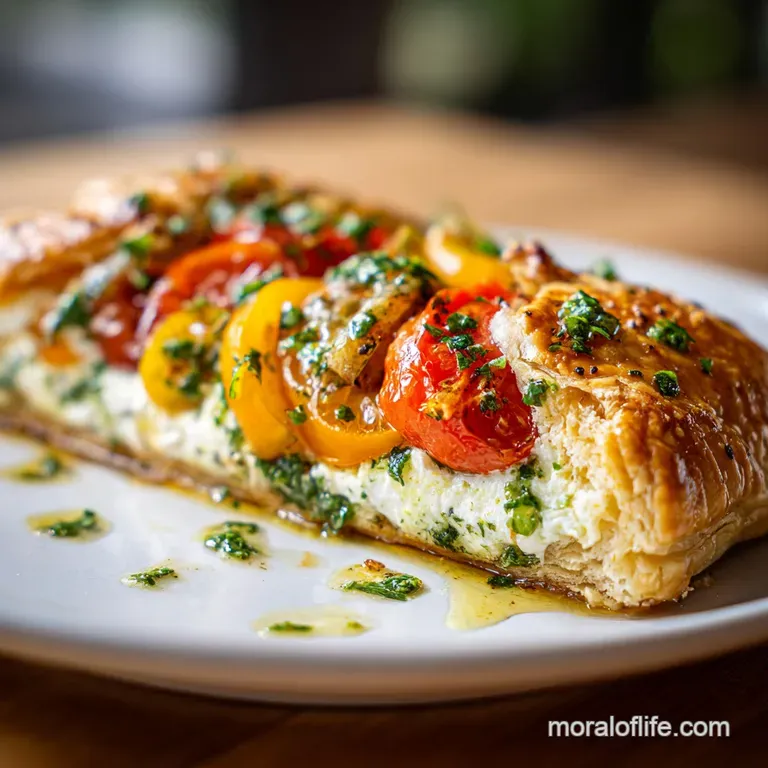
- Time: Active 20 minutes, Passive 18 minutes, Total 38 minutes
- Flavor/Texture Hook: A buttery, shatter crisp crust topped with velvety melted mozzarella and tangy balsamic glaze.
- Perfect for: A relaxed Sunday brunch or a dependable weeknight appetizer that looks impressively fancy without the effort.
- Master the Perfect Caprese Puff Pastry
- Quick Recipe Specifications and Timing
- Gathering the Essential Caprese Components
- Tools for Golden Pastry Success
- Simple Steps for Crisp Tarts
- Solving Soggy Pastry Bottom Issues
- Creative Flavor Twists to Try
- Keeping Your Pastry Fresh Longer
- Perfect Pairings for Your Appetizer
- Recipe FAQs
- 📝 Recipe Card
Master the Perfect Caprese Puff Pastry
Listen, we’ve all been there. You see a beautiful photo of a tomato tart, try to recreate it on a normal Tuesday, and end up with a soggy, sad piece of dough that more closely resembles a wet sponge than a pastry. I remember the first time I made this Caprese Puff Pastry for a neighbor's housewarming.
I was so excited about the fresh Roma tomatoes that I piled them on thick and went straight into the oven. The result? A watery mess that had me apologizing and hiding the tray behind a stack of napkins.
That disaster taught me that the secret isn't just in the ingredients, but in how you handle the moisture. Now, every time I pull a sheet of pastry out of the freezer, I do it with confidence because I know exactly how to prep those tomatoes to keep the base crackling and light.
It’s all about managing the water content so the heat can do its job and turn those layers of butter into golden, flaky perfection.
We are going for that specific "shatter" sound when you bite into the edge, followed by the silky pull of the mozzarella. This isn't just another appetizer; it’s a reliable technique you can use for any vegetable tart.
Once you get the hang of the scoring and the salting, you’ll find yourself making this Caprese Puff Pastry recipe repeatably for every gathering. Let's get into the details so your next batch is exactly what you're dreaming of.
The Physics of the Flake
Lamination Expansion: The high heat of a 200°C oven turns the water in the butter layers into steam, which physically pushes the dough layers apart before the flour sets.
Osmotic Pressure: Salting the Roma tomatoes draws out excess cellular water through osmosis, preventing that liquid from leaking into the pastry and making it soggy during the bake.
Quick Recipe Specifications and Timing
Before we start, let's look at how to get the most out of your time in the kitchen. If you're hosting a party, you can actually double this recipe quite easily, but you'll want to work in batches to keep the oven temperature stable.
| Method | Time | Texture | Best For |
|---|---|---|---|
| Standard Oven | 18 minutes | Evenly golden and very flaky | Most consistent results |
| Air Fryer | 12 minutes | Extra crispy edges, softer center | Small batches or quick snacks |
| Toaster Oven | 20 minutes | Darker top, lighter bottom | Single sheet prep only |
If you are cooking for a larger group, remember that puff pastry needs space. If you crowd the tray, the steam from the tomatoes will get trapped between the tarts, and you won't get that iconic shatter. Always leave at least 2 centimeters of space between each piece on your sheet pan.
Gathering the Essential Caprese Components
I always tell my friends that the quality of your puff pastry is 90% of the battle. Look for one that says "all-butter" on the box. The ones made with vegetable oils just don't have that same rich aroma or the strength to hold up the toppings.
For this Caprese puff pastry recipe, we want ingredients that play well together without being too heavy.
Component Analysis
| Ingredient | Science Role | Pro Secret |
|---|---|---|
| Puff Pastry | Structural foundation | Keep it ice cold until the very second it hits the oven |
| Roma Tomatoes | Low moisture fruit | Slice them thin (6mm) to ensure they cook through without collapsing |
| Mozzarella | Fat based binder | Use part skim to avoid a "grease puddle" on top of your tart |
If you love the airy, light texture of this recipe, you'll also enjoy my Caramel Puff Corn recipe for a sweet snack that has that same incredible snap and reliable crunch.
For the Pastry Base
- 1 sheet (250g) all-butter puff pastry: Thawed but chilled. Why this? Butter creates the best steam pockets for a high rise.
- Substitute: Savory pie crust (Note: It will be dense, not flaky).
- 1 large egg + 1 tbsp water: For the egg wash. Why this? Provides a deep mahogany color and glossy finish.
- Substitute: Whole milk or cream (results in a matte finish).
- 1 tbsp cornmeal: To dust the bottom. Why this? Acts like tiny ball bearings to prevent sticking and adds crunch.
- Substitute: Semolina flour or parchment paper.
For the Lighter Caprese Topping
- 4 Roma tomatoes: Sliced into 6mm rounds. Why this? They have fewer seeds and less water than beefsteak varieties.
- Substitute: Cherry tomatoes halved (add 5 mins to cook time).
- 0.5 tsp sea salt: For moisture extraction. Why this? Vital for drawing out tomato juice before baking.
- Substitute: Table salt (use slightly less).
- 6 oz part skim mozzarella: Sliced or torn. Why this? Melts beautifully without releasing too much oil.
- Substitute: Fresh mozzarella (must be patted very dry).
- 2 tbsp pesto: For a herbaceous base. Why this? Adds concentrated flavor that won't make the pastry wet.
- Substitute: Sun dried tomato tapenade.
- 0.25 cup fresh basil leaves: Chiffonade. Why this? Adds that essential fresh "Caprese" finish after baking.
- Substitute: Fresh oregano or flat leaf parsley.
- 1 tbsp balsamic glaze: For the final drizzle. Why this? The acidity balances the fatty cheese and butter.
- Substitute: Reduced red wine vinegar with a pinch of sugar.
Tools for Golden Pastry Success
You don't need a professional kitchen, but a few specific tools make this much easier. A heavy duty sheet pan is non negotiable; thin pans warp in a 200°C oven, which can cause your mozzarella to slide right off the pastry.
- Sheet Pan: A standard rimmed baking sheet (like a half sheet pan).
- Parchment Paper: To prevent the cheese from sticking if it bubbles over.
- Sharp Chef’s Knife: Necessary for slicing tomatoes without crushing them.
- Pastry Brush: For the egg wash (silicone or natural bristle works fine).
- Paper Towels: Essential for the tomato draining step.
Chef’s Note: If you have a pizza stone, place your sheet pan directly on top of it in the oven. The intense bottom heat will practically guarantee that the underside of your puff pastry is as crisp as the edges.
Simple Steps for Crisp Tarts
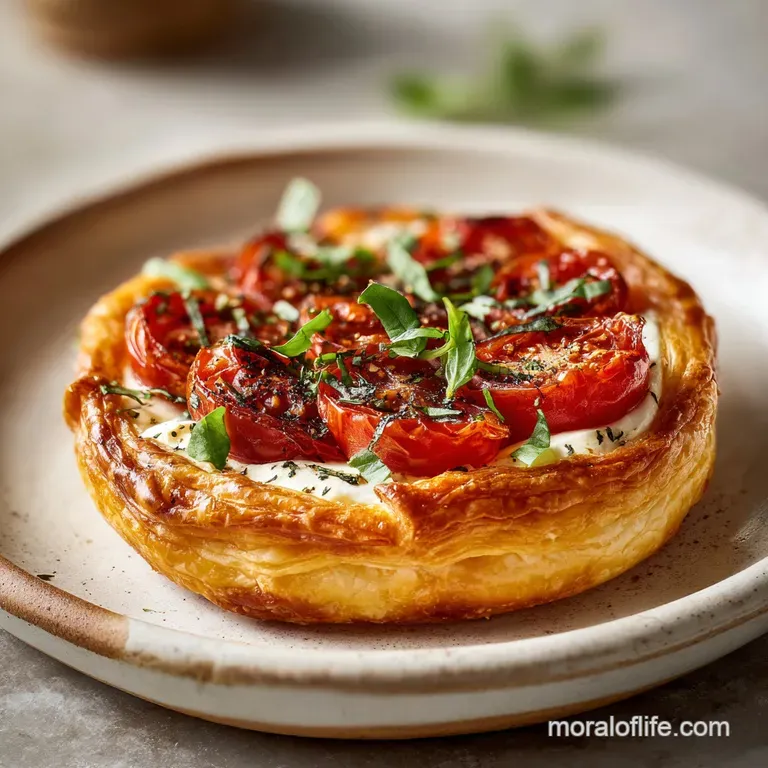
The key to this recipe is the timeline. You want to manage the tomatoes while the oven preheats so that once the pastry comes out of the fridge, it goes into the heat immediately.
1. The Moisture Extraction Phase
Slice your 4 Roma tomatoes into even rounds. Lay them out on a double layer of paper towels and sprinkle with the 0.5 tsp sea salt. Let them sit for at least 15 minutes. You will actually see the water pooling on the surface.
Before using them, press another paper towel on top to blot them completely dry. This is the single most important step for a crisp result.
2. Engineering the Pastry Frame
Preheat your oven to 200°C. Roll out your 250g puff pastry sheet on a lightly floured surface or directly on parchment. Using a sharp knife, score a 1 cm border all the way around the edge. Be careful not to cut all the way through!
This score mark tells the pastry where to rise (the border) and where to stay flat (the center with the toppings).
3. Layering the Flavors
Whisk the egg and water together. Brush the 1 cm border with the egg wash. Prick the center area (inside the border) multiple times with a fork this is called "docking." Spread the 2 tbsp of pesto thinly across the center, staying inside your score lines.
Sprinkle the 1 tbsp of cornmeal on your baking sheet and lay the pastry on top.
4. The over High heat Bake
Arrange your 6 oz of mozzarella over the pesto, then layer the dried tomato slices on top. Place the tray in the center of the oven and bake for 18 minutes. You are looking for the edges to be puffed high and deep golden brown. The cheese should be bubbling and just starting to show golden spots.
5. The Fresh Finish
Remove from the oven and let it sit for 5 minutes. This allows the internal structure of the pastry to set so it doesn't collapse when you cut it. Just before serving, scatter the 0.25 cup of fresh basil over the top and drizzle with the 1 tbsp balsamic glaze.
The heat from the tart will wake up the aroma of the basil without wilting it into nothing.
Solving Soggy Pastry Bottom Issues
Even with the best intentions, things can go wrong. If you find your pastry isn't as crisp as you'd like, it usually comes down to temperature either the oven wasn't hot enough or the pastry got too warm before baking.
Why Is My Pastry Flat?
If the puff pastry doesn't rise, the butter likely melted into the flour before it hit the oven. This happens if you handle the dough too much with warm hands or let it sit on the counter while the oven is still preheating. Always keep the dough in the fridge until the very moment you are ready to top and bake it.
| Problem | Root Cause | Solution |
|---|---|---|
| Soggy Center | Excess tomato juice or too much pesto | Salt tomatoes longer and blot dry with heavy pressure |
| Burnt Edges | Oven rack is too high | Move to the center rack and rotate the pan halfway |
| Cheese is Rubbery | Baked at too low a temperature | Ensure oven reaches 200°C before the pastry goes in |
Common Mistakes Checklist
- ✓ Forgetting to salt the tomatoes (leads to a watery mess).
- ✓ Using a dull knife (squishes the tomatoes and ruins the look).
- ✓ Skipping the "docking" step (makes the center puff up and dump the toppings).
- ✓ Using "fresh" mozzarella without pressing it between towels for 30 minutes.
- ✓ Opening the oven door in the first 10 minutes (drops the temp and kills the rise).
Creative Flavor Twists to Try
Once you've mastered the basic Caprese Puff Pastry, you can start playing with the ingredients to suit a normal Tuesday dinner or a fancy weekend party.
How Can I Add a Spicy Kick?
I love adding a pinch of red pepper flakes to the pesto before spreading it down. You could also swap the balsamic glaze for a hot honey drizzle at the very end. The sweetness of the honey with the heat of the peppers against the creamy mozzarella is incredible.
Can I Make This Vegan?
Absolutely. There are some fantastic plant based puff pastries available (many "accidentally vegan" brands use oil instead of butter). Swap the mozzarella for a cashew based cheese or a firm vegan mozzarella, and ensure your pesto doesn't contain parmesan. The technique remains exactly the same!
For scaling this recipe up or down, follow these simple rules: To Double (24 servings): Use two sheets of pastry. Do not try to overlap them on one pan. Bake on two separate racks and swap their positions halfway through the 18 minute cook time.
To Half (6 servings): Cut the pastry sheet in half before scoring. Reduce the bake time by only 2-3 minutes; puff pastry needs that full blast of heat regardless of size.
Keeping Your Pastry Fresh Longer
Puff pastry is always at its absolute peak about 10 minutes after it leaves the oven. However, life happens, and sometimes you have leftovers.
- Fridge
- Store in an airtight container for up to 2 days. The pastry will lose its crunch, but the flavor remains great.
- Freezer
- You can freeze the baked tart for up to a month. Wrap it tightly in foil and then place it in a freezer bag.
- Reheating
- Never use a microwave! It will turn the pastry into rubber. Reheat in a 180°C oven for 5-8 minutes until the cheese bubbles again and the edges crisp up.
Zero Waste Tip: If you have leftover tomato ends or basil stems, don't toss them! Toss the tomato scraps into a freezer bag for a future vegetable stock, and blend the basil stems into a quick vinaigrette for a side salad.
Perfect Pairings for Your Appetizer
Because this dish is quite rich and buttery, you want to serve it with something that has a bit of "zip." A simple arugula salad with a lemon tahini dressing is my go to. The bitterness of the greens cuts right through the fat of the pastry.
If you're serving this as part of a larger spread, it pairs beautifully with grilled chicken or a light white fish. Since the oven is already hot, I often throw a tray of asparagus drizzled with olive oil on the bottom rack for the last 10 minutes of the pastry's bake time.
It’s a dependable way to get a full meal on the table without extra stress.
Trust me, once you hear that first "shatter" of the crust and taste the combination of the warm pesto and fresh basil, this will become a permanent part of your recipe rotation. It’s simple, it’s reliable, and it’s honestly hard to stop at just one slice!
Common Kitchen Myths
Myth: You must roll out puff pastry to make it light. Truth: Rolling it out actually compresses the layers. You should only roll it enough to even out the surface or fit your pan. The less you mess with it, the higher it will rise.
Myth: Fresh mozzarella is always better for Caprese. Truth: While fresh is best for a cold salad, its high water content is the enemy of puff pastry. For baking, the lower moisture "block" mozzarella or part skim variety provides a much better structural result.
Myth: You have to make puff pastry from scratch for it to be "real" cooking. Truth: Almost no professional chef makes puff pastry from scratch daily. It is a labor intensive process that high-quality frozen brands have perfected.
Using store-bought is a smart shortcut that lets you focus on the toppings!
Recipe FAQs
What things should we avoid with puff pastry?
Avoid excess handling and warmth. Overworking the dough melts the butter layers, preventing the steam action needed for a high rise. Keep it cold until the moment it hits the hot oven.
What are some common mistakes to avoid when making Caprese salad?
Avoid using tomatoes without pre-salting. Salting draws out excess water through osmosis; without this step, the liquid will seep into the pastry base and cause sogginess.
Can I put mozzarella in puff pastry?
Yes, part skim block mozzarella is best for baking. Fresh mozzarella holds too much liquid; patting it extremely dry helps, but block mozzarella provides a better melt without creating a grease puddle on the pastry.
What can I make with ready-made puff pastry?
You can create fast savory tarts, turnovers, or sweet palmiers. Use the pastry as a quick base for vegetables, cheeses, or fruit fillings, utilizing the high heat to achieve instant lamination.
Is it true I must dock the center of the pastry?
No, docking is highly recommended, not strictly required, but essential for this recipe. Pricking the center prevents that area from puffing up higher than the scored border, keeping your toppings level.
How do I ensure the bottom crust stays crisp?
Bake the pastry on a preheated surface, like a pizza stone. Placing the sheet pan on top of a hot stone delivers intense heat to the bottom layer, effectively setting the structure before moisture can penetrate.
When should I add the fresh basil?
Add the fresh basil after baking, during the 5-minute rest period. Adding it before baking will cause the delicate leaves to wilt, lose their bright flavor, and potentially burn under the high oven heat.
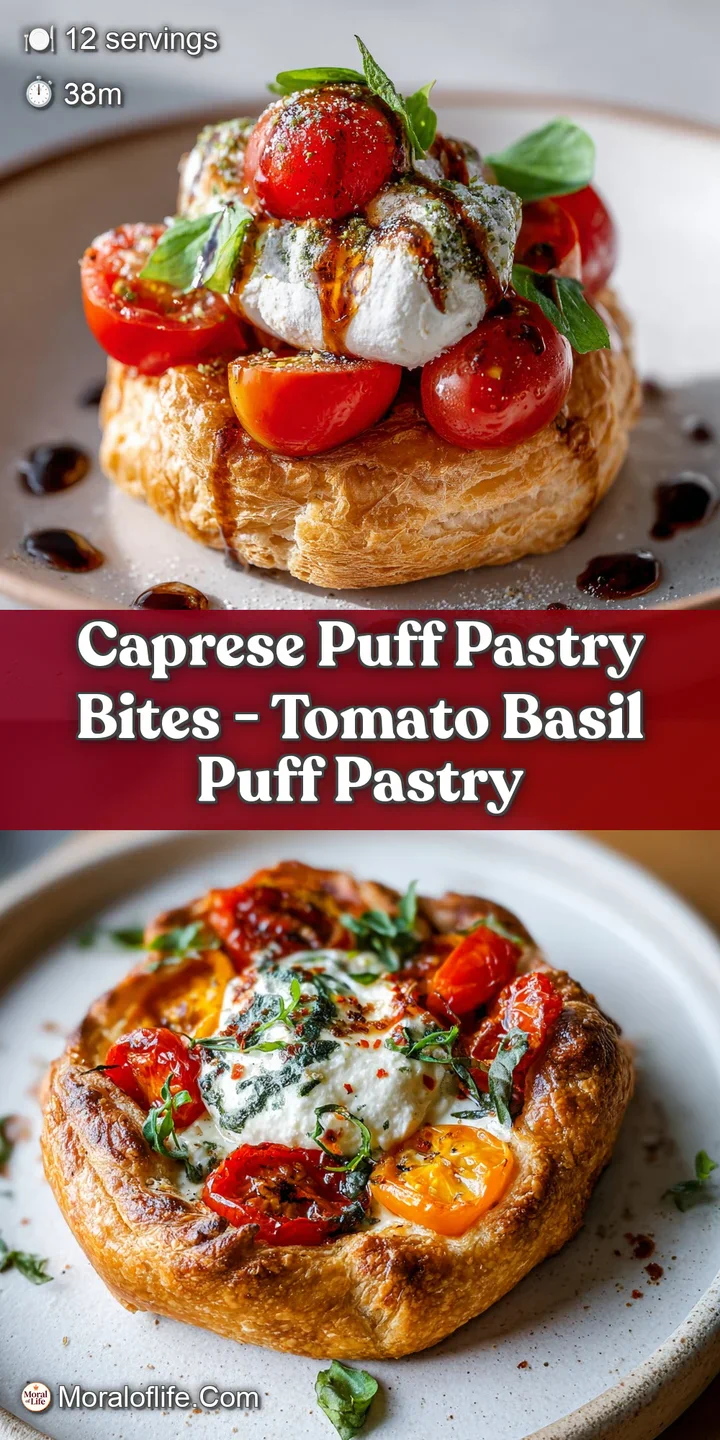
Caprese Puff Pastry Bites
Ingredients:
Instructions:
Nutrition Facts:
| Calories | 142 kcal |
|---|---|
| Protein | 5.4 g |
| Fat | 8.9 g |
| Carbs | 9.2 g |
| Fiber | 0.6 g |
| Sugar | 1.8 g |
| Sodium | 185 mg |
