Crab Mac and Cheese: Silky Coastal Comfort
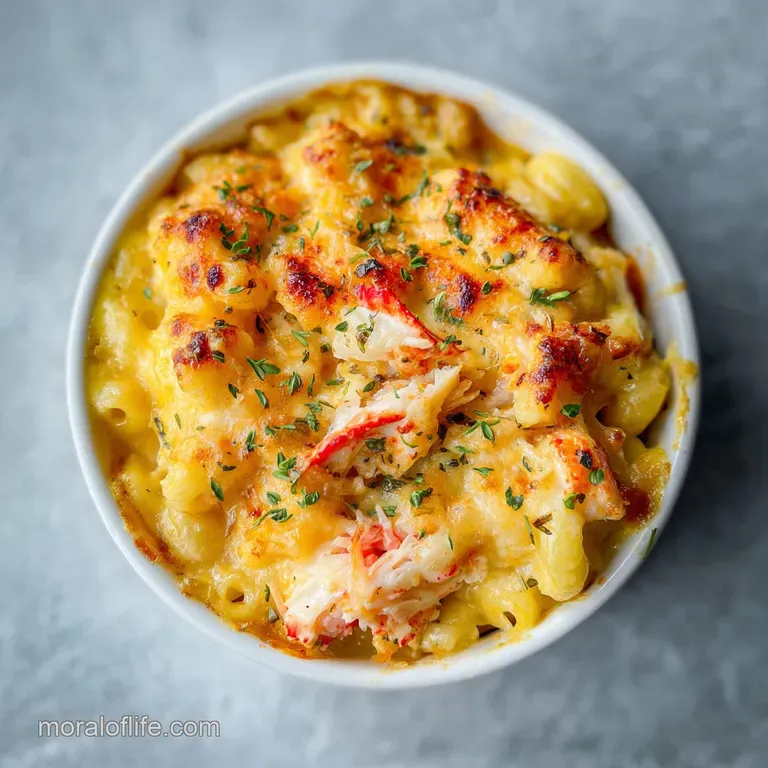
- Time: Active 20 minutes, Passive 30 minutes, Total 50 minutes
- Flavor/Texture Hook: Silky, coastal, and buttery with a shattering panko crunch
- Perfect for: A dependable weekend treat or a special Tuesday dinner
- The Ultimate Creamy Crab Mac and Cheese
- Why This Recipe Wins
- The Physics of the Melt
- Tools for Success
- The Core Ingredients
- Step-By-Step Guide
- Avoiding Common Mistakes
- Tasty Flavor Variations
- Scaling Your Dinner
- Flavor Truths
- Storing Your Leftovers
- Perfect Side Dishes
- High in Sodium
- Recipe FAQs
- 📝 Recipe Card
The Ultimate Creamy Crab Mac and Cheese
The smell of Old Bay hitting hot butter always takes me back to a small coastal shack I visited years ago. I remember sitting on a salt sprayed wooden deck, watching the tide roll in while digging into a bowl of pasta that was more crab than noodle.
That first bite was a revelation, the way the sweet seafood cut through the heavy, sharp cheese. Since then, I’ve spent countless hours in my kitchen trying to replicate that specific coastal magic without making it feel like a heavy, leaden brick of starch.
We’ve all had those seafood pastas that end up dry or, even worse, where the delicate crab gets lost in a sea of bland cheese. This version is my dependable answer to those kitchen heartbreaks.
It’s a recipe I repeat with confidence whenever I want something that feels fancy but remains fundamentally comforting. We are going to build a sauce that stays fluid even after baking and treat the crab with the respect it deserves so it stays chunky and bright.
Why This Recipe Wins
- Selective Emulsification: By using a mix of high moisture Fontina and aged Gruyère, we create a complex flavor profile that won't "break" or become oily under high oven heat.
- Acidic Brightness: The addition of lemon juice directly to the crab meat before folding it in acts as a chemical bridge, cutting through the heavy fats of the cream and butter.
- Starch Gelatinization: Cooking the pasta for two minutes less than the box instructions allows the noodles to finish hydrating inside the sauce, pulling the cheese flavor into the center of the cavatappi spirals.
- Thermal Buffering: Using warmed milk instead of cold liquid prevents the roux from seizing, which is the primary cause of grainy or lumpy cheese sauces.
| Thickness | Internal Temp | Rest Time | Visual Cue |
|---|---|---|---|
| Sauce stage | 165°F (74°C) | None | Coats the back of a spoon |
| After baking | 175°F (79°C) | 5 minutes | Bubbles at the edges of the dish |
| Panko topping | N/A | None | Deep mahogany gold and audible crunch |
Finding the right balance of seafood and dairy is essential for a successful dinner. If you enjoy this coastal flavor profile, you might find it similar to the rich textures found in a Crab Artichoke Dip recipe which uses a similar cheese to protein ratio.
The Physics of the Melt
This sauce relies on a stable Mornay base, which is essentially a white sauce with cheese folded in. The secret to the texture lies in the protein structure of the cheese. When we grate the cheese ourselves, we avoid the cellulose coatings found in bagged shreds that prevent melting.
The heat from the thickened milk gently unravels the cheese proteins, suspending them in a liquid matrix that won't turn grainy.
| Ingredient | Science Role | Pro Secret |
|---|---|---|
| Fresh Lump Crab | Main Protein | Pat it dry to prevent excess water from thinning the sauce |
| Gruyère Cheese | Flavor/Stability | Its high fat to protein ratio ensures a silky, non rubbery melt |
| Sharp Cheddar | Tangy Profile | Use white cheddar to keep the sauce looking clean and elegant |
| Old Bay | Flavor Bridge | The celery salt and paprika notes highlight the natural sweetness of crab |
Tools for Success
You don't need a professional kitchen to pull this off, but a few dependable items make the flow much smoother. A heavy bottomed saucepan or a Dutch oven is non negotiable for the sauce. Thin pans have hot spots that can scorch the milk or cause the cheese to seize.
I also highly recommend using a balloon whisk to keep the roux smooth.
A box grater is your best friend here. Trust me, don't even bother with the pre shredded stuff from the store. Those anti clumping agents are the enemy of a velvety sauce. Finally, an 8x12 inch baking dish provides the right surface area for that golden panko crust without making the mac and cheese too thin.
The Core Ingredients
- 1 lb cavatappi pasta Why this? The corkscrew shape traps the cheese sauce inside its hollow centers.
- Substitute: Large elbow macaroni for a more traditional look.
- 1 lb fresh lump crab meat Why this? Provides large, sweet chunks that don't disappear into the sauce.
- Substitute: Imitation crab (surimi) for a Budget Friendly weeknight version.
- 1 tbsp lemon juice Why this? Brightens the seafood and balances the heavy dairy fats.
- Substitute: White wine vinegar or a splash of dry white wine.
- 4 tbsp unsalted butter Why this? Forms the fat base for the roux with a pure flavor.
- Substitute: Salted butter (just reduce the added salt later).
- 1/4 cup all purpose flour Why this? The thickening agent that provides the sauce's structure.
- Substitute: Cornstarch (use half the amount mixed with cold milk).
- 3 cups whole milk, warmed Why this? Whole milk provides the necessary fat for a stable emulsion.
- Substitute: 2% milk if you want a lighter, though less silky, sauce.
- 1/2 cup heavy cream Why this? Adds a luxurious mouthfeel and prevents the sauce from drying out.
- Substitute: Half and half for a slightly lower calorie count.
- 2 cups sharp white cheddar, freshly grated Why this? Provides the punchy, familiar "mac" flavor profile.
- Substitute: Yellow sharp cheddar for a more classic orange color.
- 1 cup Gruyère cheese, freshly grated Why this? Known for its superior melting and nutty, earthy notes.
- Substitute: Emmental or Swiss cheese.
- 1/2 cup Fontina cheese, freshly grated Why this? One of the best "melting" cheeses for a stretchy texture.
- Substitute: Gouda or Monterey Jack.
- 1 tsp Old Bay seasoning Why this? The quintessential seasoning for any seafood dish.
- Substitute: A mix of paprika, celery salt, and black pepper.
- 1/2 tsp dry mustard powder Why this? Enhances the sharpness of the cheddar without adding heat.
- Substitute: 1 tsp Dijon mustard.
- 1/4 tsp nutmeg, freshly grated Why this? A classic French trick to deepen the flavor of cream sauces.
- Substitute: A pinch of ground mace.
- 1 cup panko breadcrumbs Why this? Their large surface area creates a much crunchier topping than fine crumbs.
- Substitute: Crushed buttery crackers like Ritz.
- 2 tbsp unsalted butter, melted Why this? Coats the panko to ensure even browning in the oven.
- Substitute: Olive oil for a slightly different savory note.
- 1/4 cup Parmesan cheese, finely grated Why this? Adds a salty, umami kick to the crust.
- Substitute: Pecorino Romano.
- 1 tbsp fresh parsley, minced Why this? A pop of color and freshness to finish the dish.
- Substitute: Fresh chives or green onion tops.
step-by-step Guide
- Preheat your oven to 375°F (190°C) and lightly grease your baking dish.
- Boil the cavatappi in heavily salted water for 2 minutes less than the package directions until it has a firm bite. Note: It will finish cooking in the cheese sauce.
- In a small bowl, gently toss the crab meat with lemon juice. Note: Handle carefully to keep the lumps intact.
- Melt 4 tbsp butter in a large pot over medium heat, then whisk in the flour for 1 minute until it smells slightly nutty.
- Slowly pour in the warmed milk and heavy cream, whisking constantly until the sauce thickens and coats a spoon.
- Turn the heat to low and stir in the cheddar, Gruyère, Fontina, Old Bay, mustard, and nutmeg until the cheese is completely silky.
- Fold the par cooked pasta into the cheese sauce until every spiral is filled.
- Gently fold in the crab meat, being careful not to break the pieces into shreds.
- Transfer the mixture to the baking dish. Combine panko, melted butter, and Parmesan, then sprinkle it over the top.
- Bake for 25 to 30 minutes until the edges sizzle and the top is golden brown.
Chef's Tip: Freeze your block of Fontina for 10 minutes before grating. It's a soft cheese that can be difficult to shred at room temperature, but a quick chill makes it firm enough to handle easily.
For a completely different texture that still hits those cheesy notes, you might enjoy my Mac n Cheese recipe which focuses on a stovetop finish that stays incredibly liquid and rich.
Avoiding Common Mistakes
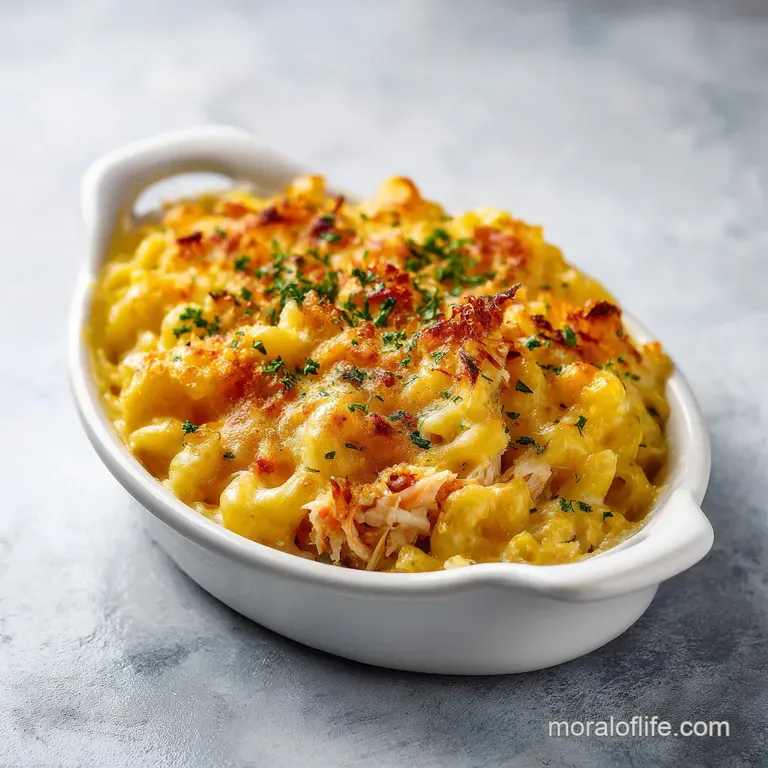
Why Your Sauce is Grainy
A grainy sauce is usually caused by too much heat. If the milk is boiling when you add the cheese, the proteins will tighten up and separate from the fats. Always turn your burner to the lowest setting or even remove it from the heat entirely before adding your grated cheese.
This gentle residual heat is all you need for a smooth melt.
The Crab Disappears
If you stir too aggressively, the delicate crab lumps will break down and essentially melt into the sauce. While the flavor remains, you lose that luxurious "lump" experience. Use a rubber spatula and a gentle folding motion, like you're folding egg whites into a cake batter.
Watery Bottom
This happens if the pasta isn't drained well enough or if the crab meat has a lot of liquid in the container. Make sure your pasta is dry before it hits the sauce and pat the crab with a paper towel.
| Problem | Root Cause | Solution |
|---|---|---|
| Greasy surface | Cheese got too hot and separated | Keep oven temp at 375°F (190°C) and don't overbake |
| Dry pasta | Noodles absorbed all the sauce | Ensure you use the full amount of milk and cream |
| Bland flavor | Under seasoned pasta water | Salt your boiling water until it tastes like the sea |
- ✓ Hand grate all cheeses to ensure a smooth, professional grade melt.
- ✓ Warm the milk before adding it to the roux to prevent lumps from forming.
- ✓ Under cook the pasta by 2 minutes so it stays firm after the bake.
- ✓ Use "Lump" or "Backfin" crab rather than "Claw" meat for a cleaner look.
- ✓ Let the dish rest for 5 minutes after baking to allow the sauce to set.
Tasty Flavor Variations
The "Budget Friendly" Swap
If fresh lump crab is out of reach, you can use high-quality imitation crab. The trick is to chop it into bite sized pieces and sauté it in a little butter and Old Bay before folding it into the mix. This builds a flavor profile that mimics the real thing for a fraction of the cost.
It’s a great option for a normal Tuesday night.
The West Coast Specialist
For those in the Pacific Northwest, using Dungeness crab is the gold standard. Dungeness has a slightly sweeter, nuttier flavor than Atlantic blue crab. If you go this route, consider adding a pinch of cayenne pepper to the sauce to highlight that specific sweetness.
The "Coastal Heat" Twist
If you like things spicy, swap the Fontina for Pepper Jack cheese. You can also add finely diced jalapeños to the butter while making your roux. This gives the dish a "low country boil" vibe that is absolutely addictive.
| Method | Time | Texture | Best For |
|---|---|---|---|
| Classic Baked | 50 minutes | Crunchy top, set sauce | Sunday dinner or potlucks |
| Stovetop Only | 25 minutes | Ultra creamy, liquid | Quick weeknight cravings |
| Individual Ramekins | 40 minutes | Max crust to sauce ratio | Dinner parties |
If you're looking for another quick cheesy fix that hits the spot in under half an hour, check out this Mozzarella Sticks with recipe which uses a clever shortcut for maximum gooeyness.
Scaling Your Dinner
- Cutting the recipe in half: Use a 1.5 quart baking dish. You only need half the amount of panko, but I usually keep the spice levels (Old Bay/Mustard) at about 75% of the original to make sure the flavor still pops.
- Doubling for a crowd: Use two 8x12 dishes rather than one giant deep dish. If the mac and cheese is too deep, the center won't heat through before the top burns. Reduce the total liquid by about 10% to ensure it doesn't get sloppy.
- Baking at Scale: If you are baking two dishes at once, rotate them halfway through the cooking time to account for oven hot spots.
Flavor Truths
One common misconception is that you must use expensive "Jumbo Lump" crab for the flavor to be good. In reality, "Backfin" or standard "Lump" crab works better for mac and cheese because the smaller pieces integrate more evenly throughout the pasta spirals.
Save the Jumbo Lump for crab cakes where the visual impact is the main event.
Another myth is that rinsing pasta helps it stay firm. In fact, rinsing washes away the surface starches that help the cheese sauce cling to the noodle. For a dish like this, you want that starch. Just drain it well and move straight to the sauce.
Storing Your Leftovers
Storage: Keep leftovers in an airtight container in the fridge for up to 3 days. Seafood doesn't have the longest shelf life once cooked, so don't push it much further than that. To reheat, add a splash of milk to the bowl and microwave in 30 second intervals to keep the sauce from breaking.
Freezing: You can freeze this before the final bake. Wrap the dish tightly in plastic wrap and then foil. It will stay good for up to 2 months. Bake directly from frozen at 350°F (180°C), adding about 20 minutes to the total time.
Zero Waste Tip: If you bought whole crabs and picked the meat yourself, don't throw away the shells! Simmer them with a bit of onion, celery, and water for 45 minutes to make a quick seafood stock.
You can freeze that stock in ice cube trays and add a cube to your next risotto or soup for a massive flavor boost.
Perfect Side Dishes
Since this Crab Mac and Cheese is incredibly rich, I usually serve it with something acidic or bright. A simple arugula salad with a sharp lemon vinaigrette is my go to. The peppery bite of the greens cuts through the Gruyère perfectly.
Another dependable option is charred broccolini with a heavy squeeze of lemon and some red pepper flakes. The bitterness of the charred vegetable provides a necessary counterpoint to the buttery panko crust.
If you want to keep the coastal theme going, a side of hushpuppies or some simple corn on the cob is always a crowd pleaser for a casual meal.

High in Sodium
975 mg mg of sodium per serving (42% % of daily value)
The American Heart Association recommends limiting sodium intake to about 2,300mg per day for optimal health.
Tips to Reduce Sodium in Your Crab Mac and Cheese
-
Low-Sodium Cheese Blend-15%
Substitute regular cheddar, Gruyère, and Fontina cheeses with their low-sodium or reduced sodium versions. This can significantly reduce the overall sodium content without sacrificing too much flavor. Start with a 25% substitution and adjust to taste.
-
Fresh vs. Processed Crab-10%
Ensure the lump crab meat you are using is truly fresh and not pre-cooked or pasteurized, which can often contain added sodium. Ask your fishmonger or read the packaging carefully.
-
Reduce or Omit Old Bay Seasoning-10%
Old Bay seasoning is a significant source of sodium. Reduce the amount used, or create your own spice blend using paprika, celery salt, black pepper, and a pinch of cayenne pepper for a similar flavor with much less sodium. Start by halving the amount of Old Bay.
-
Unsalted Butter Only-5%
Ensure you are using unsalted butter as indicated in the recipe and avoid salted butter at all costs. This removes a significant source of added sodium. This is crucial for sodium control.
-
Enhance Flavor with Herbs
Instead of relying on sodium for flavor, use a variety of fresh or dried herbs to enhance the taste of your dish. Consider adding extra parsley, chives, or dill for a burst of freshness. Experiment with different combinations to find your favorite flavor profile.
Recipe FAQs
Is crab good in mac and cheese?
Yes, absolutely. Crab adds a wonderful, slightly sweet counterpoint to the sharp, salty cheese sauce. It elevates the dish from comfort food to something truly luxurious when balanced correctly.
Does crab go well with cheese?
Yes, especially with Gruyère and Fontina. The mild sweetness of good lump crab stands up beautifully to sharp, aged cheeses, provided the sauce has enough acid, like lemon juice, to keep it from tasting too heavy.
Can you substitute crab for lobster in mac and cheese?
Yes, it's an excellent substitute. Lobster is slightly firmer, but crab provides a sweeter, flakier texture that works just as well in a rich sauce base. For a slow cooker version, check out our Crockpot French Dip recipe to see how slow cooking impacts seafood texture.
How to make Snoop Dogg's mac and cheese?
Stir in a blend of sharp white cheddar, Gruyère, and Fontina into a warm Mornay sauce. Snoop Dogg's popularized version often involves layering and a very rich, three cheese base, similar to the sauce technique used here, focusing on smooth melting qualities.
Why does my crab mac and cheese sauce become oily or grainy after baking?
This usually happens because the cheese was added to milk that was too hot. The proteins seize and separate from the fats when overheated; always remove the sauce from direct heat before stirring in the grated cheese blend.
What is the best pasta shape for a thick crab mac and cheese?
Use cavatappi or large elbow macaroni. The corkscrew shape (cavatappi) is superior because its curves and hollow center trap the sauce and small crab pieces perfectly, ensuring a consistent bite every time.
Is it true that I must use milk instead of half and-half to avoid breaking the sauce?
No, this is a common misconception. Using a combination of whole milk and heavy cream (as used in this recipe) provides the best stability and richness. If you master the technique of gently heating the dairy base, half and-half will work fine, much like how mastering temperature control helps in making Baked Taco Dip.
Crab Mac And Cheese Recipe
Ingredients:
Instructions:
Nutrition Facts:
| Calories | 678 kcal |
|---|---|
| Protein | 34.6 g |
| Fat | 35.2 g |
| Carbs | 53.8 g |
| Fiber | 2.1 g |
| Sugar | 5.4 g |
| Sodium | 975 mg |
