Vegan Chili Recipe: Mahogany-Colored Feast
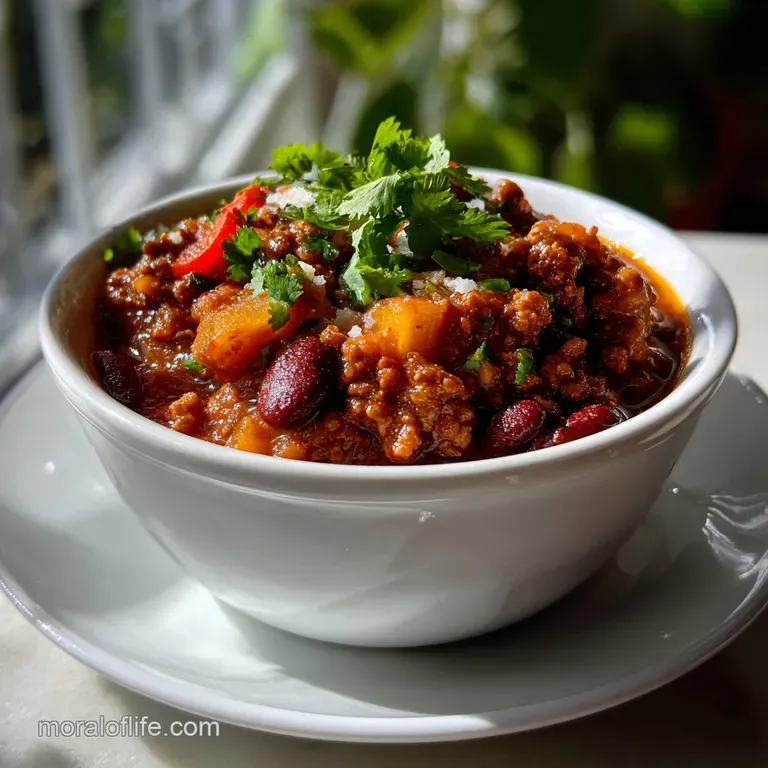
- Time: Active 20 minutes, Passive 45 minutes, Total 1 hour 5 minutes
- Flavor/Texture Hook: Velvety fire-roasted base with a satisfying, chunky bean bite
- Perfect for: Budget-conscious weeknight dinners and high-protein meal prep
- Master the Ultimate Vegan Chili Recipe
- Chemical Foundations for Flavor Depth
- Core Components and Smart Substitutions
- Precision Tools for Controlled Simmering
- Actionable Steps for Richer Stews
- Fixing Texture and Seasoning Mistakes
- Quantity Physics and Batch Protocols
- Debunking Vegetable Stew Misconceptions
- Storage Secrets and Waste Prevention
- Complementary Sides for Complete Meals
- Advanced Solutions for Home Cooks
- Recipe FAQs
- 📝 Recipe Card
Master the Ultimate Vegan Chili Recipe
We have all been there on a Tuesday night, staring at a shelf of canned beans and wondering how to make them taste like something more than a side dish. The biggest problem with most plant based stews is a lack of "meatiness" or depth, often resulting in a thin, watery bowl that leaves you reaching for a snack an hour later.
This Vegan Chili Recipe solves that issue through strategic layering of fats and acids, creating a dependable, comforting meal that feels substantial without a massive grocery bill.
I remember the first time I made this for a group of skeptical friends; they couldn't believe the rich, savory finish came from soy sauce and smoked paprika rather than a slow simmered beef bone. The aroma of fire roasted tomatoes and blooming cumin filling the kitchen is enough to turn any normal Tuesday into a feast.
It is the kind of recipe you repeat with confidence because it works every single time, provided you respect the order of operations.
In this guide, we focus on the physics of flavor extraction. By understanding how to properly sweat your aromatics and toast your spices, you unlock a sensory experience that goes beyond "tasty" into truly velvety territory.
This Vegan Chili Recipe is a testament to the fact that you do not need the fanciest ingredients to achieve a professional result just a bit of kitchen science and a sturdy pot.
Chemical Foundations for Flavor Depth
The success of this Vegan Chili Recipe relies on three distinct chemical processes that build a foundation of flavor usually reserved for meat heavy dishes.
- Lipid Soluble Extraction: Many flavor compounds in chili powder and cumin are hydrophobic, meaning they only release their full potential when heated in fat (oil) rather than water (broth).
- Maillard Reaction: Sautéing the 200g of diced yellow onion and 150g of red bell pepper creates melanoidins, which provide the deep, "browned" flavor profile essential for a hearty stew.
- Starch Gelatinization: As the 200g of zucchini and three cans of beans simmer, they release small amounts of starch into the vegetable broth, naturally thickening the liquid without the need for flour or cornstarch.
- Umami Synergism: Combining the naturally occurring glutamates in the fire roasted tomatoes with 1 tbsp of soy sauce creates a savory "boost" that mimics the richness of animal protein.
Core Components and Smart Substitutions
Choosing the right elements for your Vegan Chili Recipe ensures a dependable result every time. We use specific pantry staples that punch above their weight class in terms of flavor density.
| Ingredient | Chemical/Physical Role (Science) | The Pro Secret (Why This Matters) |
|---|---|---|
| Yellow Onion | Provides sulfur compounds for base savory notes | Sweat slowly to break down cellulose into natural sugars |
| Chili Powder | Complex blend of capsicum and earthy terpenes | Bloom in oil to unlock fat-soluble aromatic oils |
| Tomato Paste | High concentration of lycopene and natural sugars | Sauté until "brick red" to remove the raw, metallic tinned taste |
| Soy Sauce | Concentrated source of liquid glutamates | Adds a "dark" saltiness that provides a meaty back note |
Key Ingredients and Alternatives
- Fire Roasted Crushed Tomatoes (28 oz):Why this? Fire roasting breaks down the fruit's pectin, providing a smokier, softer texture. If unavailable, use standard crushed tomatoes plus a pinch of extra smoked paprika.
- Black and Kidney Beans (3 cans total):Why this? The dual bean approach provides a variety of textures creamy vs. firm.
- Soy Sauce (1 tbsp):Why this? High glutamate content creates a savory "umami" bridge between vegetables. Use tamari for a gluten-free alternative.
- Zucchini (200g): This adds "hidden" volume and moisture. You can swap this for diced sweet potato, though it will increase the cooking time by 10 minutes.
- Chipotle in Adobo (1 tbsp): This is the "smoke" factor. If you are sensitive to spice, swap for 1 tsp of extra smoked paprika.
Precision Tools for Controlled Simmering
To get the most out of your Vegan Chili Recipe, equipment that manages heat distribution is non-negotiable.
- Lodge 6 Quart Cast Iron Dutch Oven: The thick walls provide thermal mass, preventing the bottom of the chili from scorching during the 45 minute simmer.
- OXO Good Grips Silicone Spatula: Essential for scraping the "fond" (the brown bits) off the bottom of the pot, which contains the most concentrated flavor.
- Digital Kitchen Scale: Use this to ensure your 200g of onion and 150g of pepper are accurately measured for the perfect liquid-to-solid ratio.
- Chef's Knife: A sharp blade is required to mince the jalapeño and garlic finely, ensuring they distribute evenly without large, pungent chunks.
Actionable Steps for Richer Stews
Follow these atomic steps to ensure your Vegan Chili Recipe achieves the perfect velvety consistency and mahogany color.
1. Sweat the Aromatic Base
Add a splash of oil to your Dutch oven over medium heat. Add the 200g diced onion, 150g red bell pepper, and 200g diced zucchini. Sauté for 8 minutes until onions are translucent and the pepper edges show a slight golden soften.
2. Introduce the Pungent Aromatics
Add the minced garlic and the deseeded, minced jalapeño to the center of the pot. Stir constantly for 60 seconds until the sharp scent of raw garlic transforms into a mellow, sweet aroma.
3. Bloom the Spice Blend
Incorporate the 2 tbsp chili powder, 1 tbsp cumin, 1 tsp smoked paprika, 1/2 tsp oregano, 1/4 tsp cinnamon, and 1 tbsp tomato paste. Cook for 2 minutes until the paste turns a deep mahogany and the spices smell toasted/fragrant.Note: This prevents a "gritty" spice texture.
4. Deglaze the Pot
Pour in the 1 tbsp soy sauce and 1 tbsp chipotle in adobo. Use your spatula to scrape every bit of browned film off the bottom of the pot until the pot surface is clean and the liquid is dark and thick.
5. Incorporate the Bulk
Add the 28 oz fire roasted tomatoes and 3 cups of low-sodium vegetable broth. Stir thoroughly until the tomato paste is fully emulsified and no streaks of red remain.
6. Add the Protein
Fold in the two cans of rinsed black beans and the one can of rinsed kidney beans. Stir gently until the beans are evenly distributed through the liquid base.
7. The Long Simmer
Reduce heat to low and cover partially. Simmer for 35 minutes until the liquid has reduced by roughly 1/4 and the zucchini has softened into the sauce.
8. Final Texture Check
Remove the lid and simmer uncovered for the final 10 minutes until the chili is thick enough to hold a spoon upright for a split second.
9. Adjust the Seasoning
Taste the broth. Add salt or pepper only if needed, as the soy sauce and broth already provide significant sodium.
10. The Rest Phase
Turn off the heat and let the pot sit for 10 minutes until the surface develops a glossy sheen and the steam subsides.
Fixing Texture and Seasoning Mistakes
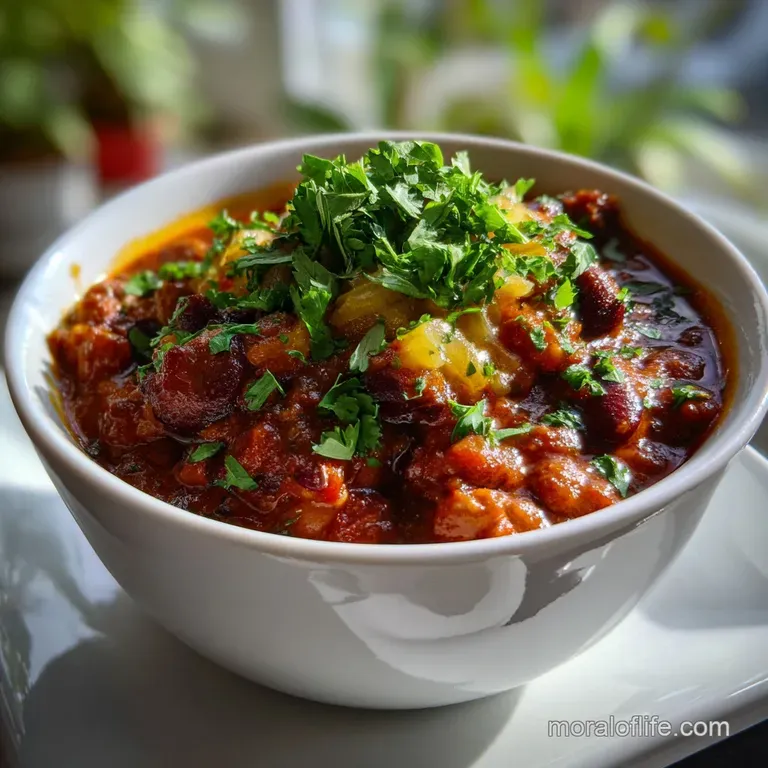
Even a dependable Vegan Chili Recipe can run into issues based on stove temperature or ingredient age.
The Problem of Watery Chili
If your chili looks more like a soup than a stew, the starch release was insufficient. This often happens if the simmer was too low to agitate the beans.
| Problem | Root Cause | The Fix | Pro Protocol |
|---|---|---|---|
| Watery Consistency | Excess broth or low simmer | Mash 1/2 cup of beans | Use an immersion blender for two quick pulses to release starch |
| Bitter Aftertaste | Burnt spices/garlic | Add 1 tsp maple syrup | A tiny hit of sugar counteracts the carbonized bitterness |
| Dull/Flat Flavor | Lack of acid | Add 1 tsp lime juice | Acid "wakes up" the spices that have been muted by long simmering |
Why Your Chili Tastes "Thin"
A "thin" taste refers to a lack of body rather than just liquid. This usually stems from skipping the "blooming" step. Without the Maillard reaction from sautéing the tomato paste, the base lacks the caramelized complexity that defines a good Vegan Chili Recipe. Similarly, skipping the soy sauce leaves a gap in the savory profile that salt alone cannot fill. For a different profile of "meaty" texture, you might compare this to the technique used in our Taco Meat Recipe, which also relies on heavy spice blooming.
Quantity Physics and Batch Protocols
Scaling this Vegan Chili Recipe requires more than just doubling the numbers.
- Scaling Up (2x): If making 12 servings, use a 1.5x ratio for the salt and spices initially. You can always add more, but the "square cube law" means flavors can become overwhelming in larger volumes. Reduce the total broth by 10% to account for the "evaporation paradox" in larger pots.
- Scaling Down (1/2): When making 3 servings, use a smaller 3 quart pot. Reduce the simmering time by 15 20% as the smaller volume will reach the target reduction much faster.
- Flavor Intensity: Spices like cinnamon and chipotle should be scaled exactly, as they are pH-sensitive and can easily dominate a smaller batch.
Debunking Vegetable Stew Misconceptions
- Myth: You must soak beans for 24 hours for chili. Truth: Canned beans are perfectly acceptable and provide a consistent texture for a weeknight Vegan Chili Recipe without the risk of "hard" centers.
- Myth: Chili needs to cook for 4 hours to be good. Truth: Because there are no tough meat fibers to break down, 45 minutes is the "sweet spot" where vegetables soften but retain their structural integrity.
- Myth: Adding cocoa or cinnamon makes it taste like dessert. Truth: In small quantities (like our 1/4 tsp cinnamon), these ingredients act as "background singers," enhancing the earthiness of the peppers without adding sweetness.
Storage Secrets and Waste Prevention
This Vegan Chili Recipe is a meal prep champion because it handles the freezer exceptionally well.
Storage: Store in airtight containers in the fridge for up to 5 days. For freezing, use freezer safe bags laid flat; it will stay fresh for 3 months. Zero Waste: Don't discard the liquid from the canned beans (aquafaba) if you are also baking!
Otherwise, the stems of your jalapeño and onion skins can be frozen in a "scrap bag" to make your next batch of homemade vegetable broth. Science: The flavors actually improve on day two because the aromatic compounds continue to migrate and equilibrate within the bean's cellular structure even after the heat is removed.
Complementary Sides for Complete Meals
While a bowl of this Vegan Chili Recipe is a meal on its own, certain pairings enhance the experience.
- Cornbread: The sweetness of corn balances the smoky chipotle heat.
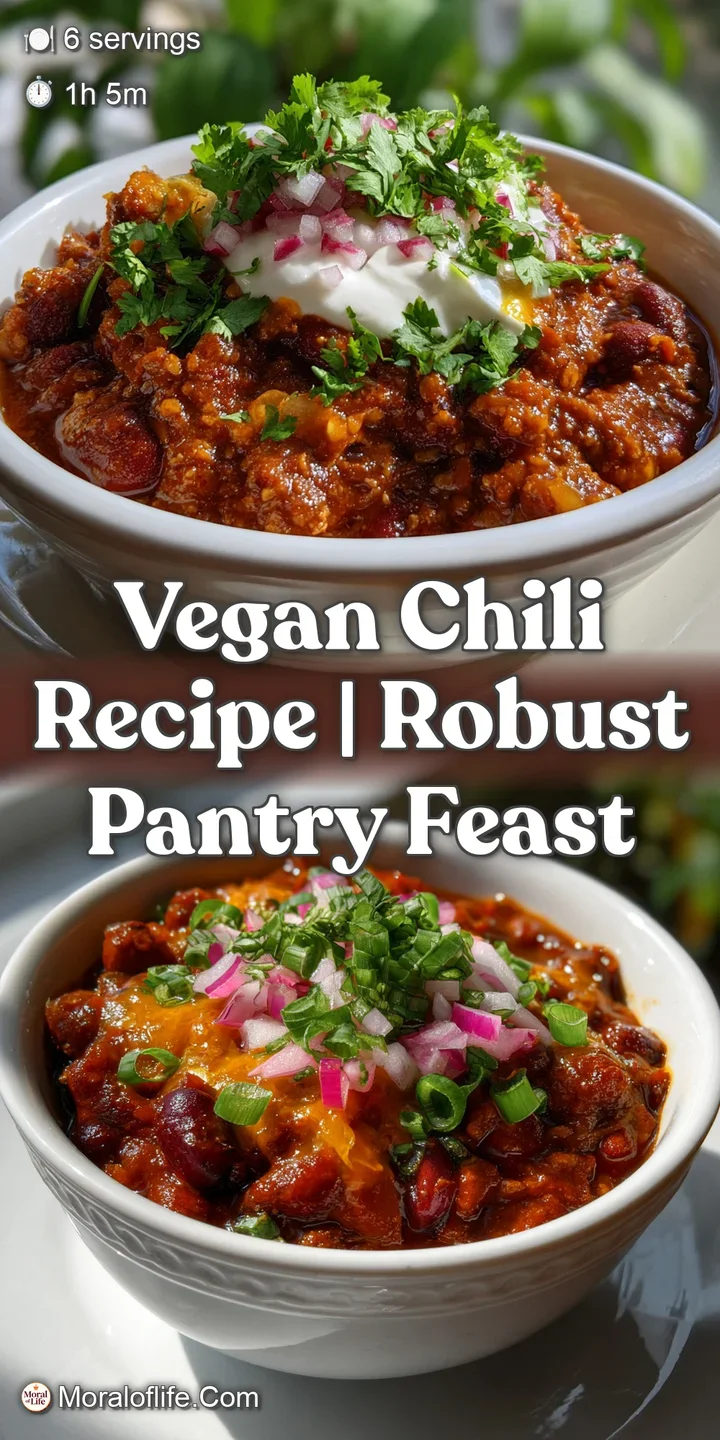
- Lime Crema: Use a vegan sour cream with a squeeze of lime to provide a cooling, acidic contrast to the rich fire roasted tomatoes.
- Cilantro and Radish: Fresh, crunchy toppings break up the soft texture of the beans.
- Sweet Ending: After a spicy meal, a cooling dessert is key. I often suggest these Baked Apples Recipe as a natural, spiced follow-up that mirrors the cinnamon notes in the chili.
Advanced Solutions for Home Cooks
Balancing Excess Heat
If you accidentally added too much chipotle or the jalapeño was particularly aggressive, do not panic. Add a fatty element like avocado or a splash of coconut milk. Fat molecules coat the tongue, preventing capsaicin from binding to your heat receptors as effectively.
Improving Mouthfeel
If the chili feels "rough" on the palate, it likely needs a fat adjustment. A tablespoon of high-quality olive oil stirred in at the very end provides a "silky" finish. This is the same logic used to create a velvety Alfredo Sauce, where emulsification is the key to a luxurious texture.
Using the Right Tomato
The fire roasted element is critical for this specific Vegan Chili Recipe. Standard diced tomatoes are often treated with calcium chloride to help them keep their shape, which can make them feel "rubbery" even after a long simmer.
Fire roasted varieties are typically processed more naturally, allowing them to melt into the sauce.
| Feature | Fire Roasted (Fresh Style) | Standard Diced (Shortcut) |
|---|---|---|
| Texture | Soft, melts into sauce | Firm, holds shape |
| Flavor | Smoky, charred, sweet | Bright, acidic, metallic |
| Best For | Rich, thick chilis | Chunky soups/salads |
- Thicker Chili
- Mash a handful of beans against the side of the pot 10 minutes before finishing.
- Smokier Chili
- Increase the chipotle adobo to 2 tbsp and add a dash of liquid smoke.
- Sweeter Chili
- Add 150g of diced carrots along with the onions in Step 1.
Recipe FAQs
How long is the active cooking time required?
20 minutes. Total preparation and passive simmering takes slightly over an hour for full flavor development.
Can I substitute tamari for the soy sauce?
Yes, for a gluten-free alternative. Tamari provides the same necessary glutamate richness for umami synergy. Ensure your salt content remains balanced upon final seasoning.
Why does my chili taste watery after simmering?
Simmering temperature was too low to release starch effectively. Insufficient agitation prevents beans and zucchini from releasing starches to thicken the liquid base.
- Mash 1/2 cup of beans against the pot wall
- Increase heat slightly to maintain a gentle bubble
- Ensure zucchini fully softens during cooking
Should I use fire roasted tomatoes or standard diced tomatoes?
Fire roasted tomatoes for deeper flavor. Fire roasting breaks down pectin, lending a softer texture and essential smoky notes that mimic slow cooking. Standard diced tomatoes often contain calcium chloride, which keeps them unnaturally firm.
Myth: Soaking dried beans is mandatory for this chili.
Myth: Soaking dried beans for 24 hours is mandatory for this chili. Reality: Canned beans are pre-hydrated and provide excellent, consistent texture in less than 2 hours total cooking time.
Which thickens the chili better: Zucchini or mashed beans?
Mashed beans provide faster, denser thickening. Zucchini contributes moisture and subtle texture, relying on starch gelatinization during a long simmer. Mashing beans immediately releases concentrated starch for immediate body.
Myth: Chili requires a four hour simmer to develop richness.
Myth: Chili requires a four hour simmer to develop richness. Reality: Since there are no meat fibers, the 45-minute simmer is sufficient for vegetable softening and flavor melding. Over simmering can degrade fresh aromatics.
Vegan Chili Recipe Pantry Feast

Ingredients:
Instructions:
Nutrition Facts:
| Calories | 285 kcal |
|---|---|
| Protein | 14.8 g |
| Fat | 3.8 g |
| Carbs | 52 g |
| Fiber | 14.5 g |
| Sugar | 7.2 g |
| Sodium | 790 mg |
