Velvety Orange Julius Recipe
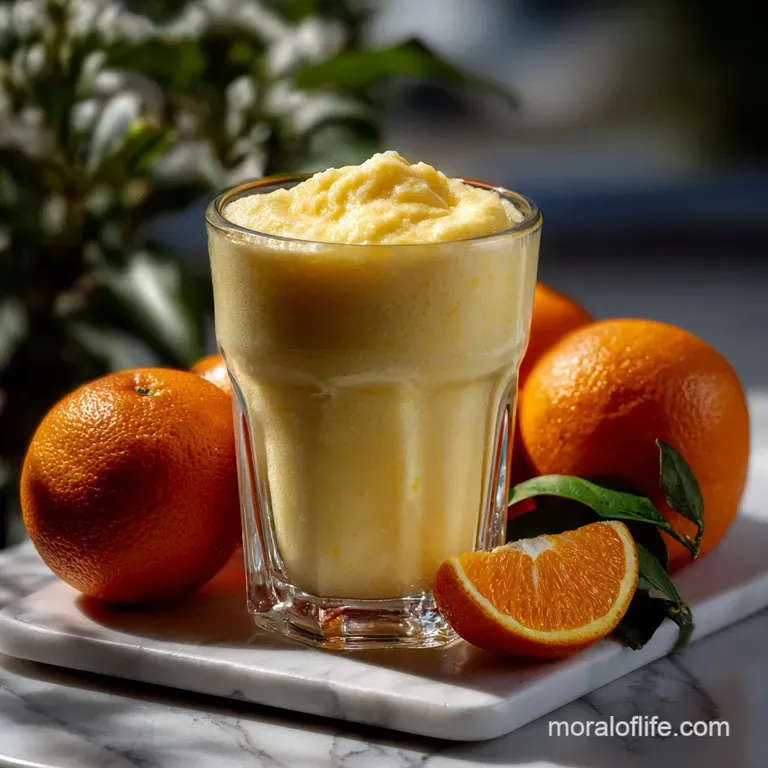
- Effort/Time: 5 minutes / Zero-cook
- Flavor Hook: Zesty citrus meets creamy vanilla soft-serve
- Perfect for: Post-workout recovery or a grab-and-go morning treat
- Mastering the Frothy Nostalgia of This Classic Orange Julius Recipe
- The Molecular Magic Behind That Signature Velvety Foam
- Engineering the Perfect Sip: Key Recipe Specifications
- Selecting Your Elements: The Chemistry of Citrus and Cream
- Necessary Arsenal: Tools for a Perfect Emulsion
- From Blender to Glass: The 5 Minute Assembly Protocol
- Solving the Slush: Why Your Drink Might Separate
- Flavor Architecture: Adaptations for Every Palate
- The Math of Multiplication: Doubling the Chill
- Keeping It Fresh: Storage and Zero-Waste Philosophy
- Level Up Your Glassware: Professional Presentation Techniques
- Decoding the Foam: Direct Answers for Smoothie Success
- Common Questions
- 📝 Recipe Card
Ever wondered why the classic mall drink has a texture that sits halfway between a juice and a milkshake? It is a structural mystery that has baffled home cooks for decades, often resulting in watery separations or overly icy slush.
The secret isn't just in the orange it is in how the proteins interact with the citric acid to create a stable, airy foam.
I remember my first attempt at recreating this; I used fresh orange juice and ended up with a curdled, thin mess. The transition from a simple juice blend to a thick, frothy masterpiece requires a specific type of chemical stabilization.
This Orange Julius Recipe focuses on achieving that exact "pillowy" mouthfeel using ingredients that manage the pH balance of the dairy. Mastering this specific Orange Julius Recipe is crucial for success.
Whether you are looking for a quick hit of nostalgia or a refreshing way to cool down after a summer afternoon, mastering the mechanics of the blend is key. We are moving away from the powdery additives of the 1970s and moving toward a clean, protein rich emulsion.
Let's break down the physics of the froth so you can get this Orange Julius Recipe right on the very first try.
Mastering the Frothy Nostalgia of This Classic Orange Julius Recipe
The Orange Julius Recipe is more than a smoothie; it is a lesson in air incorporation and temperature management. To achieve the signature "walk away" thickness that stays stable in a straw, we must look at the drink as a temporary emulsion.
By using 6 oz (170g) frozen orange juice concentrate, we provide a massive hit of flavor and sugar without the excess water found in fresh squeezed juice. This allows the drink to remain concentrated even as the ice begins to melt.
The inclusion of 1/2 cup (60g) non-fat plain Greek yogurt serves a dual purpose. Beyond the nutritional boost, the proteins in the yogurt act as a surfactant. When whipped at high speeds, these proteins trap micro bubbles of air, creating the velvety suspension we crave.
Unlike a standard fruit smoothie, this drink relies on the interaction between the vanilla extract and the citrus oils to create a flavor profile that mimics orange cream soda but with a much denser structural integrity a hallmark of a good Orange Julius Recipe.
To ensure success, the sequence of the blend is non-negotiable. If you add the ice too early, you risk "bruising" the fruit solids before the dairy has had a chance to emulsify. We start with the liquids and the 2 tbsp (25g) monk fruit sweetener to create a smooth base syrup.
Only once the base is perfectly homogenous do we introduce the thermal mass of the ice to lock that structure into a semi frozen state.
The Molecular Magic Behind That Signature Velvety Foam
- Protein Acid Stabilization: The phosphoric and citric acids in the orange concentrate slightly denature the proteins in the 1 cup (240ml) 2% milk and yogurt. This creates a thickened network that traps air more efficiently than milk alone, which is the structural secret to a great Orange Julius Recipe.
- Emulsification via Lecithin: Natural fats in the 2% milk help bridge the gap between the water based juice and the air bubbles, preventing the drink from separating into layers as it sits.
- Cryogenic Texture Control: Using frozen concentrate instead of liquid juice keeps the "starting temperature" of the mix closer to the freezing point. This ensures the 1.5 cups (200g) ice cubes shatter into microscopic shards rather than melting into a watery puddle.
Engineering the Perfect Sip: Key Recipe Specifications
Creating a consistent Orange Julius Recipe requires adhering to specific ratios that balance sweetness with acidity. While many classic versions use heavy granulated sugar, we utilize monk fruit to maintain a lower glycemic index without sacrificing the "syrupy" body necessary for the emulsion.
| Feature | Specification |
|---|---|
| Total Prep Time | 5 minutes |
| Ideal Serving Temp | 31°F (-0.5°C) |
| Blending Speed | Variable (Start low, finish on High) |
| Macro Focus | High Protein / Low Added Sugar |
Chef's Tip: Freeze your orange juice concentrate for at least 24 hours before making this. If the concentrate is "slushy" rather than solid, your final drink will lack the necessary structural loft and may feel "thin" on the palate.
Selecting Your Elements: The Chemistry of Citrus and Cream
The choice of ingredients in this Orange Julius Recipe is scientifically deliberate. Each component plays a role in the final viscosity and flavor release.
| Ingredient | Chemical/Physical Role (Science) | The Pro Secret (Why This Matters) |
|---|---|---|
| Orange Concentrate | High Brix (sugar) content lowers freezing point | Provides intense flavor without adding bulk water |
| Greek Yogurt | Denatured whey protein for aeration | Acts as a natural stabilizer for the foam |
| Pure Vanilla Extract | Aromatic bridge between acid and fat | Masks the "tang" of yogurt to mimic soft serve |
| 2% Milk | Lipid based mouthfeel | Adds enough fat to carry fat-soluble citrus oils |
- 6 oz (170g) frozen orange juice concentrateWhy this? Provides high viscosity sugar solids for better ice suspension.
- 1/2 cup (60g) non-fat plain Greek yogurtWhy this? The high protein-to-water ratio creates a sturdier foam than regular yogurt.
- 1 cup (240ml) 2% milkWhy this? The 2% fat content provides a velvety finish without being overly heavy.
- 2 tbsp (25g) monk fruit sweetener
- 1 cup (240ml) cold filtered water
- 1/2 tsp (2.5ml) pure vanilla extract
- 1.5 cups (200g) ice cubes
Ingredient Substitutions
| Original Ingredient | Substitute | Why It Works |
|---|---|---|
| Monk Fruit (2 tbsp) | Honey (1.5 tbsp) | Adds floral notes but increases sugar content |
| 2% Milk (1 cup) | Unsweetened Almond Milk | Lower calorie; thinner body. Note: Reduce water by 2 tbsp |
| Greek Yogurt (1/2 cup) | Silken Tofu | Excellent vegan protein substitute; very neutral |
Necessary Arsenal: Tools for a Perfect Emulsion
To replicate the Orange Julius Recipe perfectly, you need more than a standard kitchen spoon. The goal is to create a high velocity vortex that shears the ice into snow while whipping the dairy into a lather.
- High Speed Blender (e.g., Vitamix or Ninja): Necessary to pulverize the ice into a "shattered" texture rather than leaving chunks.
- Digital Kitchen Scale: To ensure the 170g of concentrate and 200g of ice are precise.
- Long Handled Silicone Spatula: Essential for scraping down the sides of the blender to ensure no frozen concentrate remains unmixed.
- Chilled Glassware: Using a room temperature glass will cause the drink to "break" (separate) at the edges within 2 minutes.
From Blender to Glass: The 5 Minute Assembly Protocol
- Chill your blender jar for 5 minutes in the freezer. Note: Prevents the motor's heat from melting the ice prematurely.
- Pour 1 cup cold filtered water into the base. Note: Liquid at the bottom prevents the blades from spinning air.
- Add 1 cup 2% milk and 1/2 tsp vanilla extract. Note: Disperses aromatics into the fat molecules.
- Incorporate 1/2 cup Greek yogurt and 2 tbsp monk fruit. Note: Pre-mixing the sweeteners prevents graininess.
- Scoop in 6 oz frozen orange juice concentrate. Note: Ensure it is still semi solid for maximum chill.
- Pulse 3 times until the base looks like a bright orange liquid. Note: Avoid over mixing before the ice is added.
- Add 1.5 cups ice cubes all at once. Note: Large volume of ice creates immediate thermal shock.
- Blend on medium for 15 seconds until you hear the large clunking sounds stop. Note: The auditory shift indicates the ice has moved from "chunks" to "shards."
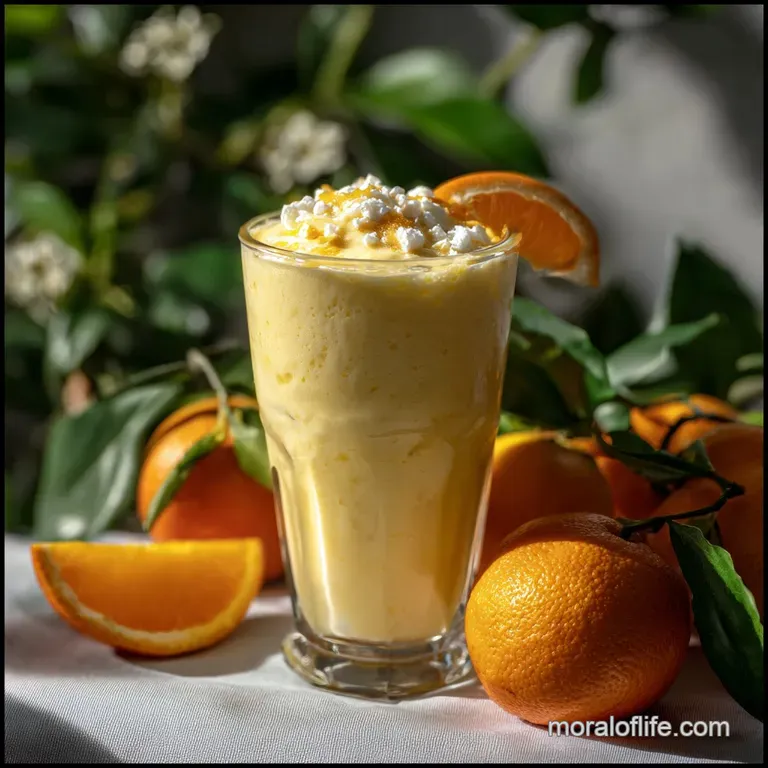
- Ramp to high for 10 seconds until the mixture develops a "four leaf clover" vortex on top. Note: This visual cue means the drink is fully aerated and velvety, finalizing the Orange Julius Recipe.
- Pour immediately into a frosted glass. Note: The drink is most stable the second it leaves the blade.
Solving the Slush: Why Your Drink Might Separate
Why Your Drink Is Watery
If your Orange Julius Recipe lacks that thick, spoonable quality, the culprit is usually the ice-to-liquid ratio or the temperature of the concentrate. When the concentrate is too warm, it fails to provide the structural "grip" needed to hold the ice in suspension. This is similar to the emulsion stability found in an Alfredo Sauce recipe, where temperature control is the difference between a smooth sauce and a broken mess.
| Problem | Root Cause | The Fix | Pro Protocol |
|---|---|---|---|
| Grainy Texture | Sweetener didn't dissolve | Dissolve monk fruit in the milk before adding ice | Use powdered monk fruit for instant integration |
| Separation | Over blending | Stop blending as soon as the clover vortex forms | Keep blend time under 45 seconds total |
| Too Tart | Yogurt/Orange ratio off | Increase vanilla extract by 1/4 tsp | Add a pinch of sea salt to dull the sharp acidity |
Achieving the Icy Slush
The physics of the "slush" relies on the Maillard adjacent browning of the vanilla interacting with the cold. Actually, it is more about the viscosity. If the drink is too thin, the ice will float to the top.
To fix this, ensure your Greek yogurt is full fat or non-fat but strained (Greek style), as the thicker protein structure supports the ice better than standard thin yogurt when making this version of the Orange Julius Recipe.
Flavor Architecture: Adaptations for Every Palate
If you want to move beyond the classic Orange Julius Recipe, you can modify the base while keeping the science of the foam intact.
- Tropical Twist: Swap the water for coconut milk. Note: Adds medium chain triglycerides for a richer mouthfeel.
- Creamsicle Dream: Double the vanilla extract and add a tablespoon of heavy cream.
- Green Julius: Add a handful of baby spinach. The orange concentrate is strong enough to mask the vegetal flavor while providing a massive nutrient boost.
Fast vs. Classic Comparison
| Feature | Fast (This Recipe) | Classic (Original Mall Style) |
|---|---|---|
| Sweetener | Monk Fruit (Natural) | Refined Sugar/Corn Syrup |
| Protein | 11.3g (via Greek Yogurt) | ~2g (via Dairy Powder) |
| Texture | Velvety/Aerated | Slushy/Icy |
The Math of Multiplication: Doubling the Chill
When you decide to double this Orange Julius Recipe for a crowd, you cannot simply double everything and hit "on."
- The Evaporation Paradox: While evaporation isn't an issue here as it is in a soup, Heat Dissipation is. A double batch (4 servings) creates more friction against the blender blades. This generates heat that will melt your ice 30% faster. Fix: Use 10% more ice than a straight doubling would suggest to maintain the integrity of the final Orange Julius Recipe.
- Flavor Saturation: Citric acid is pungent. When doubling, keep the orange concentrate at exactly 12 oz, but only increase the vanilla to 3/4 tsp (rather than 1 tsp). Aromatics like vanilla can become "medicinal" if scaled linearly.
- Pan Crowding (Blender Capacity): Never fill a blender jar more than 2/3 full. The "lofty" foam needs room to expand as air is whipped in. If you crowd the jar, you will end up with a dense, un-aerated juice instead of a frothy treat.
Keeping It Fresh: Storage and Zero Waste Philosophy
Storage Protocols
- Fridge: Not recommended. The foam will collapse within 15 minutes as the air escapes and the ice melts. If you must store it, whisk it vigorously before drinking.
- Freeze: 1 month. Pour leftovers into popsicle molds. The high sugar and protein content will prevent it from becoming a solid block of ice, resulting in a "creamsicle" texture a great way to preserve the Orange Julius Recipe for later.
- Reheat: Not applicable. If the drink has melted, re-blend it with 3 4 fresh ice cubes to restore the air bubbles.
Zero Waste Philosophy
- Orange Rinds: Don't discard the peel if you have fresh oranges. Transform: Candied zest or orange sugar. Science: The essential oils (limonene) in the rind are much more concentrated than the juice.
- Leftover Yogurt: If you have a few tablespoons left in the container, use it to make the base of an Alfredo Sauce recipe for a tangy twist, or save it for your next batch.
- Milk Scraps: Use any leftover milk to hydrate a Banana Bread recipe for a moist crumb.
Level Up Your Glassware: Professional Presentation Techniques
How you present the Orange Julius Recipe changes the perceived flavor. A cold drink served in a warm glass feels "messy" as it melts.
Three Levels of Plating
| Level | Technique | Impact |
|---|---|---|
| Simple | Standard pint glass, no garnish | Functional and quick for breakfast |
| Polished | Frosted hurricane glass with a thin orange wheel | Enhances the visual "sunset" colors |
| Restaurant | Salted rim (using monk fruit/orange zest) + mint sprig | The mint's scent complements the citrus oils |
Presentation Tip: If you are hosting, place your glasses in the freezer 20 minutes before serving. When the cold Julius hits the frozen glass, it creates a thin "frost" layer on the inside that keeps the drink stable for twice as long.
Decoding the Foam: Direct Answers for Smoothie Success
Why does my Julius separate into a clear layer at the bottom?
This is known as syneresis. It happens when the air bubbles (the foam) are too large and the liquid isn't viscous enough to hold them. This is usually caused by using 1% or skim milk instead of 2% or whole milk. The lack of fat means there is nothing to "glue" the water to the air.
To fix a separated drink, add a teaspoon of Greek yogurt and re-blend for 5 seconds.
Is the vanilla really necessary?
Yes. In the Orange Julius Recipe, vanilla isn't just a flavor; it’s a chemical balancer. The "pure vanilla extract" contains vanillin, which rounds out the sharp "bite" of the citric acid from the concentrate. Without it, the drink tastes like acidic juice; with it, it tastes like a dessert. It provides the same aromatic depth you'd find when you add espresso to deepen chocolate in a cookie recipe.
Can I use fresh oranges instead of concentrate?
Myth: Fresh is always better. Truth: For this specific recipe, fresh juice is too watery. The concentrate provides the "solids" necessary for the thick, creamy mouthfeel. If you use fresh juice, the drink will be thin and icy rather than velvety.
Decision Shortcut: If you want it thicker, add 1/4 cup more Greek yogurt. If you want it sweeter, add 1 extra tbsp of monk fruit. If you want it colder, blend the ice for less time to keep the shards larger.
Common Questions
Can I substitute fresh orange juice for frozen concentrate?
Myth: Fresh is always better. Truth: For this specific recipe, fresh juice is too watery. The concentrate provides the "solids" necessary for the thick, creamy mouthfeel. If you use fresh juice, the drink will be thin and icy rather than velvety.
What is the minimum blending time required?
Pulse 3 times, then blend on high for 10 seconds total. Over blending incorporates too much ambient air that destabilizes quickly, causing rapid separation. The goal is high velocity shearing, not continuous whipping.
Why does my Orange Julius separate into watery layers?
- Use non-fat Greek yogurt
- Ensure concentrate is fully frozen
- Limit total blend time under 45 seconds
Is the vanilla extract optional in this recipe?
Should I use salted or unsalted butter?
What is the ideal serving temperature in Fahrenheit?
31°F (-0.5°C) is the target thermal state. This temperature is just below freezing, allowing the drink to maintain its emulsified structure without becoming a solid block of ice.
Is this recipe high in sugar?
Velvety Orange Julius Recipe
Ingredients:
Instructions:
Nutrition Facts:
| Calories | 231 kcal |
|---|---|
| Protein | 11.3 g |
| Fat | 2.7 g |
| Carbs | 38.1 g |
| Fiber | 0.8 g |
| Sugar | 34.5 g |
| Sodium | 76 mg |
