Basic Overnight Oats Recipe for Meal Prep
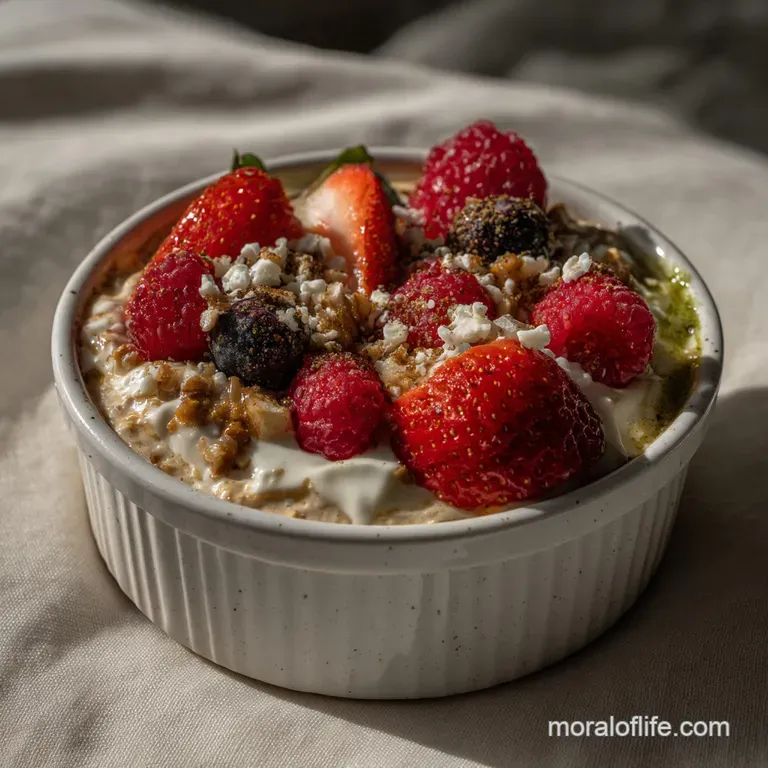
- Effort/Time: 10 minutes prep / 4 hours minimum soak
- Flavor Hook: Rich, custardy base with a balanced sweet and salt finish
- Perfect for: Busy professionals needing a grab-and-go, fuel-heavy morning meal
- Hydration Science and the Cold-Soak Emulsion Method
- Precision Metrics for a Consistent Morning Fuel
- The Essential Chemistry of Your Pantry Staples
- Minimalist Tools for Maximum Meal-Prep Efficiency
- The Eight-Step Assembly Protocol for Optimal Texture
- Why Your Breakfast is Chalky: Solutions and Fixes
- ⚗️ The Scaling Lab: Physics of Quantity
- Flavor Architecture and Dietary Adaptation Strategies
- Common Myths
- Cold-Chain Integrity and Preservation Timelines
- Texture Contrast and Final Flavor Balancing
- Recipe FAQs
- 📝 Recipe Card
Master the Ultimate Overnight Oats
There is nothing more frustrating than opening the fridge at 7:00 AM, starving and rushed, only to find a jar of chalky, liquid submerged grain that tastes like cardboard. I have spent way too much money on expensive glass jars and organic toppings only to end up tossing half eaten, gritty messes because the ratio was off or the hydration hadn't actually occurred.
A texture failure in your breakfast doesn't just waste ingredients; it ruins the momentum of your entire day, leaving you reaching for a sugary pastry by 10:00 AM because your "healthy" meal was inedible. The success of Overnight Oats hinges entirely on precision.
I once tried to rush the process by using quick cook oats and skipping the yogurt, thinking the extra milk would compensate for the creaminess. I ended up with a literal soup of slimy starch that had zero structural integrity.
I’ve destroyed at least a dozen batches of Overnight Oats by overcomplicating the ratios or ignoring the fundamental physics of how a dry grain absorbs liquid in a cold environment.
It took months of testing different hydration levels to realize that Overnight Oats aren't just "wet oats" they are a calculated emulsion. Mastering Overnight Oats requires patience.
The secret to a velvety, satiating result isn't a "magic" ingredient; it is the scientific principle of Starch Hydration and Capillary Action. Unlike stovetop oats that rely on heat to rupture starch granules (gelatinization), these Overnight Oats use time to allow liquid to slowly penetrate the cell walls of the oat groat.
When you combine this with the Mucilaginous Gel formation of chia seeds, you create a structural matrix that holds moisture without becoming watery. The result is a dense, pudding like consistency that offers a satisfying "chew" and a deep, nutty fragrance the hallmark of perfect Overnight Oats.
Hydration Science and the Cold Soak Emulsion Method
- Cold Soak Starch Hydration: Liquid molecules move into the porous spaces of the [Quaker] Old Fashioned Rolled Oats, softening the beta glucan fibers without the heat induced slime associated with boiling. This cold process is key to superior Overnight Oats.
- Hydrocolloid Matrix: [Navitas] Chia seeds absorb up to 10x their weight in liquid, creating a viscous gel that binds the milk and yogurt into a singular, cohesive emulsion, giving structure to the Overnight Oats.
- Protein Denaturation: The acidic environment provided by [Fage] Plain Greek yogurt begins to break down complex grain proteins, making them more bioavailable and easier for the digestive system to process in your Overnight Oats.
- Osmotic Pressure Management: A specific pinch of [Diamond Crystal] Sea Salt regulates the water movement into the seeds, ensuring the interior of the oat is seasoned, not just the surrounding liquid in your Overnight Oats mixture.
- Enzymatic Activation: The 8 hour rest period allows phytase enzymes to neutralize phytic acid, which is an anti nutrient found in raw grains that can inhibit mineral absorption in the finished Overnight Oats.
| Feature | Freshly Stirred (5 mins) | Cold Soak Shortcut (2 hours) | Masterclass Overnight (8+ hours) |
|---|---|---|---|
| Texture | Gritty, liquid separated | Semi soft, slightly chewy | Velvety, uniform, pudding like |
| Digestibility | Low (High phytic acid) | Moderate | High (Enzymatic breakdown) |
| Flavor Depth | Raw grain dominant | Developing sweetness | Deep, nutty, balanced |
Precision Metrics for a Consistent Morning Fuel
To ensure your Overnight Oats provide the 18g of protein and 9g of fiber promised, you must hit these numeric checkpoints during assembly. Following these metrics separates mediocre results from truly excellent Overnight Oats.
- Hydration Ratio: 1:1.2 (Oat to Liquid/Yogurt ratio by volume). This ensures the oats are fully submerged without becoming a "soup."
- Minimum Thermal Set: 40°F (4°C) for at least 4 hours. Anything less results in a "snap" in the center of the grain that feels undercooked, even in quality Overnight Oats.
- Mass Accuracy: 45g of oats is the threshold for a 381 calorie meal that provides sustained satiety for 4 6 hours.
The Essential Chemistry of Your Pantry Staples
Selecting the right elements is about more than brand loyalty; it's about how these molecules interact over an 8 hour period in the refrigerator, building the perfect base for your Overnight Oats.
Ingredient Chemistry Breakdown
| Ingredient | Chemical/Physical Role (Science) | The Pro Secret (Why This Matters) |
|---|---|---|
| Old Fashioned Rolled Oats | Steam stabilized starch structure | Rolled oats maintain structural integrity longer than "Quick" oats, preventing a mushy texture in your Overnight Oats. |
| Chia Seeds | Hydrophilic mucilage formation | These act as the "glue" that thickens the milk into a custard like consistency via soluble fiber. |
| Plain Greek Yogurt | Acidic protein fortification | The lactic acid softens the oat bran while adding 18g of bioavailable protein for satiety. |
| Pure Maple Syrup | Hygroscopic sweetener | Liquid sugar integrates into the oat cells more efficiently than granulated sugar, which may stay gritty. |
- 1/2 cup (45g) [Bob’s Red Mill] Old Fashioned Rolled Oats: Why this? Provides the essential starch structure that resists total disintegration during long term soaking of the Overnight Oats.
- 1/2 cup (120ml) Milk of choice: Why this? The primary hydration agent; dairy provides calcium, while soy offers the highest plant protein yield.
- 1/4 cup (60g) [Chobani] Plain Greek yogurt: Why this? Thickens the mixture via fat and protein solids while adding a necessary tangy counter note.
- 1 tablespoon (12g) Chia seeds: Why this? Essential for moisture retention; without them, the oats will sit in a pool of unabsorbed milk, ruining the Overnight Oats.
- 1 tablespoon (15ml) Pure maple syrup or honey: Why this? Liquid sweeteners provide uniform distribution of glucose without weighing down the texture.
- 1/2 teaspoon Pure vanilla extract: Adds aromatic complexity that mimics the scent of baked goods.
- 1 pinch [Maldon] Sea salt: Why this? Sodium ions suppress bitterness and amplify the perception of sweetness in the oats.
Minimalist Tools for Maximum Meal Prep Efficiency
You don't need a high end kitchen to master Overnight Oats, but the geometry of your vessel matters for even hydration. Having the right tools enhances the outcome of your Overnight Oats.
- [Ball] 16 oz Wide Mouth Mason Jar: The wide opening allows for aggressive stirring, ensuring no dry pockets of chia seeds are trapped at the bottom.
- [OXO] Silicone Spatula: Essential for scraping the sides of the jar to ensure the yogurt is fully integrated into the oat-milk suspension.
- [Taylor] Digital Kitchen Scale: Measuring by weight (grams) is the only way to ensure the 45g of oats doesn't fluctuate, which drastically changes the final thickness of the Overnight Oats.
- Measuring Spoons: Necessary for the 12g of chia seeds; even a 5g variance can turn the meal from "creamy" to "cement like."
The Eight Step Assembly Protocol for Optimal Texture
- Zero the scale using your [Ball] Mason Jar to ensure precise measurement of the 45g of oats.
- Add 1/2 cup Rolled Oats to the dry jar. Note: Keeps the oats at the bottom for maximum initial liquid contact.
- Incorporate 1 tablespoon Chia Seeds and 1 pinch sea salt. Note: Mixing dry ingredients first prevents the chia seeds from clumping into "gel-balls."
- Pour in 1/2 cup milk of choice. Note: Use cold milk to maintain the cold soak temperature from the start.
- Layer 1/4 cup Greek yogurt on top. Note: Placing the dense yogurt on top of the liquid helps it slowly filter down as you stir.
- Drizzle 1 tablespoon maple syrup and 1/2 teaspoon vanilla extract. Note: Concentrates the aromatics in the center for better distribution.
- Stir vigorously for 45 seconds until the mixture is a uniform, beige slurry with no visible clumps of seeds. This initial stirring is crucial for good Overnight Oats.
- Seal the lid tightly and let sit on the counter for 10 minutes until the chia seeds begin to swell and the liquid looks slightly thickened.
- Give one final shake to redistribute any settled oats at the bottom.
- Refrigerate for 8 hours until the jar feels solid when tilted and a nutty, vanilla fragrance is present upon opening. This waiting period guarantees the best flavor profile for your Overnight Oats.
Why Your Breakfast is Chalky: Solutions and Fixes
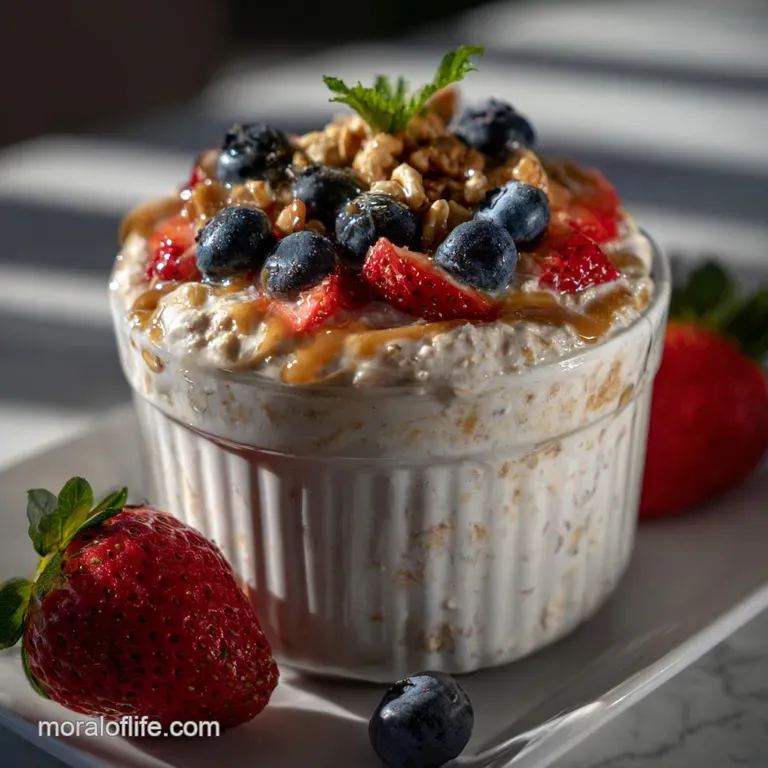
Why Your Overnight Oats Are Too Runny
If your Overnight Oats resemble a thin soup, the most common culprit is a lack of binding agents or incorrect ratios. The chia seeds are the "engine" of the thickness; if they are old or you skipped them, the milk has nothing to hold onto.
| Problem | Root Cause | The Fix | Pro Protocol |
|---|---|---|---|
| Soup like consistency | Excessive milk or low-fiber oats | Add 1 tsp extra chia seeds | Whisk in 1 tbsp almond butter to emulsify the excess liquid |
| Chalky/Gritty texture | Insufficient hydration time | Soak for minimum 4 hours | Pulse 1/4 of the oats in a blender before soaking for instant creaminess |
| Bitter aftertaste | Rancid chia seeds or oats | Use fresh, airtight stored grains | Add a squeeze of lemon juice to brighten the flavor and cut bitterness |
Why Your Oats Have "Hard Spots"
This is usually caused by "clumping." When chia seeds hit liquid, they immediately form a protective gel. If they are bunched together, the liquid can't reach the center of the clump, leaving you with dry, crunchy pockets.
Always stir, wait ten minutes, and stir again before the long chill to prevent this in your Overnight Oats.
⚗️ The Scaling Lab: Physics of Quantity
When you are meal prepping for an entire week or a large family, doubling the Overnight Oats recipe isn't a simple 2x math problem. Scaling requires understanding container physics.
- The Evaporation Paradox: Unlike stovetop cooking, there is zero evaporation in a sealed jar. If you are mixing a giant batch in a large bowl before portioning, you must reduce total milk by 10%. The weight of the large mass compresses the oats at the bottom, forcing liquid upward and creating a "wet" top layer.
- Flavor Saturation: Spices like cinnamon or nutmeg scale at 1.5x, not 2x. Concentrated aromatic oils from spices become overwhelming in large batches, potentially tasting "soapy."
- Thermal Mass & Refrigeration: If you put 10 individual jars into the fridge at once, you increase the internal temp of your refrigerator. Space the jars out for the first 2 hours to ensure the center of the jars reaches the 40°F (4°C) "safety zone" quickly to prevent spoilage.
- The Square Cube Law: A single jar has a high surface area-to-volume ratio, cooling quickly. A large 2 quart tub of oats takes significantly longer to reach the core temperature. If scaling up in one large container, increase the soak time by 2 hours to account for the slower thermal drop when making large batches of Overnight Oats.
Flavor Architecture and Dietary Adaptation Strategies
The beauty of the Overnight Oats basic recipe is its role as a blank canvas. Once you master the base, you can adjust the "physics" of the flavor.
"If You Want X, Do Y" Decision Shortcut
- If you want a dessert like texture, swap 2 tablespoons of milk for heavy cream or full fat coconut milk.
- If you want maximum protein, use soy milk and add a scoop of whey isolate (add 2 extra tablespoons of milk to compensate for the powder's absorption).
- If you want a crunch, never add nuts at night; toast them and add only 1 minute before eating to maintain "shatter" texture.
Substitution Table
| Original Ingredient | Substitute | Why It Works |
|---|---|---|
| Greek Yogurt (1/4 cup) | Silken Tofu (blended, 1/4 cup) | Similar protein density and creamy mouthfeel; keeps the Overnight Oats vegan. |
| Maple Syrup (1 tbsp) | Mashed Banana (1/2 medium) | Provides natural fructose and extra potassium, though the texture becomes denser. |
| Chia Seeds (1 tbsp) | Ground Flaxseed (1.5 tbsp) | Offers similar mucilaginous thickening, though the texture is slightly "grittier." |
| Rolled Oats (1/2 cup) | Buckwheat Groats (1/2 cup) | gluten-free and provides a much firmer, "popping" texture compared to oats. |
Common Myths
- Myth: You have to use "overnight oats" specific jars.
- Truth: Any airtight container works. Glass is preferred because it doesn't absorb odors from the fridge like cheap plastic can.
- Myth:Overnight Oats are only for cold eating.
- Truth: You can microwave the hydrated oats for 60 seconds. The hydration has already happened, so they will be creamier than if you boiled them from dry.
- Myth: Steel cut oats work better.
- Truth: Raw steel cut oats are too dense for cold soaking; they remain unpleasantly hard and can cause digestive distress if not par-boiled first.
Cold Chain Integrity and Preservation Timelines
Storage
- Fridge: Keep at 40°F (4°C) for up to 5 days. Note: The texture is optimal on days 2 and 3. By day 5, the oats begin to break down into a smoother, less "chewy" consistency due to prolonged enzyme activity.
- Freezing: Not recommended. The expansion of water molecules during freezing ruptures the cell walls of the oats, resulting in a grainy, watery mess upon thawing.
- Reheating: If eating warm, add a splash of fresh milk before microwaving to loosen the "set" starches.
💡 ZERO WASTE PHILOSOPHY
Don't discard the Yogurt Whey (the liquid at the top of the yogurt tub). Transform: Stir it directly into the milk for the Overnight Oats. Science: This liquid is packed with probiotics and protein that accelerate the softening of the grain bran.
Got Apple Peels? Transform: Finely mince and stir into the oats. Science: The pectin in the peels adds a natural "jammy" thickness to the mix without extra sugar.
Texture Contrast and Final Flavor Balancing
The final stage happens 30 seconds before you eat. The "cold cure" is finished, and the Overnight Oats are at their most dense.
- The Acid Pop: If the oats feel "flat" on your tongue, add a squeeze of fresh lemon or a few raspberries. The acid cuts through the heavy fat of the Greek yogurt.
- The Texture Bridge: Always add something with a "snap" or "shatter."
- Toasted Pepitas: Add a savory, earthy crunch.
- Cacao Nibs: Provide a bitter, chocolatey bite that offsets the maple syrup.
- Hemp Hearts: Add a soft, nutty finish that complements the velvety oats.
The "Phase 4 Final Adjustment" is critical. If the Overnight Oats have set too firmly (this happens if your chia seeds were particularly thirsty), stir in exactly 1 tablespoon of extra milk. This creates a "pourable" creaminess that mimics a high end restaurant porridge.
You've done the work, you've respected the science, and now you have a fuel dense, efficient meal that makes your morning routine feel like a breeze instead of a burden. Let's crack on.
Recipe FAQs
How long do Overnight Oats need to soak minimally?
4 hours minimum soak. The minimum thermal set must be 40°F (4°C) for at least four hours. Less time results in a center that feels undercooked despite full external hydration.
Can I use Quick Oats instead of Rolled Oats?
No, Quick Oats yield a mushy texture. Heat stabilized starches in rolled oats resist total disintegration during cold soaking. Quick oats gelatinize too rapidly, resulting in a loss of desired chew.
Why are my Overnight Oats gritty or chalky?
Failure to stir thoroughly after the initial 10-minute rest. Chia seeds instantly gel upon hydration, creating localized clumps that liquid cannot penetrate, leaving dry centers.
- Ensure dry ingredients are mixed first
- Stir vigorously for 45 seconds initially
- Wait 10 minutes, then give one final shake
Is Greek Yogurt better than adding more milk?
Greek yogurt provides essential structural protein. Milk alone results in a thin, watery mixture because it lacks the fat and protein solids necessary for a cohesive emulsion. Yogurt creates the necessary viscous matrix.
Myth: Overnight Oats must be eaten cold.
Myth: You have to use "overnight oats" specific jars. Truth: Any airtight container works. Glass is preferred because it doesn't absorb odors from the fridge like cheap plastic can.
Is it safe to prepare a whole week of oats at once?
No, optimal flavor is achieved by day three. While storage is possible up to five days, the texture degrades significantly as enzymes continue to break down the grain structure over time.
Should I use granulated sugar or maple syrup?
Maple syrup integrates better for uniform sweetness. Granulated sugar has a higher crystalline structure that may not fully dissolve in cold liquid, potentially leaving gritty pockets in the final product.
Basic Overnight Oats Recipe
Ingredients:
Instructions:
Nutrition Facts:
| Calories | 381 calories |
|---|---|
| Protein | 18g |
| Fat | 10g |
| Carbs | 56g |
| Fiber | 9g |
| Sugar | 18g |
| Sodium | 185mg |
