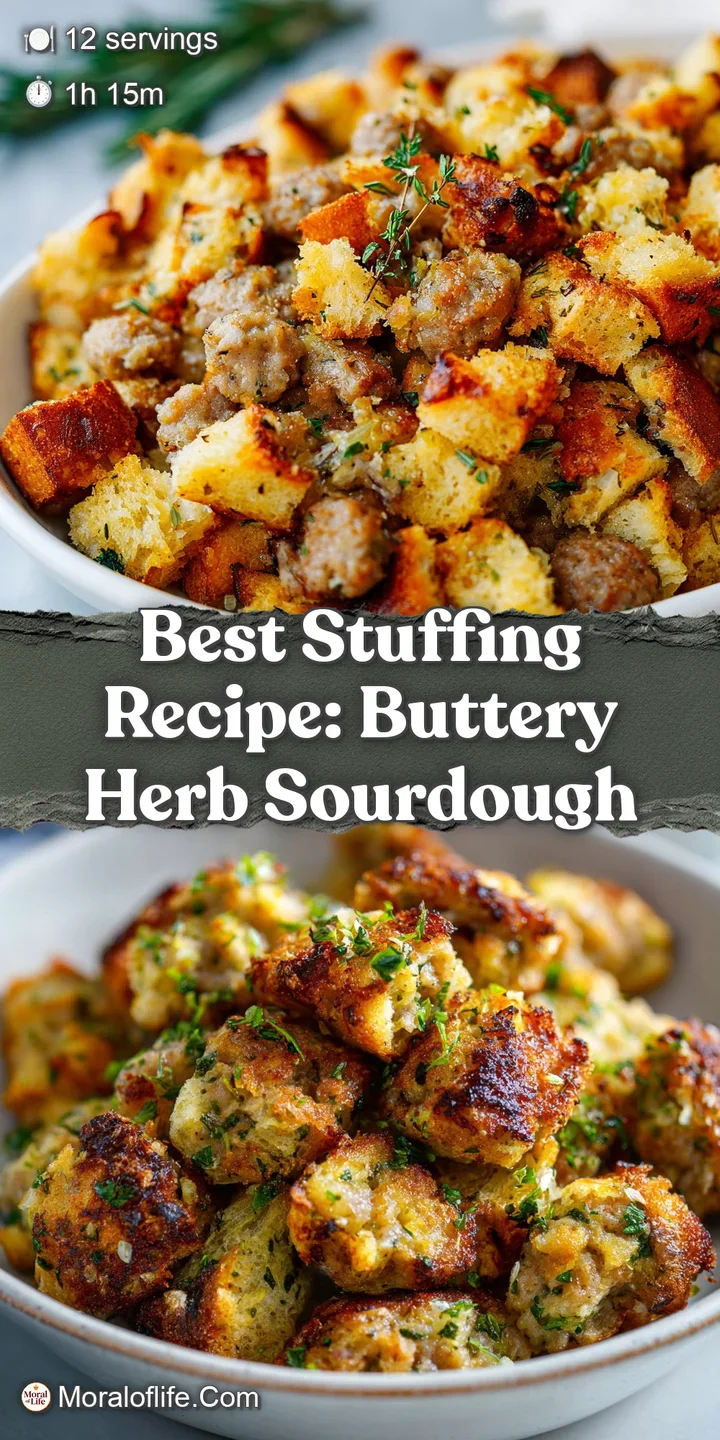
Best Stuffing Recipe: Buttery Sourdough
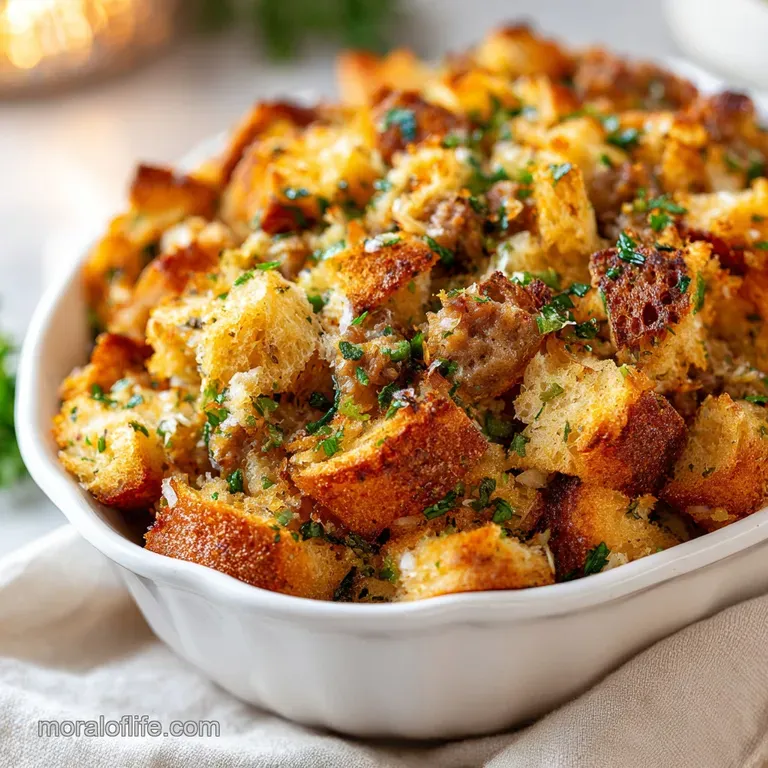
- Time: Active 25 minutes, Passive 50 minutes, Total 1 hours 15 mins
- Flavor/Texture Hook: Shatter crisp edges with a buttery, herb infused sourdough crumb.
- Perfect for: A dependable holiday centerpiece or a comforting Sunday roast side.
- Making the Best Stuffing Recipe Ever
- Texture and Flavor Secrets Revealed
- Comparing Classic and Fast Methods
- Essential Numbers for Your Success
- Deep Dive Into Our Ingredients
- Essential Components for Success
- Kitchen Tools for Better Results
- Putting Everything Together Gently
- Solving Common Stuffing Issues
- Adjusting for Large Crowds
- Debunking Holiday Cooking Myths
- Storing and Using Your Scraps
- Perfect Pairings for Your Table
- Recipe FAQs
- 📝 Recipe Card
Making the Best Stuffing Recipe Ever
I still remember the "Beige Puddle Incident" of 2012. I was so excited to host my first big dinner, but I made the mistake of using soft white bread and too much lukewarm broth. When I pulled the pan out, it wasn't a beautiful side dish - it was a soggy, flavorless heap that honestly looked like wet cardboard.
My friends were polite, but the fact that the bowl was still three quarters full at the end of the night told me everything I needed to know.
That disaster sent me on a mission to figure out how to get that specific, rustic texture where every cube of bread holds its own. I started playing with sourdough because it has those giant air pockets and a sturdy crust that refuses to quit.
When you hear the sizzle of the sausage hitting the hot butter and the smell of fresh sage starts drifting through the house, you just know it's going to be a good day. This isn't just a side dish for me anymore, it's the dependable heart of the meal.
We've all been there with a recipe that looks great in photos but falls flat on the plate. My goal here is to give you something you can repeat with confidence every single year. We're going to use real, honest ingredients like leeks and poultry sausage to create a depth of flavor that those little seasoning packets just can't touch.
Trust me on this, once you try the sourdough method, there's no going back to the mushy stuff.
Texture and Flavor Secrets Revealed
- Starch Retrogradation: Drying the sourdough in the oven crystallizes the starches, which prevents the bread from disintegrating when it hits the broth.
- Fat Encapsulation: Tossing the cubes in grass fed butter and sausage fat creates a barrier that lets the bread absorb flavor without losing its structure.
- Protein Matrix: Using beaten eggs acts as a binder that sets the internal structure, giving you a velvety mouthfeel rather than a runny mess.
- Aromatic Layering: Sautéing leeks and celery until soft but not browned preserves their natural sugars, adding a subtle sweetness that balances the salty sausage.
Comparing Classic and Fast Methods
| Method | Time | Texture | Best For |
|---|---|---|---|
| Classic Oven | 1 hours 15 mins | Crispy top, silky middle | The big holiday meal |
| Stovetop Quick | 30 minutes | Soft throughout | Normal Tuesday dinner |
| Slow Cooker | 4 hours | Dense and moist | Saving oven space |
This recipe leans into the classic oven method because the texture is vastly superior. While a stovetop version is fast, it lacks the contrasting "shatter" on the top layer that makes a truly great stuffing. If you want a different holiday side with a unique texture, check out this Recipe of Stuffing with a cornbread base.
Essential Numbers for Your Success
The Physics of the Crunch
Sourdough has a lower pH and a tighter crumb structure than white bread, which means it requires more liquid to soften but maintains its "bite" even after a long bake. This cellular resistance is what prevents the dreaded sogginess.
| Thickness of Cube | Internal Temp | Rest Time | Visual Cue |
|---|---|---|---|
| 1 inch | 165°F | 10 mins | Edges turn mahogany gold |
| 0.5 inch | 165°F | 5 mins | Uniformly brown and dry |
| 2 inches | 165°F | 15 mins | Very soft with hard crust |
Deep Dive Into Our Ingredients
| Ingredient | Science Role | Pro Secret |
|---|---|---|
| Sourdough Bread | Structural Base | Use a day old loaf for better absorption |
| Unsalted Butter | Fat & Emulsion | Grass fed adds a richer yellow hue |
| Chicken Bone Broth | Umami Liquid | Low sodium lets you control the salt |
| Large Eggs | Structural Binder | Beat until frothy to incorporate air |
Essential Components for Success
- 1 lb sourdough bread: Cut into 1 inch cubes. Why this? The tangy acidity cuts through the heavy fat of the sausage and butter. (Sub: French bread - softer texture)
- 0.5 cup unsalted grass fed butter: For sautéing. Why this? Higher fat content means more flavor and a better crust on the bread. (Sub: Ghee)
- 1 lb lean poultry or pork sausage: Removed from casings. Why this? Provides the main savory backbone and essential renderings. (Sub: Soy based sausage crumbles)
- 2 large leeks: White and light green parts only. Why this? Sweeter and more delicate than standard yellow onions. (Sub: Shallots)
- 3 stalks celery: Finely diced. Why this? Adds a necessary crunch and classic herbal base note. (Sub: Fennel bulb)
- 4 cloves garlic: Minced. Why this? To provide a sharp aromatic punch that lingers. (Sub: 1 tsp garlic powder)
- 0.5 cup fresh Italian parsley: Chopped. Why this? Brightens the dish and adds a pop of color. (Sub: Fresh cilantro for a twist)
- 2 tbsp fresh sage: Finely minced. Why this? The quintessential "holiday" flavor that pairs perfectly with poultry. (Sub: 1 tbsp dried sage)
- 1 tbsp fresh thyme leaves: Stripped from stems. Why this? Adds an earthy, floral note that rounds out the spices. (Sub: Fresh rosemary)
- 2.75 cups low sodium chicken bone broth: The hydration. Why this? Bone broth adds collagen which helps the stuffing set beautifully. (Sub: Vegetable stock)
- 2 large eggs: Beaten. Why this? Holds the cubes together so it scoops like a dream. (Sub: Flax eggs)
- 1 tsp sea salt: To season. Why this? Enhances every other ingredient's natural profile. (Sub: Kosher salt)
- 0.5 tsp freshly cracked black pepper: For a mild heat. Why this? Freshly cracked has oils that pre ground pepper lacks. (Sub: White pepper)
Kitchen Tools for Better Results
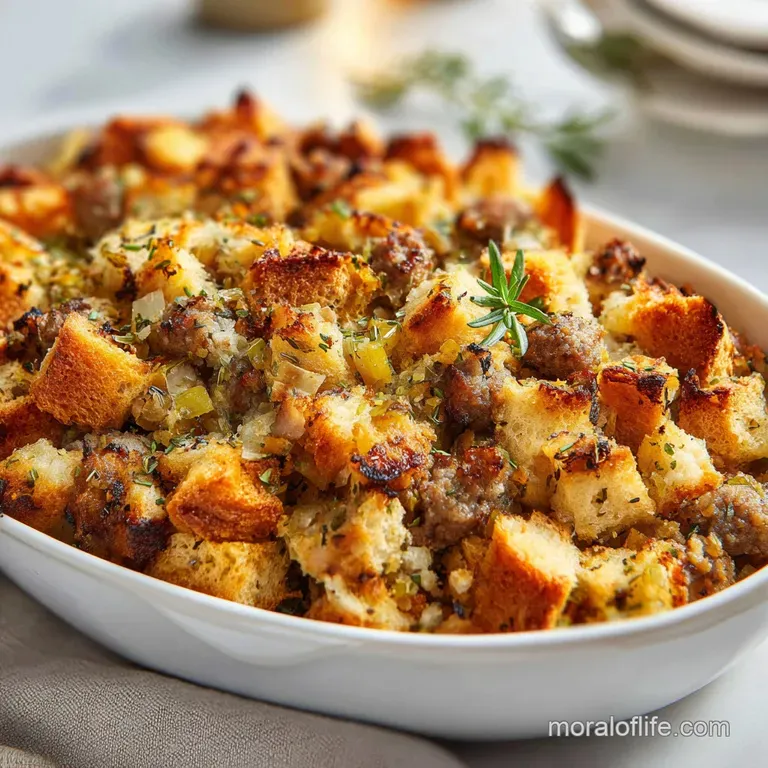
You don't need anything too fancy for this, but a large cast iron skillet (like a Lodge) is brilliant for browning the sausage. It holds heat better than stainless steel and gives the meat a much better sear. You'll also need a 9x13 inch baking dish for the final bake.
Chef Tip: Freeze your butter for 10 minutes before dicing it into the skillet. It melts more evenly and seems to brown the leeks without scorching them.
If you find yourself making this on a busy day, you can prep the veggies the night before. Just keep the leeks and celery in a sealed container in the fridge so they stay crisp. Pair this with a hearty Chicken and Dumplings recipe for the ultimate comfort meal during those cold months.
Putting Everything Together Gently
- Preheat your oven to 350°F (180°C).
- Spread the 1 lb sourdough bread cubes on a baking sheet.
- Toast for 15 minutes until the bread is dry and slightly golden. Note: This prevents the bread from turning into mush later.
- Melt 0.5 cup butter in a large skillet over medium high heat.
- Brown 1 lb sausage until no pink remains and it starts to sizzle.
- Add the 2 sliced leeks and 3 stalks of celery to the skillet.
- Sauté for 8 minutes until the vegetables are translucent and soft.
- Stir in 4 cloves minced garlic, 2 tbsp sage, and 1 tbsp thyme for 1 minute.
- Combine the toasted bread and the skillet mixture in a large bowl.
- Whisk 2.75 cups bone broth with 2 beaten eggs, 1 tsp salt, and 0.5 tsp pepper.
- Pour the liquid over the bread and toss gently until every cube is hydrated.
- Transfer to a buttered 9x13 dish and bake for 50 minutes until the top is golden and crackling.
Solving Common Stuffing Issues
Why Your Stuffing is Soggy
This usually happens when you add too much liquid at once or use bread that isn't dry enough. If the bread still feels like a fresh sponge before it goes in the oven, it won't be able to hold the broth.
| Problem | Root Cause | Solution |
|---|---|---|
| Liquid at bottom | Over saturation | Bake uncovered for 10 extra minutes |
| Bread is mushy | Fresh bread used | Toast bread longer next time |
| Bland flavor | Under seasoned broth | Add a splash of Worcestershire or more salt |
Common Mistakes Checklist
- ✓ Pat the leeks completely dry after washing (prevents steaming in the butter).
- ✓ Never use "fresh" bread - if you don't have time to toast, leave it out overnight.
- ✓ Don't over mix once the broth is added, or you'll break the sourdough cubes.
- ✓ Let the dish rest for at least 10 minutes after baking to let the "custard" set.
- ✓ Use low sodium broth so you can control the final salt level yourself.
Adjusting for Large Crowds
When you need to feed a small army, doubling this recipe is fairly straightforward. However, don't just double the salt and spices start with 1.5x the amount and taste as you go. For a 2x batch, you'll need two separate 9x13 pans rather than one giant deep one.
This ensures that the middle actually cooks through before the top burns.
If you are scaling down for a quiet night, you can easily halve everything. For the eggs, beat one egg in a small bowl and just use half of it. You'll want to use a smaller 8x8 pan and check for doneness about 10 minutes earlier than the full recipe suggests.
Debunking Holiday Cooking Myths
Many people believe that "stale" bread and "dried" bread are the same thing. They aren't. Stale bread has simply lost its moisture to the air, while dried (toasted) bread has undergone a chemical change that makes it much more resilient. Always toast your bread for the best results.
Another myth is that you must cook the stuffing inside the turkey for it to be authentic. Honestly, don't even bother. Cooking it in a separate dish allows the edges to get crispy and ensures the stuffing reaches a safe temperature without overcooking the bird. It's much more dependable this way.
Storing and Using Your Scraps
Keep your leftovers in an airtight container in the fridge for up to 4 days. When reheating, I like to put a small pat of butter on top and pop it in the toaster oven to bring back that crunch. You can also freeze this for up to 3 months. Just thaw it in the fridge overnight before reheating.
Don't toss the leek tops or celery leaves! You can throw those into a freezer bag and use them the next time you're making homemade chicken stock. The dark green parts of leeks are packed with flavor, even if they're a bit too tough for the stuffing itself.
Perfect Pairings for Your Table
This dish is the natural companion to a roasted turkey or a thick cut pork chop. The sage and leeks scream "autumn comfort," but it's honestly good enough to eat as a main dish with a side salad.
I often serve it alongside some roasted root vegetables or a tart cranberry sauce to cut through the richness of the sausage.
If you're looking for more inspiration, this stuffing works beautifully with a simple gravy poured over the top. It's a dependable recipe that I repeat with confidence every time the weather starts to turn cold. It's just one of those things that makes a house feel like a home.
Recipe FAQs
What is the secret to good stuffing?
Toasting the bread thoroughly until dry. This step, called starch retrogradation, creates internal structure so the cubes absorb liquid without collapsing into mush.
What are common stuffing mistakes to avoid?
Using bread that is too fresh or soft. Soft bread disintegrates immediately when liquid is added; always use day-old bread or toast fresh bread until it is fully dry.
Is Arnold stuffing better than Pepperidge Farm stuffing?
Neither brand is superior to homemade sourdough cubes. Pre-packaged dried cubes lack the depth of flavor and structural integrity that comes from toasting your own sturdy bread.
Should I put an egg in my stuffing?
Yes, use a beaten egg for structure. The egg protein acts as a binder, setting the interior into a soft, cohesive custard rather than a loose, runny side dish.
How do I prevent the bottom layer of stuffing from becoming soggy?
Ensure the baking dish is lightly greased and the bread is evenly saturated. Avoid letting the liquid pool at the bottom by mixing thoroughly, similar to how you ensure even consistency when making the Fried Pickle Dipping Sauce recipe.
What is the ideal internal temperature for safe and moist stuffing?
Cook until the center reaches 165°F (74°C). If the top is browning too fast before the center hits this mark, cover the pan loosely with foil to deflect direct heat.
Can I make stuffing ahead of time for easier holiday cooking?
Yes, assembly can be done up to 24 hours ahead of baking. Mix all ingredients except the broth and eggs, then cover and refrigerate; add the wet ingredients just before baking, or use the same technique for the initial sauté base as you would for the aromatics in Bearnaise Sauce recipe.
Buttery Herb Stuffing Recipe
Ingredients:
Instructions:
Nutrition Facts:
| Calories | 269 kcal |
|---|---|
| Protein | 12.3 g |
| Fat | 14.2 g |
| Carbs | 23.4 g |
| Fiber | 1.2 g |
| Sugar | 2.1 g |
| Sodium | 272 mg |
