Cheese Flan: Creamy and Rich
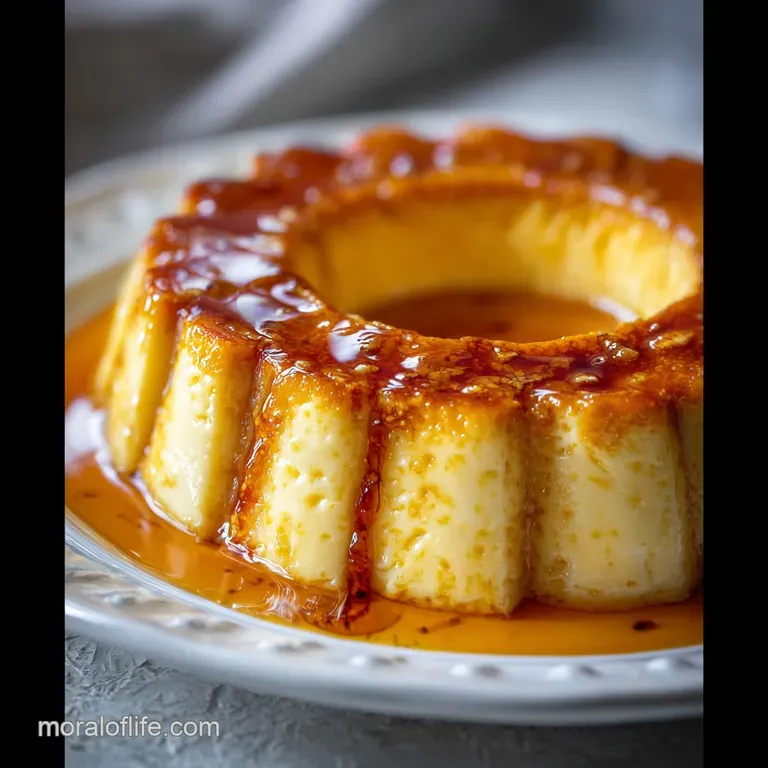
- Time: Active 15 minutes, Passive 1 hours, Total 1 hours 15 mins
- Flavor/Texture Hook: Velvety creaminess with a bittersweet amber finish
- Perfect for: Holiday gatherings, family dinners, or a first time baker's impressive debut
- Master the Silky Texture of Cheese Flan
- Why This Custard Recipe Works
- Component Analysis for Optimal Results
- Gathering Your Essential Ingredients
- Necessary Tools for Success
- Follow These Easy Instructions
- Fixing Common Baking Mistakes
- Simple Swaps and Variations
- Keep Your Dessert Fresh
- Serve Your Masterpiece Beautifully
- Debunking Kitchen Myths
- Cheese Flan Recipe FAQs
- 📝 Recipe Card
Master the Silky Texture of Cheese Flan
The smell of sugar melting in a heavy bottomed pan is one of those sensory triggers that instantly transports me back to my grandmother's kitchen. I remember standing on a stool, watching the white crystals transform into a bubbling, amber liquid gold. It's a bit of a nail biter, isn't it?
One second it's pale, and the next, it's threatening to burn. But that slight bitterness in the dark caramel is exactly what cuts through the intense sweetness of the custard.
When I first tried making this myself, I was terrified of the "weeping" effect where the flan ends up in a puddle of water. I realized that the secret isn't just in the eggs, but in the fat content. Most traditional recipes are lovely, but adding that block of cream cheese was a total revelation for me.
It adds a weight and a silky mouthfeel that makes every bite feel like a true indulgence.
We've all been there, staring through the oven door, wondering if that center jiggle is "done" or "raw." Trust me, I've pulled flans out too early and ended up with a delicious soup. But after dozens of batches and a few collapsed desserts, I've found the exact cues you need.
We're going for a simple mixing process that yields a crowd pleasing result every single time, even if you've never touched a ramekin in your life.
Why This Custard Recipe Works
- Protein Denaturation Control: The inclusion of cream cheese adds structural fats that wrap around the egg proteins, preventing them from bonding too tightly and becoming rubbery.
- Emulsification Stability: Using both evaporated and condensed milk provides a high concentration of milk solids, which creates a much smoother emulsion than regular milk alone.
- Thermal Buffering: The water bath (bain marie) keeps the temperature around the custard at a constant 212°F, ensuring the eggs cook gently without curdling or creating air pockets.
- Sugar Inversion: Adding a touch of water to the dry sugar helps it melt evenly, reducing the risk of crystallization before the caramel reaches its peak flavor.
It reminds me of the silky texture we aim for in our Mac n Cheese recipe, where the balance of fats and liquids is everything for a smooth finish.
| Thickness | Internal Temp | Rest Time | Visual Cue |
|---|---|---|---|
| 1.5 inches | 175°F - 180°F | 4 hours (min) | Gentle wobble in center like Jell O |
| 2 inches | 175°F - 180°F | 6 hours | Sides are firm, center stays slightly soft |
| Individual Ramekins | 170°F | 2 hours | Edges pull away slightly from the glass |
This table helps you decide when to pull the pan out. If you're using a standard round cake pan, that 1.5 inch mark is your sweet spot.
Component Analysis for Optimal Results
| Ingredient | Science Role | Pro Secret |
|---|---|---|
| Granulated Sugar | Caramelization | Don't stir once it starts melting to avoid graininess |
| Cream Cheese | Structural Fat | Must be completely soft to avoid tiny white lumps in the custard |
| Large Eggs | Coagulation | Use room temperature eggs so they emulsify easily with the fats |
| Evaporated Milk | Protein Density | Provides the "cooked milk" flavor without the wateriness of fresh milk |
The interaction between the sugar and the dairy is what creates that iconic syrup after the flan rests. As the flan cools, the moisture from the custard slightly dissolves the hardened caramel base, turning it into a built in sauce.
Gathering Your Essential Ingredients
- 1 cup (200g) Granulated white sugar: Why this? Provides the clean, sweet base for the essential bitter orange caramel topping.
- 1/4 cup (60ml) Water: Why this? Allows the sugar to melt more evenly, preventing premature burning.
- 1 block (8 oz / 226g) Full fat cream cheese, softened: Why this? The key for a dense, cheesecake like stability and velvety texture.
- 1 can (14 oz / 396g) Sweetened condensed milk: Why this? Acts as the primary sweetener and provides a thick, syrupy consistency.
- 1 can (12 oz / 354ml) Evaporated milk: Why this? Adds richness and protein without the excess water found in whole milk.
- 5 Large eggs, room temperature: Why this? The binding agent that sets the custard when heated.
- 1 tsp (5ml) Pure vanilla extract: Why this? Rounds out the dairy flavors with a warm, floral aromatic note.
- 1/4 tsp (1.5g) Fine sea salt: Why this? Essential for balancing the sugar and making the caramel flavor pop.
Chef's Tip: If you forgot to take your cream cheese out of the fridge, cut it into small cubes and microwave it on 10% power for 30 seconds. It needs to be "smearable" to blend perfectly.
Necessary Tools for Success
You don't need a high tech kitchen to pull this off, but a few specific items make it much easier. A heavy bottomed saucepan is non negotiable for the caramel. If the pan is too thin, the heat will be patchy, and you'll end up with burnt spots before the rest of the sugar has even melted.
I personally prefer a stainless steel pan so I can actually see the color change of the sugar.
A blender is your best friend for the custard. While you can use a whisk, a blender ensures the cream cheese is fully integrated. If you don't have a blender, a stand mixer such as a KitchenAid with the paddle attachment works, but you'll want to strain the mixture through a fine mesh sieve afterward to catch any stubborn bits of egg or cheese.
Finally, you'll need a large roasting pan to act as your water bath.
Follow These Easy Instructions
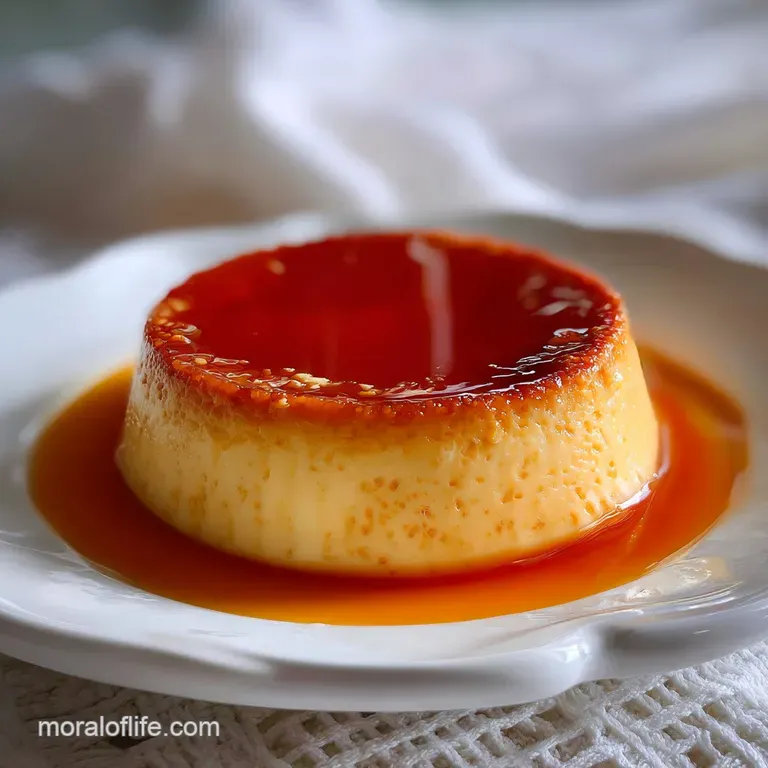
Phase 1: Crafting the Caramel Foundation
- Combine 1 cup sugar and 1/4 cup water in a small saucepan over medium heat.
- Heat without stirring until the mixture turns a deep, reddish amber color. Note: You can swirl the pan gently, but avoid spoons to prevent crystals.
- Immediately pour the hot caramel into a 9 inch round cake pan.
- Tilt the pan quickly to coat the bottom until the caramel hardens and stops moving.
Phase 2: Emulsifying the Custard
- Place the 8 oz softened cream cheese in a blender and pulse until smooth.
- Add the 14 oz condensed milk, 12 oz evaporated milk, 5 eggs, vanilla, and salt.
- Blend on low speed until the mixture is completely uniform and pale yellow. Note: Avoid high speeds to prevent creating too many air bubbles.
- Pour the custard mixture through a fine strainer into the caramel lined pan.
Phase 3: The Gentle Bake
- Place the cake pan inside a larger roasting pan and fill the roasting pan with hot water.
- Bake at 350°F for 1 hour until the edges are set but the center still wobbles.
- Remove from the water bath and let cool on a wire rack for 1 hour.
- Refrigerate for at least 4 hours (preferably overnight) until the flan is completely chilled and firm.
If you love creamy traditional desserts that benefit from a long chill time, you should try my Arroz con Leche Recipe for another classic treat.
Fixing Common Baking Mistakes
One of the most frustrating things is "Swiss Cheese" flan when you cut into it and see tons of tiny holes. This usually happens because the oven was too hot or you over blended the mixture, trapping air inside. If you see those holes, it's still edible, but it won't have that signature velvety feel.
Why Your Custard is Grainy
This usually happens if the eggs scramble. This occurs if your water bath runs dry or if you didn't use room temperature ingredients, causing the fats to clump. Always make sure that water level stays halfway up the side of your cake pan.
| Problem | Root Cause | Solution |
|---|---|---|
| Rubbery Texture | Overbaked or no water bath | Pull from oven when center still jiggles; always use a bain marie |
| Caramel is Stuck | Not enough rest time | Let the flan sit in the fridge for at least 4 hours so the moisture dissolves the sugar |
| Lumpy Custard | Cold cream cheese | Ensure cheese is room temp and strain the mixture before baking |
Common Mistakes Checklist
- ✓ Never stir the sugar with a spoon once it begins to boil; it causes crystallization.
- ✓ Strain the custard through a fine mesh sieve to ensure a professional, smooth finish.
- ✓ Use hot water (not boiling) for your water bath to start the gentle cooking immediately.
- ✓ Tap the filled pan on the counter three times before baking to release large air bubbles.
- ✓ Ensure the cream cheese is "room temperature" (about 70°F) for perfect emulsification.
Simple Swaps and Variations
| Original Ingredient | Substitute | Why It Works |
|---|---|---|
| Evaporated Milk | Full fat Coconut Milk | Same fat content. Note: Adds a distinct tropical flavor profile. |
| Granulated Sugar | Maple Syrup (for caramel) | Different flavor, but requires more reduction time to reach amber stage. |
| Vanilla Extract | Almond Extract | Provides a nutty, marzipan like aroma that pairs well with the cheese. |
To Make It Lighter
You can use Neufchâtel cheese instead of full fat cream cheese. It has about a third less fat but still provides the necessary structure. I don't recommend using fat free evaporated milk, though, as the flan will lose its richness and might feel watery.
For an Autumnal Flavor Profile
Add 1/2 teaspoon of ground cinnamon and a pinch of nutmeg to the blender. The spices settle slightly into the caramel during the bake, creating a warm, cozy version of the classic cheese flan.
Keep Your Dessert Fresh
Storage: Keep the flan in its baking pan, covered tightly with plastic wrap, for up to 5 days in the refrigerator. If you've already inverted it onto a plate, cover it with a deep bowl or a cake dome to prevent it from absorbing fridge odors.
Freezing: I honestly don't recommend freezing flan. The ice crystals break the delicate protein bonds in the custard, and once thawed, it will likely "weep" and become grainy. It's much better to eat it fresh within a few days.
Zero Waste Tip: If you have leftover caramel hardened in your saucepan, don't scrub it! Fill the pan with water and bring it to a boil. The sugar will dissolve into a sweet syrup that you can actually use to sweeten coffee or tea.
Serve Your Masterpiece Beautifully
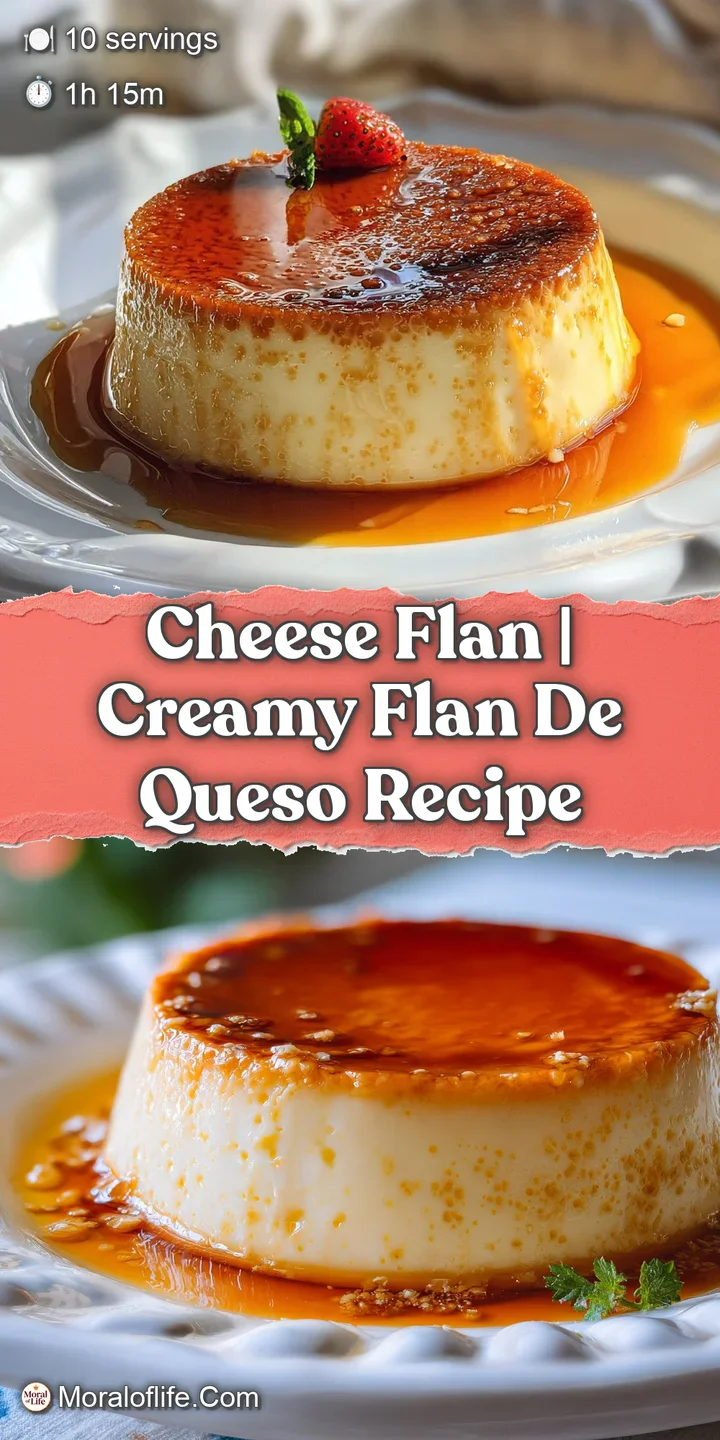
The moment of truth is the "flip." To do this successfully, run a thin knife around the edge of the pan. Place a large, rimmed plate over the top and, in one confident motion, invert it. You'll hear a satisfying "shloop" sound as the flan releases and the caramel sauce cascades down the sides.
This dish is a staple during celebrations, much like our Rosca de Reyes recipe, and deserves a bit of flair. For the best visual appeal, focus on these three color accents:
- Deep Amber (Base): This is your natural caramel. Ensure it's a dark enough amber to provide contrast against the pale custard.
- Vibrant Green (Freshness): Add a few sprigs of fresh mint right before serving. The green against the orange brown is striking.
- Bright Red (Acid): Scatter a handful of fresh raspberries or sliced strawberries around the base. The tartness of the berries balances the heavy sweetness perfectly.
Debunking Kitchen Myths
One common myth is that you must use a pressure cooker for the best flan. While it’s faster, the oven method provides a much more controlled environment for the "low and slow" heat that eggs need to stay tender. A pressure cooker can easily over pressurize the custard, leading to those unwanted air bubbles.
Another misconception is that the caramel needs lemon juice to stay liquid. In this recipe, the moisture from the resting custard does all the work for you. As it sits in the fridge, the sugar naturally turns back into a beautiful, thin syrup without any extra acids needed.
Trust the process and the patience of the chill!
Cheese Flan Recipe FAQs
What is flan de queso?
Yes, it's a rich, creamy dessert. Flan de queso, or cheese flan, is a baked custard dessert similar to traditional flan but enriched with cream cheese, giving it a denser, cheesecake like texture and a decadent flavor.
What is the difference between flan and flan de queso?
The primary difference is the addition of cream cheese. Traditional flan is a pure custard made from eggs, milk, and sugar, resulting in a lighter texture. Flan de queso incorporates cream cheese, which adds significant richness, density, and a subtle tangy note.
What is Puerto Rican flan made of?
Typically, it's eggs, milk (often evaporated and condensed), sugar, and vanilla. Puerto Rican flan is known for its smooth, jiggly texture and deep caramel topping. Some variations might include a hint of citrus zest or cinnamon, but the core ingredients remain consistent for that classic custard base.
How to know when flan de queso is done?
Look for the edges to be set, with a slight wobble in the center. Gently shake the pan; the sides should appear firm, but the middle should still jiggle like jelly. An instant read thermometer should register around 175°F to 180°F.
For perfect results, always use a water bath to ensure gentle, even cooking.
Can I make flan de queso ahead of time?
Yes, it's actually best made ahead. Flan de queso needs at least 4 hours, and ideally overnight, in the refrigerator to fully set and for the caramel to meld into a sauce. This make-ahead aspect is why it's a fantastic dessert for parties, similar to how our Dulce De Leche Cake Recipe: Traditional Mexican Milk Cake benefits from resting time.
Is the caramel always made with just sugar?
Typically, yes, but water is often added. For the caramel topping, granulated sugar is heated until it melts and caramelizes to a deep amber color. Adding a small amount of water to the sugar before heating helps it melt more evenly and reduces the risk of burning, which is a crucial technique for controlling sugar's transformation.
What if my flan de queso has holes in it?
This usually means it was overcooked or baked at too high a temperature. The key to that silky, smooth texture is gentle, consistent heat, typically achieved using a water bath (bain marie). Over blending the custard can also introduce too much air, leading to those undesirable holes. If you enjoyed mastering the smooth texture here, apply the same principle of gentle cooking to achieve perfection in dishes like our Instant Pot Risotto Recipe: No-Stir Velvety Grains.
Cheese Flan
Ingredients:
Instructions:
Nutrition Facts:
| Calories | 368 kcal |
|---|---|
| Protein | 10.1 g |
| Fat | 16.4 g |
| Carbs | 46.3 g |
| Fiber | 0 g |
| Sugar | 43.2 g |
| Sodium | 108 mg |
