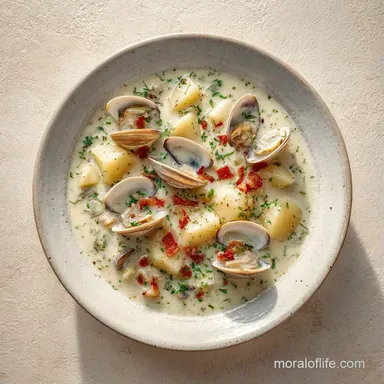
15-Minute New England Clam Chowder: Creamy

- Time: 5 min active + 10 min cook
- Flavor/Texture Hook: Briny, velvety broth with tender potato chunks
- Perfect for: Rainy weeknights or sudden seafood cravings
- 15 Minute Clam Chowder with Potatoes and Cream
- The Secret to the Flavor
- Fast Versus Traditional Methods
- Ingredient Role Analysis
- Necessary Kitchen Gear
- Full Ingredient List
- Cooking Steps and Cues
- Fixing Common Chowder Issues
- Adjusting Recipe Quantities
- Kitchen Myths Debunked
- Storage and Scrap Tips
- Perfect Side Dish Pairings
- Recipe FAQs
- 📝 Recipe Card
15 Minute Clam Chowder with Potatoes and Cream
Listen, there is nothing like that first smell of butter sizzling with onions and celery in a heavy pot. It’s the smell of comfort, especially when the weather turns cold and you just want something that feels like a hug in a bowl.
I remember one Tuesday night when I was absolutely exhausted, craving that salty, creamy New England vibe, but the thought of scrubbing fresh clams for an hour made me want to order takeout instead.
That's when I realized that the "slow and low" rule isn't always the only way to get deep flavor. By using a few smart pantry shortcuts, you can get that same briny depth in a fraction of the time. This 15 Minute Clam Chowder with Potatoes and Cream is the perfect quick and creamy dinner.
It doesn't taste like a "shortcut" meal; it tastes like something that spent the whole afternoon on the stove.
You can expect a soup that is thick but not gloppy, with clams that stay tender instead of turning into rubber bands. We're focusing on building layers of salt, fat, and cream. Right then, let's get into how we make this happen so fast without losing the soul of the dish.
The Secret to the Flavor
To get a soup this rich in such a short window, we have to lean on a few specific mechanisms. We aren't just boiling things together; we are manipulating the starch and the proteins to create a thick, silky mouthfeel quickly.
Starch Shortcut: Using frozen diced potatoes is the real trick here. They are usually blanched before freezing, meaning they are partially cooked and release their starches into the broth much faster than a raw potato would.
Fat Binding: We use a small amount of flour to create a roux with the butter. This binds the clam juice and cream, preventing that annoying separation you sometimes see in quick soups.
Umami Boost: Clams are salty, but adding a dash of Worcestershire sauce adds a fermented, savory depth that mimics the taste of a long simmered seafood stock.
Temperature Control: We add the cream and clams at the very end. High heat kills the delicate texture of canned clams and can break the emulsion of the cream, so keeping it on low is the key to that velvety finish.
Fast Versus Traditional Methods
Most people think a chowder has to take two hours. While traditional methods have their place, the difference in the final bowl is surprisingly small if you use the right ingredients.
| Feature | Fast Method (This Recipe) | Traditional Method | Impact on Taste |
|---|---|---|---|
| Potato Prep | Frozen Diced | Raw, peeled, cubed | Frozen is softer, faster |
| Clam Source | Canned/Jarred | Fresh, steamed in pot | Fresh is saltier, more work |
| Thickening | Small Roux | Potato Mash/Flour | Roux is more stable |
| Total Time | 15 minutes | 90+ minutes | Huge time saving |
Ingredient Role Analysis
Not every ingredient is just there for filler. Each one plays a specific role in making this 15 Minute Clam Chowder with Potatoes and Cream work. If you've ever made a Cream Cheese Alfredo Sauce, you know how important the fat to liquid ratio is for a smooth sauce. This soup follows the same logic.
| Ingredient | Science Role | Pro Secret |
|---|---|---|
| Unsalted Butter | Fat Base | Browns the aromatics for a nuttier taste |
| Frozen Potatoes | Thickening Agent | Releases starch instantly upon heating |
| Clam Juice | Flavor Foundation | Adds the essential "ocean" salinity |
| Heavy Cream | Emulsion/Body | Provides the velvety, coating mouthfeel |
The butter creates the foundation, while the clam juice provides the liquid gold. I always suggest using unsalted butter because canned clams and clam juice vary wildly in salt levels. If you use salted butter, you might end up with a bowl of salt water.
The Worcestershire sauce is the quiet hero here; it bridges the gap between the sweetness of the cream and the brine of the seafood.
Necessary Kitchen Gear
You don't need a professional kitchen for this, but a couple of specific tools make the process smoother.
First, grab a heavy bottomed pot or a Dutch oven. A thin pot will create hot spots, which can cause the cream to scorch or the butter to burn before the onions even soften. You want something that distributes heat evenly across the base.
For stirring, a silicone spatula or a wooden spoon is best. You need to be able to scrape the bottom of the pot to make sure the flour doesn't clump up or burn. A whisk is great for the final stage when adding the cream, as it helps incorporate the liquid without leaving streaks.
Finally, have a fine mesh strainer handy if you're using fresh clams, though for this version, the cans do the work for you. Just make sure you have a bowl to catch the juices since we'll be using every drop of that liquid.
Full Ingredient List

Here is exactly what you need. I've converted these to metric for precision, as that's how I've found the best results in my own kitchen.
- Unsalted Butter: 42g (3 tbsp) Why this? Provides a rich, nutty base for the vegetables.
- Yellow Onion: 75g, finely diced (1/2 cup) Why this? Adds a subtle sweetness to balance the salt.
- Celery: 30g, finely diced (1/4 cup) Why this? Adds an earthy, aromatic crunch.
- Garlic: 1 clove, minced Why this? Pungency that cuts through the heavy cream.
- Frozen Diced Potatoes: 300g (2 cups) Why this? Pre cooked and releases starch quickly.
- Chopped Clams: 2 cans (410g each) Why this? Consistent quality and zero prep time.
- Clam Juice: 240ml (1 cup) Why this? The primary source of briny flavor.
- All purpose Flour: 8g (1 tbsp) Why this? Stabilizes the cream and thickens the broth.
- Heavy Cream: 240ml (1 cup) Why this? Creates the signature velvety texture.
- Dried Thyme: 1/2 tsp Why this? Adds a woody, herbal note.
- Salt: 1/4 tsp (adjust to taste) Why this? Enhances all other flavors.
- Black Pepper: 1/4 tsp Why this? Adds a tiny bit of heat.
- Worcestershire Sauce: 5ml (1 tsp) Why this? Deepens the savory, umami profile.
Ingredient Swaps
Sometimes the pantry is bare, or you have dietary needs. Here is how to pivot without ruining the dish.
| Original Ingredient | Substitute | Why It Works |
|---|---|---|
| Heavy Cream | Half and Half | Lighter feel. Note: Thinner consistency |
| Frozen Potatoes | Canned Diced Potatoes | Same speed. Note: Often softer texture |
| Dried Thyme | Dried Oregano | Similar herbal profile. Note: Slightly more "pizza" scent |
| Yellow Onion | Shallots | More refined, sweeter taste. Note: Use 3-4 large shallots |
Cooking Steps and Cues
Let's get this on the stove. This 15 Minute Clam Chowder with Potatoes and Cream moves fast, so have everything measured and ready before you turn on the heat.
Phase 1: Sautéing the Aromatics
- Melt the 42g of butter over medium heat in your pot.
- Add the diced onion and celery. Stir frequently for about 3 minutes until the onions are translucent and the celery has softened. Note: Don't let them brown; we want a pale, sweet base.
- Stir in the minced garlic and cook for 30 seconds until it smells fragrant.
Phase 2: Building the Base
- Sprinkle the 8g of flour over the vegetables. Stir for 1 minute until the raw flour scent disappears. Note: This "cooks" the flour so your soup doesn't taste like paste.
- Pour in the 240ml of clam juice and the 5ml of Worcestershire sauce.
- Stir in the 300g of frozen potatoes and the 1/2 tsp of thyme.
- Bring the mixture to a simmer for 5 minutes until the potatoes are tender and the liquid looks slightly thickened.
Phase 3: The Velvety Finish
- Reduce the heat to low. This is the most important part.
- Stir in the 240ml of heavy cream and the chopped clams (including the liquid from the cans).
- Heat through for 2 minutes until the soup is steaming but not boiling. Note: If it boils, the cream might separate and the clams will get rubbery.
- Stir in the salt and pepper. Taste it first, the clams are already salty!
Chef's Tip: For an extra punch of flavor, add a tiny pinch of smoked paprika or a dash of hot sauce right before serving. It doesn't change the profile, but it wakes up the cream.
Fixing Common Chowder Issues
Even with a simple recipe, things can go sideways. Usually, it's a temperature issue.
Broken Cream Sauce Fixes
If you see little beads of fat floating on top, your cream has "broken." This happens if the heat was too high. You can usually fix this by whisking in a teaspoon of cornstarch mixed with a little cold water, then heating very gently.
Rubbery Clam Texture
Canned clams are already cooked. If you boil them for 5-10 minutes, they shrink and toughen. Always add them at the very end. If they're already rubbery, there's no way to reverse it, but you can mask it by cutting them into smaller pieces.
Soup is Too Thin
If your potatoes weren't starchy enough, the soup might feel more like a broth. Let it simmer for an extra 2 minutes before adding the cream, or mash a few of the potato chunks against the side of the pot with your spoon to release more starch.
| Problem | Root Cause | Solution |
|---|---|---|
| Grainy Texture | Flour not cooked out | Cook roux 1 min longer next time |
| Overly Salty | Too much clam juice/salt | Stir in extra splash of heavy cream |
| Bland Taste | Lacking acidity/depth | Add a drop of lemon juice or more Worcestershire |
Common Mistakes Checklist
- ✓ Avoid boiling the soup after the cream goes in.
- ✓ Don't skip the flour; it prevents the broth from separating.
- ✓ Tastetest for salt only AFTER adding the clams.
- ✓ Use a heavy pot to prevent the bottom from scorching.
- ✓ Keep heat low during the final 2 minutes of cooking.
Adjusting Recipe Quantities
If you're feeding a crowd or just yourself, you can scale this. But be careful with the seasonings.
Scaling Down (Half Batch) Use a smaller saucepan to keep the liquid from evaporating too quickly. Reduce the cooking time for the aromatics by about 20%. For the garlic, use half a clove or a small pinch of garlic powder.
Scaling Up (Double or Triple Batch) When doubling the recipe, don't double the salt and thyme immediately. Start with 1.5x the amount, then taste and adjust. Liquids usually reduce slightly less in larger pots, so you might need to simmer the base for an extra 3 minutes before adding the cream to get the thickness right.
If you're making a massive pot of this, I highly recommend working in batches for the initial sauté. If you crowd the pot with too many onions, they'll steam instead of sauté, and you'll lose that sweet, caramelized depth.
If you enjoy the creamy consistency of this dish, you might also like my Homemade Loaded Potato Soup, which uses a similar starch binding technique but with a heartier, earthier flavor profile.
Kitchen Myths Debunked
There are a few things people say about seafood soups that just aren't true.
Myth: Canned clams are tasteless. The truth is that high-quality canned clams are often packed in their own natural juices, which preserves the briny essence. While fresh is great, the difference in a creamy chowder is minimal because the cream and butter carry most of the flavor.
Myth: You must mash potatoes to thicken chowder. While mashing helps, a proper roux (butter and flour) provides a more stable emulsion. This prevents the soup from becoming a "potato paste" and keeps the broth silky.
Myth: Seafood soup must simmer for hours to be "authentic." Authenticity is about flavor, not suffering. By using frozen, blanched potatoes, we achieve the same texture in 15 minutes that a raw potato takes 30 minutes to reach.
Storage and Scrap Tips
Since this contains heavy cream and seafood, you have to be careful with how you store it.
Fridge Storage Store your chowder in an airtight container for up to 3 days. The potatoes will continue to absorb liquid as they sit, so you'll notice the soup gets thicker in the fridge.
Freezing Guidelines Honestly, I don't recommend freezing this. The heavy cream tends to separate and become grainy when thawed, and the clams can lose their texture. If you must freeze it, freeze the base (everything except the cream and clams) and add those fresh when you reheat.
Reheating Method Never microwave this on high. Heat it on the stovetop over low medium heat. If it's too thick, stir in a tablespoon of milk or water to loosen it up. Stir gently so you don't break the potato chunks.
Zero Waste Tips Don't toss the celery leaves! Chop them finely and use them as a garnish on top of the bowl for a pop of color and a fresh, herbal hit. If you have leftover clam juice in the can, freeze it in ice cube trays.
You can drop one of those cubes into a pasta sauce or a risotto later for an instant seafood boost.
Perfect Side Dish Pairings
A bowl of 15 Minute Clam Chowder with Potatoes and Cream is filling, but the right sides make it a full meal.
The Classic Crunch Oyster crackers are the standard for a reason. The saltiness and the "shatter" of the cracker contrast perfectly with the velvety soup. If you can't find them, toasted sourdough cubes with a bit of garlic butter are a brilliant alternative.
Fresh Contrast Since the soup is very rich and heavy, you need something acidic to cut through the fat. A simple arugula salad with a lemon olive oil dressing or a crisp apple and cabbage slaw works wonders. The brightness of the lemon cleanses your palate between spoonfuls.
Bread Pairings A warm, crusty baguette is a must for mopping up the last bits of cream from the bowl. If you want something more indulgent, a piece of buttery cornbread adds a sweetness that complements the brine of the clams.
Trust me, once you realize you can get this level of comfort in 15 minutes, you'll never go back to the long simmer versions on a weeknight. It's fast, it's bold, and it hits every single craving. Let's get cooking!
Recipe FAQs
How to make this 15-minute clam chowder at home?
Sauté onion and celery in butter, then stir in flour, clam juice, and potatoes. Simmer for 12 minutes before stirring in heavy cream and clams for the final 2 minutes on low heat.
What is this clam chowder made of?
It is a creamy seafood stew made with clams and potatoes. The base consists of butter, onion, celery, garlic, flour, clam juice, heavy cream, thyme, and Worcestershire sauce.
How to cook canned clams without making them rubbery?
Stir them in during the last 2 minutes of cooking. Keep the heat on low and do not let the soup reach a rolling boil to ensure the clams remain tender.
Is it true that New England clam chowder is traditionally only sold on Fridays?
No, this is a common misconception. While historically tied to meatless Friday customs, this quick version is designed for any day of the week.
How can you make different types of clam chowder?
Modify the base ingredients or seasonings. If you enjoyed mastering the cream integration here, see how the same principle works in our creamy tomato garlic pasta.
Which state is most known for this style of clam chowder?
Massachusetts is widely recognized for New England chowder. This regional style is characterized by the creamy base and potatoes used in this recipe.
Can this chowder be frozen for future meals?
No, freezing is not recommended. The heavy cream tends to separate and become grainy, while the clams lose their ideal texture when thawed.
15 Minute Clam Chowder for 4 Servings