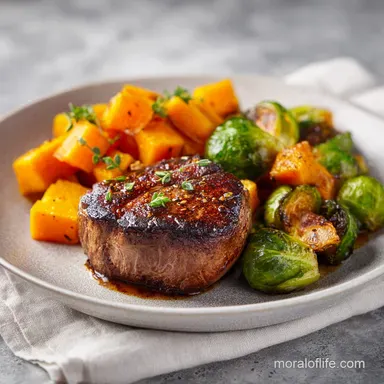
Garlic Butter Steak: Roasted Fall Vegetables
- Time:15 minutes active + 30 minutes cooking = Total 45 minutes
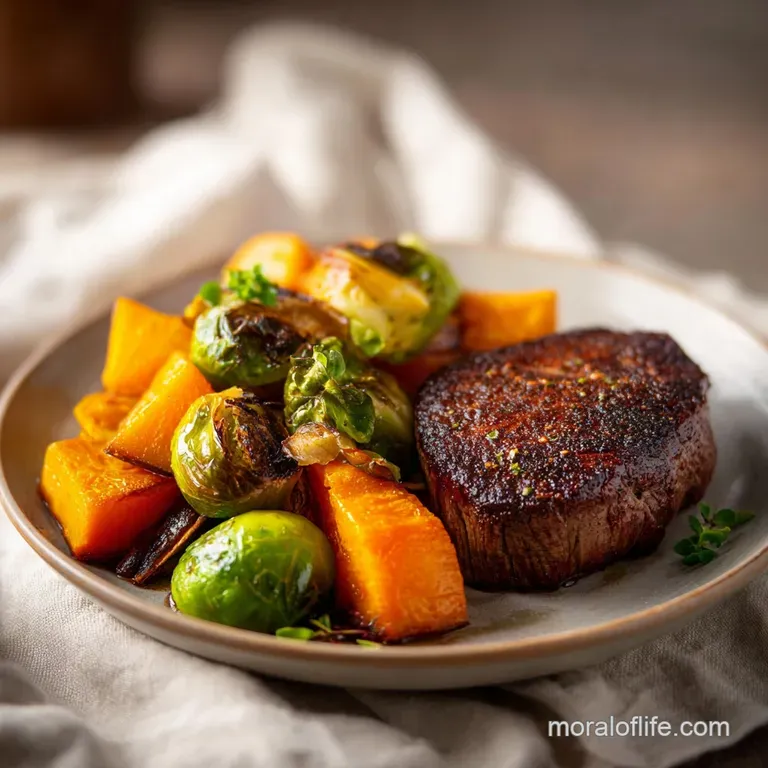
- Flavor/Texture Hook: Velvety butter basted steak paired with shatter crispy sprout edges
- Perfect for: A dependable weeknight dinner that feels like a treat
Garlic Butter Steak with Brussels Sprouts and Butternut Squash
That first hiss when the sirloin hits the smoking hot oil is practically a dinner bell in my house. I remember the first time I tried to pull this meal together on a rainy Tuesday.
I was convinced I could just throw everything in the oven and call it a day, but the result was a tragedy of mushy sprouts and a steak that looked more like it had been steamed than seared. It was a humbling moment in my kitchen, but it taught me that the magic happens in the contrast of textures.
The real win came when I started treating the vegetables and the protein as two different rhythms of the same song. The squash needs time to get those brown, sugary edges, while the steak needs a violent, over high heat sear to get that deep crust.
When you combine the two with a final baste of garlic butter, everything just clicks.
This Garlic Butter Steak with Brussels Sprouts and Butternut Squash is the ultimate one pan dinner recipe. It’s the kind of meal that makes your kitchen smell like a professional bistro, but it doesn't require you to spend four hours scrubbing pots.
You'll get a meal that's hearty, colorful, and honestly, just really satisfying.
Why This Recipe Works
I've spent a lot of time wondering why some home cooked steaks feel "off" compared to restaurant ones. It usually comes down to how we handle heat and moisture.
- Surface Dryness: Patting the meat dry prevents the steak from steaming in its own juices, which allows it to brown quickly.
- over High heat Roasting: 400°F (200°C) is the sweet spot where the natural sugars in the butternut squash caramelize without burning the sprouts.
- Fat Based Flavor: Butter acts as a vehicle for the garlic and herbs, pushing those aromatic oils directly into the meat during the final minutes.
- Resting Period: Letting the meat sit allows the fibers to relax, so the juices stay inside the steak instead of running all over your plate.
DIVTABLE_0
Component Analysis
Not every ingredient is just "filler." There's a reason we use these specific items to get that professional finish.
| Ingredient | Science Role | Pro Secret |
|---|---|---|
| Sirloin Steak | Protein Base | Choose a cut with slight marbling for better juice retention. |
| Unsalted Butter | Flavor Carrier | Use unsalted so you can control the seasoning of the baste. |
| Butternut Squash | Natural Sweetener | Cut into uniform 1 inch cubes to ensure they all finish at once. |
| Fresh Rosemary | Aromatic Oil | Bruise the leaves slightly before adding to release more scent. |
Gear for the Job
You don't need a fancy kitchen to make this happen, but a few specific tools make the process a lot smoother. I always use a heavy bottomed skillet, like a cast iron or stainless steel pan, because they hold heat way better than non stick. If your pan cools down the second the meat hits it, you'll lose that crust.
For the vegetables, a large rimmed baking sheet is non negotiable. If you crowd the sprouts and squash, they'll release steam and get soggy instead of roasting. I also recommend using parchment paper; it prevents the squash from sticking and makes cleanup a breeze.
A meat thermometer is also a dependable tool here, as it takes the guesswork out of "medium rare."
Bringing It Together
Let's crack on with the actual cooking. The flow here is key: get the oven working first, then handle the steak while the veggies are roasting.
Phase 1: The Oven Roast
- Preheat your oven to 400°F (200°C) and line a baking sheet with parchment paper. Note: Preheating ensures the veggies sear immediately upon contact.
- Toss your cubed butternut squash and halved Brussels sprouts with 2 tbsp olive oil, salt, pepper, and red pepper flakes.
- Spread the vegetables in a single layer on the baking sheet. Roast for 20-25 minutes, tossing them halfway through, until the edges are charred and the squash is tender.
Phase 2: The over High heat Sear
- Pat your sirloin steaks completely dry with paper towels and season them generously with salt and pepper. Note: Moisture is the enemy of a good crust.
- Heat 1 tbsp olive oil in your skillet over medium high heat until it is just smoking.
- Sear the steaks for 3-5 minutes per side for medium rare. According to the USDA food safety guidelines, ensuring the internal temperature reaches the desired level is key for both safety and texture.
- Remove the steaks from the pan and let them rest on a plate.
Phase 3: The Garlic Butter Finish
- Reduce the skillet heat to medium. Add the butter, smashed garlic, rosemary, and thyme.
- Once the butter foams, tilt the pan and spoon that infused butter over the resting steaks for 2 minutes. Note: This adds a velvety finish and deeps the garlic flavor.
- Plate the steak alongside the roasted vegetables and drizzle any remaining garlic butter over the top.
Troubleshooting Guide
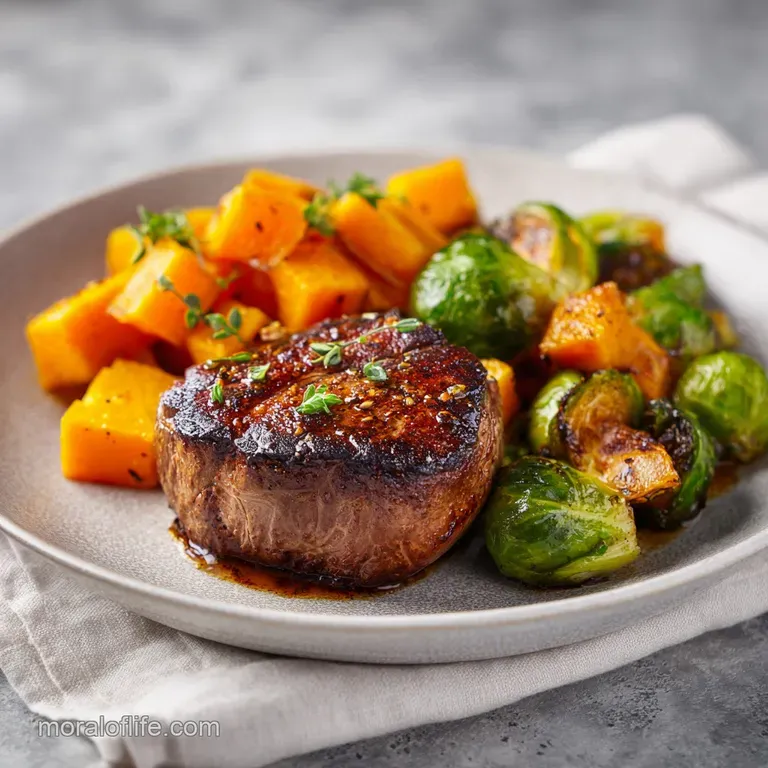
Even the best of us hit a snag sometimes. If your dinner isn't looking quite right, it's usually a quick fix.
| Issue | Solution |
|---|---|
| Why Your Sprouts are Mushy | This almost always happens because the baking sheet was too crowded. When vegetables are piled on top of each other, they steam instead of roast. Give them space to breathe. |
| Why Your Steak is Gray | If your steak looks gray instead of brown, your pan wasn't hot enough. The oil should be shimmering or just starting to smoke before the meat hits the surface. |
| Why the Garlic Burnt | Garlic burns quickly at high heat. That's why we reduce the heat to medium before adding the butter and garlic. If the butter turns dark brown too fast, pull the pan off the heat immediately. |
Common Mistakes Checklist
- ✓ Did you pat the steak dry with paper towels?
- ✓ Is there enough space between the vegetables on the tray?
- ✓ Did you let the meat rest before slicing?
- ✓ Did you reduce the heat before adding the garlic butter?
Variations & Substitutions
I love this recipe because it's flexible. Depending on what's in your fridge, you can swap a few things without ruining the vibe. If you're in the mood for something even creamier, you could serve this with a side of four cheese garlic sauce drizzled over the vegetables.
| Original Ingredient | Substitute | Why It Works |
|---|---|---|
| Sirloin Steak | Ribeye or New York Strip | Higher fat content. Note: Will be richer and juicier |
| Butternut Squash | Sweet Potato | Similar sugar profile. Note: Slightly softer texture |
| Brussels Sprouts | Broccoli Florets | Similar roasting time. Note: Less bitter than sprouts |
| Fresh Rosemary | Dried Rosemary (1/3 amount) | Similar flavor. Note: Less aromatic and "bright" |
But what if you want to change the whole feel of the meal? For a more "autumnal" twist, add a teaspoon of maple syrup to the vegetable toss. If you're looking for something lower carb, you can swap the squash for cauliflower, though you'll lose that sweet contrast.
If you're scaling this up for a crowd, don't try to cook 4 lbs of steak in one pan. Work in batches. If you crowd the pan, the temperature drops, and you'll end up boiling your meat. For the vegetables, just use two baking sheets instead of one to keep that shatter crispy texture.
Dish Myths
There are a few things people always say about steak that just aren't true. Let's clear them up.
The "Sealing" Myth: You'll often hear that searing "seals in the juices." This is a total myth. Searing actually causes more moisture loss, but we do it because the flavor created by the browning is worth the trade off.
The "Room Temp" Myth: Some say you must let steak sit out for an hour before cooking. In reality, for a steak of this thickness, 15-30 minutes is plenty, and the high heat of the pan does most of the work anyway.
Storage Guidelines
If you have leftovers, you're in luck because this actually tastes great the next day, provided you reheat it correctly.
Fridge: Store the steak and vegetables in separate airtight containers for up to 3 days. Keep them chilled at 4°C.
Freezer: I don't recommend freezing the roasted vegetables as they lose their snap. However, the steak can be frozen for up to 2 months, though the texture will change slightly.
Reheating: To avoid overcooking the meat, don't use the microwave on high. Instead, place the steak in a pan over medium heat with a tiny knob of butter and cover it with a lid for 2-3 minutes.
For the vegetables, pop them back in the oven at 200°C for about 5-8 minutes to bring back that crispness.
Zero Waste Tip: Don't throw away the butternut squash peels! If you peel the squash with a vegetable peeler, you can toss the peels in a bit of oil and salt and roast them right along with the vegetables for a salty, crunchy snack. Also, if you have leftover garlic butter in the pan, use it to toast some crusty bread. If you're looking for another way to use garlic, my garlic bread grilled cheese is a great way to use up remaining ingredients.
Perfect Complements
While this Garlic Butter Steak with Brussels Sprouts and Butternut Squash is a full meal on its own, sometimes you want a little something extra on the side.
Since this dish is quite rich and savory, I recommend pairing it with something acidic or light. A simple arugula salad with a lemon vinaigrette cuts through the butter beautifully. If you want a starch, a small scoop of quinoa or wild rice works well to soak up that extra garlic butter.
For a drink, a bold red wine like a Cabernet Sauvignon matches the intensity of the sirloin. If you're skipping the alcohol, a sparkling water with a squeeze of fresh lime provides a refreshing contrast to the earthy roasted notes. This meal is all about balance, so keep your sides light and your flavors bright.
High in Sodium
840 mg 840 mg of sodium per serving (37% 37% of daily value)
The American Heart Association recommends a daily sodium limit of 2,300 mg for most adults to maintain heart health.
Tips to Reduce Sodium
-
Reduce Added Salt-25%
Cut the 1 tsp of kosher salt by half or replace it with a salt-free seasoning blend to significantly lower the sodium content.
-
Use Citrus Acid-15%
Squeeze fresh lemon juice over the butternut squash and brussels sprouts after roasting to provide a bright, salty-like flavor punch.
-
Maximize Aromatics-10%
Increase the amount of fresh garlic or add a pinch of smoked paprika to create a bolder flavor profile that reduces the craving for salt.
-
Enhance Fresh Herbs
Increase the quantity of fresh rosemary and thyme to add aromatic depth and savory notes to the steak and vegetables.
Recipe FAQs
Why are my Brussels sprouts mushy instead of charred?
Avoid crowding the baking sheet. When vegetables are piled on top of each other, they steam instead of roasting. Spread them in a single layer to allow air circulation.
Why is my steak gray instead of brown?
Heat your oil until it is just smoking. If the pan is not hot enough, the meat will boil in its own juices rather than searing.
How to get a perfect crust on the steak?
Pat the meat completely dry with paper towels. Moisture on the surface creates steam, which prevents the meat from browning properly.
Can I use Ribeye or New York Strip instead of sirloin?
Yes, these are excellent alternatives. They have a higher fat content, making the dish richer. If you enjoy preparing high-protein centerpieces, see how we handle bulk portions in our homemade seafood boil.
Is it true that resting the steak is optional?
No, this is a common misconception. Resting allows the juices to redistribute; cutting too soon causes them to run out, leaving the meat dry.
How to store and reheat leftovers?
Store in separate airtight containers for up to 3 days. Reheat the steak in a pan over medium heat with a small amount of butter to prevent overcooking.
How to ensure the vegetables roast evenly?
Cut the butternut squash into 1-inch pieces. Toss them with olive oil and roast at 400°F for 20–25 minutes, tossing halfway through for a uniform char.
Garlic Butter Steak for 4 Servings