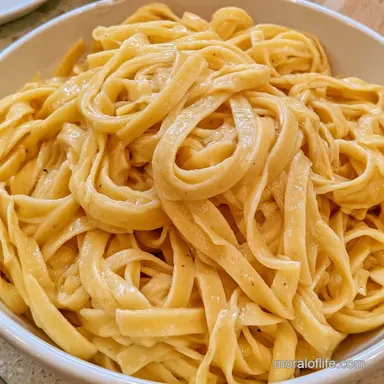
Homemade Egg Noodle Pasta with Fresh Dough

- Time: 30 min active + 30 min resting + 5 min cooking
- Flavor & Texture: Rich, buttery, and tender
- Perfect for: A cozy Sunday dinner
There is nothing quite like watching golden ribbons drift to the surface of salty, boiling water. As they cook, the savory aroma of fresh eggs wafts through the entire kitchen.
This egg noodle pasta is uncomplicated, relying on a few basic pantry ingredients to achieve a luxurious, rustic quality.
The result is a silky, tender pasta that grips sauces far more effectively than boxed varieties. It's a great way to elevate a weekday meal into something truly memorable.
Why This Method Works
- Room Temp Eggs: They blend into the flour faster, meaning you spend less time fighting with the dough.
- Resting Period: Giving the dough 30 minutes helps it relax so it snaps back less when you roll it thin.
Fresh vs Dried Options
| Type | Cook Time | Texture | Best For |
|---|---|---|---|
| Fresh | 3-5 min | Tender | Rich, heavy sauces |
| Dried | 8-12 min | Firmer | Quick weekday meals |
The Basics
| Ingredient | Role | Substitutes |
|---|---|---|
| All-Purpose Flour | Structure | Semolina (adds a grittier texture) |
| Olive Oil | Smoothness | Melted butter (for a richer taste) |
Ingredients
- 2 cups (250g) all-purpose flour The goal: Balanced protein for a tender bite
- 3 large (150g) eggs The goal: Provides the golden color and richness
- 1 tsp (5g) fine sea salt The goal: Enhances the flour's natural taste
- 1 tbsp (15ml) olive oil The goal: Keeps the dough smooth
- 2 tbsp (30ml) water The goal: Adjusts hydration if flour is too dry
Tools Needed
You don't need a fancy setup. A rolling pin and a sharp knife work just fine, though a pasta machine like a KitchenAid makes the rolling phase faster.
Cooking Steps
Mixing the Flour and Eggs
Create a mound of 2 cups (250g) all-purpose flour on a work surface and carve a wide well in the center. Crack 3 large (150g) eggs into the center and add 1 tsp (5g) fine sea salt and 1 tbsp (15ml) olive oil.
Using a fork, gently whisk the eggs, gradually incorporating flour from the inner walls of the well until a shaggy, thick paste forms.
Kneading for Elasticity
Fold the remaining flour into the mixture until a dough forms. Knead the dough by pushing it away with the heels of your hands, folding it back, and rotating for 5–8 minutes until the surface is smooth and the dough bounces back slowly when poked.
If the dough feels dry and crumbly, add water 1 tablespoon at a time, kneading for one minute after each addition until supple.

Resting the Dough
Wrap the dough tightly in plastic wrap or cover it with an inverted bowl and let it sit at room temperature for 30 minutes to relax the gluten.
Rolling and Cutting
Divide the dough into four equal pieces. Using a pasta machine or rolling pin, flatten the dough into thin sheets until they are nearly translucent. Use the cutter attachment or a knife to slice the sheets into the desired width. Dust the finished noodles with a pinch of flour to prevent sticking.

Boiling to Perfection
Drop the noodles into a pot of heavily salted boiling water. Cook for 3–5 minutes until the noodles float to the surface and feel tender but firm to the bite.

If Something Goes Wrong
If your dough feels like sand and won't clump together, it just needs a bit more moisture. Add water slowly. If the noodles stick together after you cut them, you likely didn't use enough flour for dusting.
Avoid over-kneading. If you push too hard for too long, the pasta can get a rubbery snap. Stick to the timer and let it rest.
Fixing Dry Dough
Add water one tablespoon at a time. Knead for one minute after each addition until the dough is supple.
Stopping Sticky Noodles
Dust the sheets liberally with flour before slicing. Don't overcrowd the boiling pot.
Avoiding Rubber Texture
Ensure you let the dough rest for the full 30 minutes. This relaxes the proteins.
| Problem | Root Cause | Solution |
|---|---|---|
| Dry dough | Not enough moisture | Add water 1 tbsp at a time |
| Sticky noodles | Too little flour | Dust liberally before cutting |
| Rubbery bite | Over-kneaded | Rest dough for full 30 min |
Twists and Swaps
You can easily change the flavor. I like adding a teaspoon of garlic powder to the flour for a savory base. For a colorful look, puree a handful of spinach and mix it into the eggs before adding them to the flour.
Making Pasta with Egg Noodles homemade is also a great start for a hearty meal with ground beef and a brown gravy.
Keeping It Fresh
Keep uncooked noodles in a sealed tub; they will stay fresh in the refrigerator for 3 days. Dust them well with flour so they don't clump.
For longer storage, arrange the noodles in nests on a baking sheet and freeze until solid before transferring them to a freezer bag. They last 3 months. Do not thaw frozen egg noodle pasta; simply drop them into boiling water for an additional 1–2 minutes.
Serving Ideas

Opt for a simple finish using melted butter, fresh parsley, and a sprinkle of parmesan. For a more decadent pairing, try this Cream Cheese Alfredo Sauce, which clings perfectly to the pasta's fresh ridges.
Good to Know
Can egg noodles be used for pasta?
Yes, they are a classic variety of pasta. The addition of eggs creates a richer flavor and a more tender texture than simple water-and-flour doughs.
What dishes pair well with egg noodle pasta?
Rich, creamy, or heavy sauces work best. These noodles hold onto thick coatings beautifully, such as a four cheese garlic sauce.
Is this type of pasta called something else?
Yes, they are often simply called egg noodles. In some regions, they are referred to as pasta all'uovo when made in the Italian tradition.
Does egg noodle pasta have more nutrition than regular pasta?
Yes, it generally contains more protein. The eggs provide additional nutrients and a denser structure compared to standard semolina pasta.
How to serve egg noodles simply?
Toss the cooked noodles with a bit of olive oil and salt. This highlights the rich flavor of the fresh eggs without overpowering the dish.
Are these similar to Italian pasta?
Yes, the ingredients and method are very similar to tagliatelle. The main difference is often the flour, as some Italian versions use semolina for a firmer bite.
Tender Homemade Egg Noodle Pasta