Velvety Homemade Orange Julius
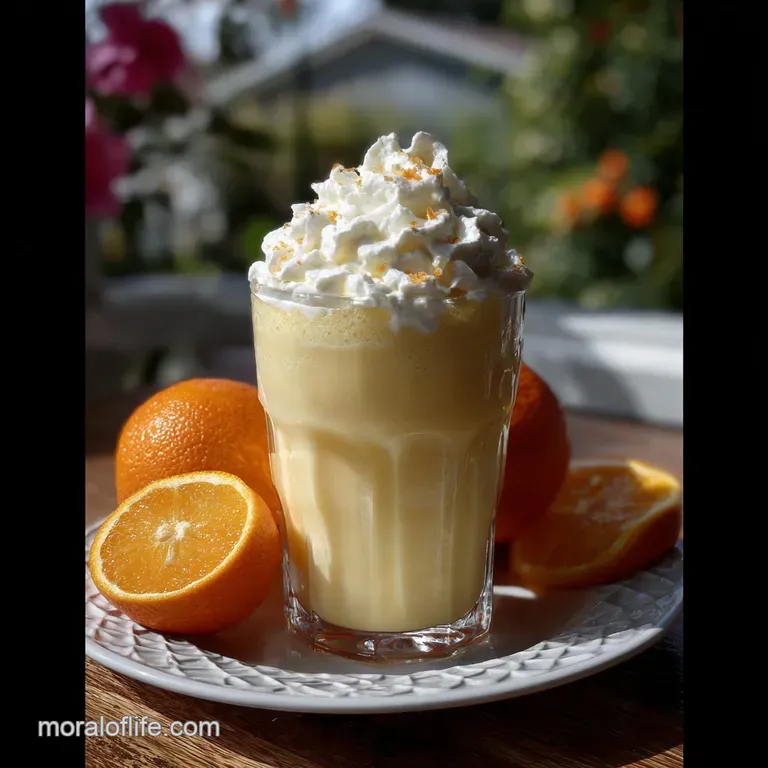
- Effort/Time: 5 minutes / Minimal complexity
- Flavor Hook: Bright, citrus-forward sweetness with a creamy, vanilla-bean finish
- Perfect for: Weekend brunches, nostalgic treats, or quick-prep party refreshments that evoke a classic Orange Julius experience
- Recreating the Iconic Velvety Orange Julius Experience
- The Science of Protein-Stabilized Citrus Emulsions
- Precision Metrics for First-Try Success
- The Essential Elements for a Frosty crowd-pleasing Treat
- High-Velocity Tools for Maximum Aeration
- The Atomic Protocol for a Frothy Finish
- Why Your Drink Separates or Lacks Body
- Flavor Architecture and Dietary Adaptations
- ⚗️ The Scaling Lab: The Physics of Quantity
- Common Myths
- Managing Thermal Integrity and Texture Decay
- Occasion-Ready Presentation and Garnishing Strategies
- Recipe FAQs
- 📝 Recipe Card
Recreating the Iconic Velvety Orange Julius Experience
There is nothing worse than craving a frosty, citrus bright treat only to end up with a watery, curdled mess that separates before you even find a straw. I once attempted to "health ify" this by using fresh squeezed juice and skim milk, but the result was a thin, grainy liquid that lacked any of the signature frothy body I remembered from the mall.
It was a waste of expensive citrus and a total texture failure that ended up in the sink, proving that the authentic Orange Julius flavor profile requires specific chemistry.
I destroyed at least five batches trying to figure out why my home version felt like a sad smoothie instead of a thick, velvety cloud. I tried adding more ice, which just diluted the flavor, and I tried more sugar, which just made it cloying.
It wasn't until I looked into the physics of foam stability that I realized I was missing the structural "glue" that keeps the air bubbles trapped within the liquid required for a true Orange Julius.
The secret to a successful Orange Julius isn't the blender speed; it's protein induced emulsification. By incorporating egg white powder, we create a protein network that coats the tiny air bubbles, preventing them from collapsing when they hit the acidic orange juice.
The result is a drink that stays aerated and thick, providing a lush mouthfeel that lingers without the icy grit of a standard slushie the signature characteristic of a great Orange Julius.
The Science of Protein Stabilized Citrus Emulsions
- Protein Aeration: The egg white powder acts as a surfactant, reducing surface tension and allowing air to be whipped into stable, microscopic bubbles, crucial for the airy texture of an Orange Julius.
- Cryoconcentration: Using frozen orange juice concentrate provides a dense, 80% sugar and acid base that lowers the freezing point, ensuring the ice remains in a "slush" state rather than melting into water, just like the original preparation.
- Lactose Buffering: The fats and proteins in whole milk neutralize the sharp bite of citric acid, creating a mellow, rounded flavor profile through fat-soluble flavor delivery that defines the creamy nature of the Orange Julius.
The Science of Why it Works
Egg white proteins denature and uncurl during high speed blending, forming a structural matrix that traps air. This prevents the heavy citrus syrup from sinking and ensures a homogenous, velvety suspension, which is the hallmark of a premium Orange Julius.
Precision Metrics for First Try Success
| Feature | Specification |
|---|---|
| Total Prep Time | 5 minutes |
| Mixing Method | High velocity pulse and sustain |
| Servings | 2 servings |
| Target Texture | Soft serve foam / Micro shattered ice |
| Serving Temperature | -1°C to 1°C (30°F to 34°F) |
The Essential Elements for a Frosty crowd pleasing Treat
To get the exact flavor profile, use specific brands like Minute Maid Frozen Orange Juice Concentrate and Nielsen Massey Pure Vanilla Extract. The quality of your vanilla acts as the bridge between the sharp citrus and the creamy milk, perfecting the classic Orange Julius taste.
- 6 oz frozen orange juice concentrateWhy this? Provides intense flavor and sugar density without excess water volume.
- 1 cup whole milkWhy this? The 3.25% fat content is necessary for a rich, velvety mouthfeel, essential for this Orange Julius.
- 1/2 cup granulated white sugarWhy this? Essential for lowering the freezing point and achieving a soft slush.
- 1 tsp pure vanilla extract
- 1 cup water
- 2 cups ice cubes
- 1 tbsp egg white powderWhy this? Stabilizes the foam structure and prevents immediate separation, making your drink a success.
Ingredient Chemistry Breakdown
| Ingredient | Chemical/Physical Role (Science) | The Pro Secret (Why This Matters) |
|---|---|---|
| Frozen Concentrate | High osmotic pressure/Acid source | Prevents the drink from becoming a solid block of ice by interfering with crystal formation. |
| Egg White Powder | Protein based surfactant | Provides the "Julius" froth that doesn't collapse; much safer than raw egg whites for making this Orange Julius. |
| Granulated Sugar | Solute for freezing point depression | Keeps the ice crystals "shatter soft" rather than hard and crunchy. |
| Whole Milk | Lipid based emulsification | Coats the tongue to balance the high acidity of the orange concentrate. |
High Velocity Tools for Maximum Aeration
For the best results, a high power blender like a Vitamix 5200 or a Ninja Professional Plus is required. The blades must move fast enough to shatter the ice into "micro shards" while simultaneously whipping the egg white proteins into a stable foam.
If your blender is low-wattage, you may end up with "pebble ice" rather than a smooth emulsion needed for the perfect Orange Julius.
Chef's Tip: Chill your blender jar in the freezer for 10 minutes before starting. A cold jar prevents the friction of the blades from melting your ice too quickly, preserving the "shatter" texture of the drink so you achieve that famous Orange Julius consistency.
The Atomic Protocol for a Frothy Finish
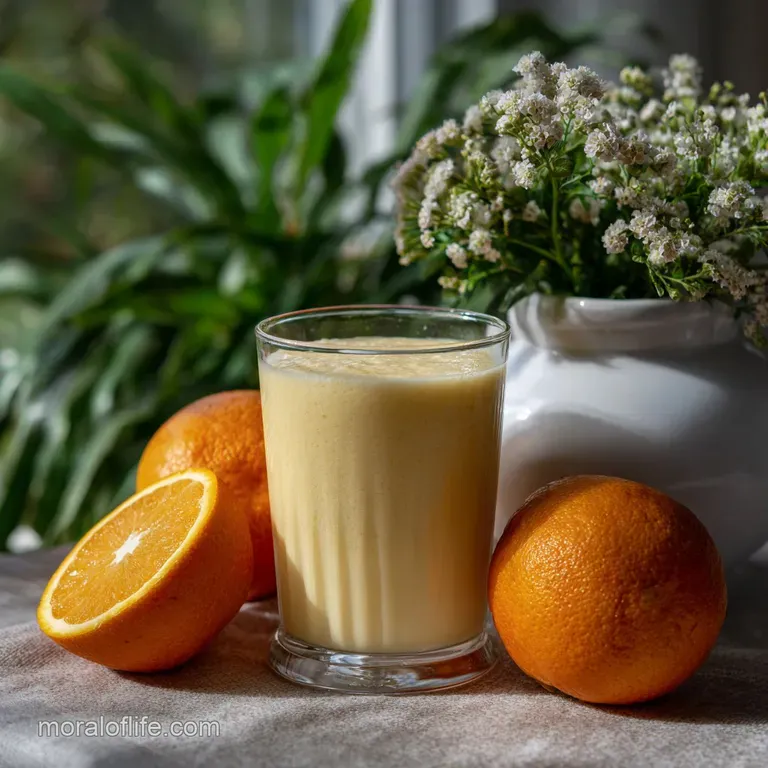
- Place the Vitamix blender jar onto the base.
- Pour the 1 cup water into the bottom. Note: Adding liquids first prevents the concentrate from sticking to the blades.
- Add 1 cup whole milk to the water.
- Spoon in the 6 oz frozen orange juice concentrate until no large frozen lumps remain in the measuring cup.
- Scatter 1/2 cup granulated white sugar over the liquid.
- Measure 1 tsp pure vanilla extract and pour it directly into the center.
- Dust 1 tbsp egg white powder across the top of the liquid. Note: This prevents the powder from clumping against the side of the jar.
- Dump 2 cups ice cubes into the jar last.
- Secure the lid tightly and pulse 5 times until the ice begins to break into smaller chunks.
- Blend on high speed for 30 seconds until the roar of the blades softens to a rhythmic hum and the mixture looks pale orange and velvety, signaling a successful Orange Julius.
- Stop the blender and check the consistency; it should hold a soft peak on the back of a spoon.
- Pour immediately into chilled glasses until the foam reaches the rim.
Why Your Drink Separates or Lacks Body
The Science of Separation
When an Orange Julius separates, it is usually due to "foam collapse." If the proteins aren't whipped enough, or if there isn't enough sugar to bind the water molecules, the heavier liquids sink while the air bubbles escape.
This is a failure of the emulsification matrix that ruins the classic texture of your Orange Julius.
| Problem | Root Cause | The Fix | Pro Protocol |
|---|---|---|---|
| Thin/Watery | Too much water or melted ice | Increase ice by 1/2 cup or use colder concentrate | Use ice directly from the freezer; do not let it sit on the counter. |
| Gritty Texture | Ice didn't shatter | Blend longer on high speed | Ensure your blender is at least 1000 watts for micro shattering. |
| Flat/No Foam | Old egg white powder | Use fresh powder or increase by 1/2 tsp | Store egg white powder in a cool, dry place to maintain protein integrity. |
Why Your Drink Is Too Sweet or Too Tart
This balance depends entirely on the brand of concentrate. If it's too tart, the citric acid is overpowering the lactose in the milk. If it's too sweet, the sugar-to-acid ratio is skewed for this particular Orange Julius formula.
To fix tartness: Add 1 tbsp extra milk to buffer the acid. To fix sweetness: Add a squeeze of fresh lemon juice to provide a bright acid contrast.
Flavor Architecture and Dietary Adaptations
| Original Ingredient | Substitute | Why It Works |
|---|---|---|
| Whole Milk | Coconut Milk (Full Fat) | Similar lipid content; adds a tropical undertone. Note: Result will be slightly denser. |
| White Sugar | Honey (1/3 cup) | High fructose levels provide sweetness; adds a floral note but changes the classic flavor. |
| Orange Concentrate | Pineapple Concentrate | Different acid profile; creates a "Pineapple Julius" with similar frothiness. |
Decision Shortcut
- If you want a thicker, shake like texture, add 1/4 cup heavy cream to your Orange Julius.
- If you want a sharper citrus bite, add 1 tsp orange zest.
- If you want a lower sugar version, use a sugar substitute like Allulose (it mimics sugar's freezing point depression better than Stevia).
⚗️ The Scaling Lab: The Physics of Quantity
When doubling this recipe for a crowd pleasing brunch, you cannot simply double the time and expect the same result for your large batch Orange Julius.
- The Evaporation Paradox: While not a heated recipe, the "Heat Friction Paradox" applies. Doubling the ingredients means the blades must work twice as hard, generating more heat. This will melt your ice 20% faster. Fix: Use 10% more ice than a straight double batch to compensate for motor heat.
- Pan Crowding (Blender Edition): Never fill your blender jar past the 75% mark. The Orange Julius expands significantly as it aerates. Overfilling prevents the "vortex" from forming, leaving you with un-shattered ice chunks at the top.
- Flavor Saturation: Scale the vanilla and sugar to 1.5x (NOT 2x). For some reason, vanilla becomes very dominant in larger volumes of cold liquid when making a big batch of this Orange Julius. You can always add more after a taste test.
- Thermal Mass: A double batch has more mass and will stay cold longer once poured, but it takes longer to reach that "velvety" state. Increase blending time by 15 seconds to ensure the egg white powder is fully integrated for maximum froth.
Common Myths
Myth: You must use raw egg whites for the authentic texture. Truth: Egg white powder is actually superior for achieving a stable, classic Orange Julius froth.
It provides a more concentrated protein punch without the moisture of a fresh egg white, which can dilute the flavor. Plus, it’s pasteurized and shelf stable.
Myth: Fresh orange juice is better than concentrate. Truth: Fresh juice contains too much water. The concentrate provides the "syrup" density required to suspend the ice crystals without turning the drink into a slushy puddle, which is a common mistake when trying to mimic the original Orange Julius.
Managing Thermal Integrity and Texture Decay
- Fridge Storage: Do not store this in the fridge. The aeration will collapse within 15 minutes, leaving you with a flat, separated liquid; the magic of the Orange Julius disappears quickly.
- Freezing: You can pour leftovers into popsicle molds. The high sugar content and egg white powder will prevent them from becoming "ice blocks," resulting in a creamy, orange creamsicle popsicle version of your favorite drink.
- Re-blending: If the drink has sat for 10 minutes and separated, add two fresh ice cubes and pulse for 5 seconds to re-incorporate the air and bring back the foam.
💡 ZERO WASTE PHILOSOPHY
Don't discard the frozen orange juice concentrate can. Transform: Use the last dregs in the can to make a quick vinaigrette. Science: The concentrated sugars and citric acid act as an emulsifier and flavor base for olive oil and Dijon mustard, providing a bright citrus pop to salads, carrying a hint of that Orange Julius brightness.
Occasion Ready Presentation and Garnishing Strategies
Since this is a simple-to-make treat, the presentation is where you can make it feel special for guests. Always serve in chilled glassware to maintain the integrity of your expertly made Orange Julius.
A warm glass will instantly melt the micro shards of ice at the edges, causing the drink to "bleed" water into the foam.
- The Glassware: Use a tall Collins glass or a nostalgic soda fountain glass.
- The Garnish: A thin wheel of fresh orange or a sprig of mint provides a sensory trigger before the first sip of your homemade treat.
- The Straw: Use a wide diameter straw. The thickness of a well made Orange Julius will clog a standard thin straw.
This drink is best served immediately after the final 30 second blend. The "golden window" for the perfect texture is within the first 3 minutes of pouring. Once the temperature rises above 2°C, the protein matrix begins to weaken, and the velvety foam will start to dissipate.
Keep it cold, keep it frothy, and enjoy the nostalgic citrus rush that only a perfectly executed Orange Julius can provide.
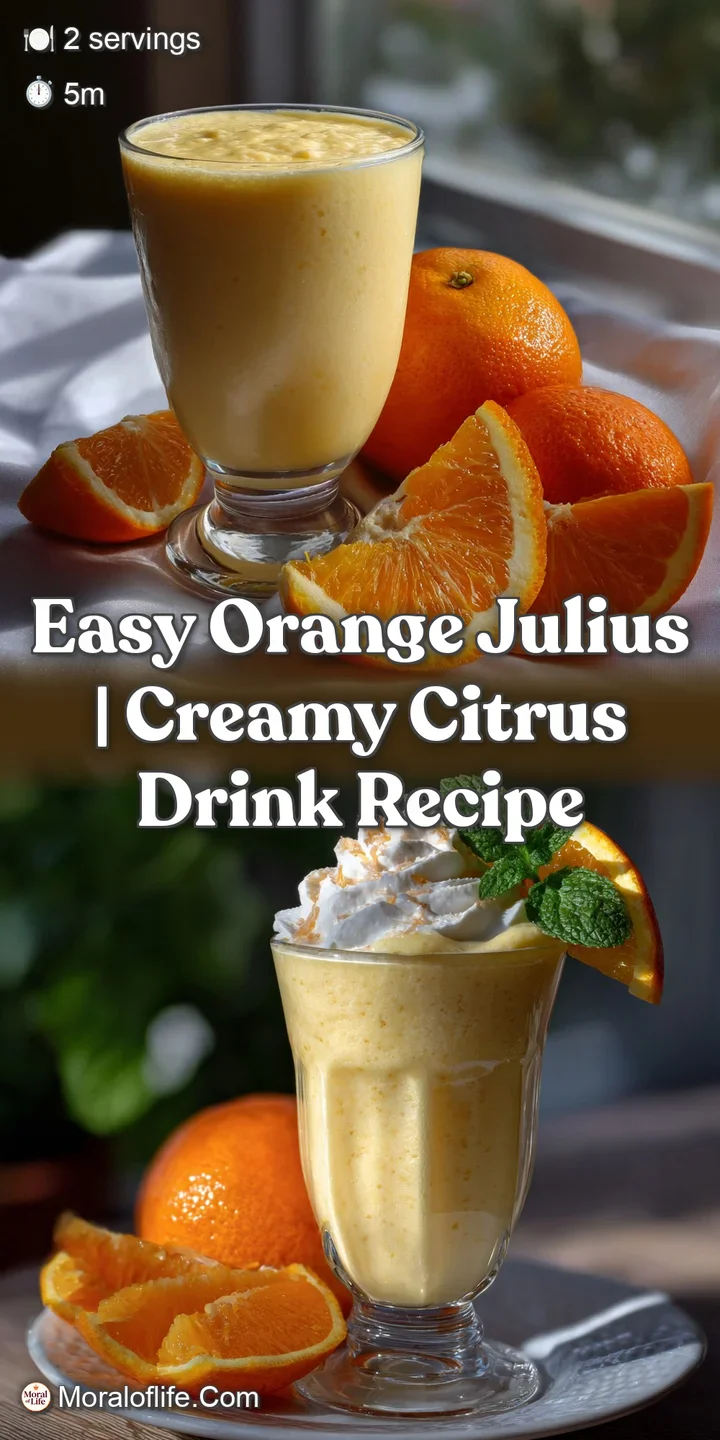
Recipe FAQs
Is this drink best served immediately after blending?
Yes, immediately. The aeration collapses quickly after 3 minutes. Aerated foam stability is highly dependent on temperature and time; the trapped air bubbles escape rapidly once the drink warms past 2°C, ruining the velvety suspension.
Can I substitute fresh orange juice for the concentrate?
No. Fresh juice contains too much water. Concentrate provides the high sugar and acid density required to suspend ice crystals effectively. Too much water results in a watery texture rather than a classic Orange Julius.
What ingredient is crucial for stabilizing the foam structure?
Egg white powder prevents foam collapse. These proteins surround air bubbles during blending, creating a matrix that stops the heavy citrus syrup from sinking prematurely.
My drink turned grainy; what broke the emulsion?
Rapid temperature shifts cause protein denaturation and graininess. High acidity combined with temperature shock denatures the milk and egg proteins, preventing a smooth, homogenous suspension.
- Blend ingredients chilled for best results
- Ensure high speed blending is sustained
- Avoid adding sugar after ice incorporation
Is the final drink closer in texture to a slushie or a milkshake?
It is closer to a soft serve foam. A slushie relies on large ice particles, whereas the Orange Julius texture requires micro shattered ice suspended within a dense, protein stabilized liquid.
Should I use salted or unsalted butter?
Unsalted butter is not required as this recipe contains no butter. This beverage relies on whole milk lipids for mouthfeel; salted butter is inappropriate as it drastically alters the intended sweet citrus flavor profile.
Myth: Raw egg whites provide better aeration than powder.
Myth: Raw egg whites provide better aeration than powder. Reality: Egg white powder is superior for stability in acidic, cold beverages. Its concentrated, pasteurized protein content yields a more reliable and non-curdling foam structure for the Orange Julius.
Orange Julius Drink Recipe
Ingredients:
Instructions:
Nutrition Facts:
| Calories | 423 calories |
|---|---|
| Protein | 9 g |
| Fat | 4.3 g |
| Carbs | 88 g |
| Fiber | 0.4 g |
| Sugar | 85 g |
| Sodium | 112 mg |
