Perfect French Toast with Buttery Brioche
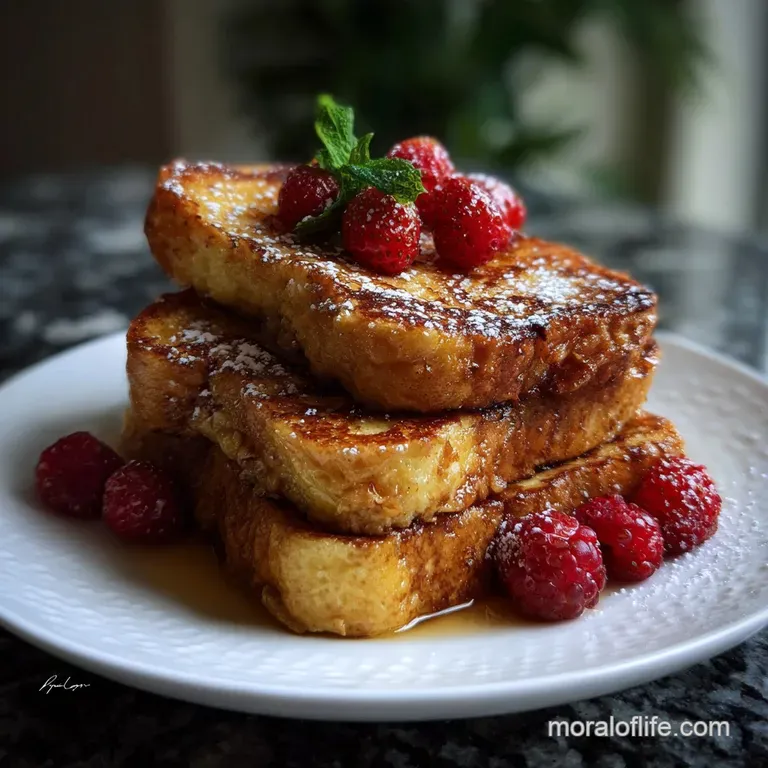
- Effort/Time: 25 minutes total (Low effort, high reward)
- Flavor Hook: Warm cinnamon and nutmeg infused into buttery brioche used for this incredible French Toast
- Perfect for: A normal Tuesday or a slow-motion weekend brunch featuring French Toast
- The Physics of Porosity and Protein Coagulation
- Temporal and Nutritional Architecture for the Morning
- The Alchemy of Aroma: Selecting Your Custard Elements
- Essential Tools for Thermal Mass and Even Searing
- Precision Execution: From Custard Hydration to the Final Sizzle
- Navigating Structural Collapse and Caramelization Failures
- ⚗️ The Scaling Lab: Thermodynamics of the Double Batch
- Flavor Architecture and Contextual Adaptation
- Debunking the Myths of the Morning Soak
- Preservation Protocols and Zero Waste Transformation
- The Final Aesthetic: Texture and Temperature Pairing
- Recipe FAQs
- 📝 Recipe Card
There is nothing worse than biting into a thick slice of French Toast only to have the center collapse into a cold, soggy puddle of uncooked egg. It is a textural nightmare that ruins the morning and wastes a perfectly good $10 loaf of brioche.
We’ve all been there staring at a plate of limp bread that tastes more like a wet sponge than a breakfast masterpiece. It’s frustrating, messy, and frankly, a letdown when you just wanted something dependable to start the day with a classic French Toast.
I used to be the person who rushed the soak, thinking ten seconds was enough, only to end up with dry, bready centers. Then I overcorrected, soaking the slices for two minutes until they disintegrated in my hands before they even hit the pan.
I destroyed at least half a dozen loaves of Challah trying to figure out why my crust was burnt while the inside remained raw. It took ruining a few "normal Tuesday" breakfasts to realize that great French Toast isn't just about dipping bread; it's about managing hydration levels and thermal mass for superior French Toast.
The secret to success lies in starch gelatinization and the Maillard reaction. When the bread hits the Lodge Cast Iron skillet, the sugars and proteins in the custard undergo a chemical transformation that creates a shattering, mahogany crust on your French Toast.
This outer "shell" seals in the moisture, allowing the internal egg proteins to denature and set into a custard like consistency without becoming scrambled. The result is a sensory payoff of a sizzling pan and the nutty aroma of toasted nutmeg that promises a velvety bite every single time you make this French Toast.
The Physics of Porosity and Protein Coagulation
- Capillary Action: Stale bread contains dehydrated starch cells that act like microscopic sponges, pulling the custard into the center of the slice via surface tension, which is crucial for good French Toast.
- Protein Denaturation: Egg proteins uncoil and rebond at 145°F, creating a stable internal lattice that prevents the bread from collapsing into mush when preparing French Toast.
- Maillard Reaction: The interaction between the granulated sugar and egg proteins at high heat produces the deep brown color and complex, toasted flavor profile of quality French Toast.
- Lipid Insulation: Using whole milk provides enough fat to coat the bread fibers, ensuring a silky mouthfeel rather than a rubbery texture in your finished French Toast.
Temporal and Nutritional Architecture for the Morning
| Metric | Value |
|---|---|
| Prep Time | 10 minutes |
| Cook Time | 15 minutes |
| Total Time | 25 minutes |
| Yield | 4 servings of French Toast |
| Calories | 493 kcal |
| Protein | 16.5 g |
| Fat | 26.5 g |
| Carbohydrates | 49.6 g |
| Sugar | 11.4 g |
The Alchemy of Aroma: Selecting Your Custard Elements
| Ingredient | Chemical/Physical Role (Science) | The Pro Secret (Why This Matters) |
|---|---|---|
| 4 large Eggs | Emulsification and structural binding | Fat in yolks creates the velvety, custardy interior finish for this French Toast |
| 1 cup Whole milk | Solvent for solutes and source of lactose | Why this? High fat content prevents a watery, thin custard. |
| 1 tsp McCormick Ground Cinnamon | Hydrophobic spice infusion | Volatile oils release when hitting the hot buttered pan |
| 1/4 tsp Diamond Crystal Fine Sea Salt | Osmotic balancing and flavor enhancement | Why this? Salt sharpens the perception of sweetness and nutmeg. |
- 8 thick slices Brioche or Challah: Why this? High egg/butter content in bread ensures a soft, rich crumb. (Substitute: Texas Toast for a sturdier, less sweet base for your French Toast).
- 2 tbsp Granulated sugar: Promotes caramelization on the bread surface. (Substitute: Maple syrup for a deeper, woody sweetness).
- 1 tsp Pure vanilla extract: Provides aromatic complexity. (Substitute: 1/2 tsp Almond extract for a cherry like floral note).
- 1/8 tsp Ground nutmeg: Adds earthy depth to the cinnamon. (Substitute: Ground mace for a more delicate citrus pepper profile).
- 2 tbsp Kerrygold Unsalted butter: Provides the milk solids for browning. (Substitute: Ghee for a higher smoke point).
- 1 tbsp Neutral oil: Raises the smoke point of the butter to prevent burning. (Substitute: Avocado oil for a healthy fat profile).
Essential Tools for Thermal Mass and Even Searing
To achieve a consistent sizzle, I recommend using a Lodge Cast Iron Skillet. The heavy metal retains heat, preventing the pan temperature from plunging when you add the cold, soaked bread for your batch of French Toast.
You will also need an OXO Good Grips Balloon Whisk to fully incorporate the egg whites into the milk; any stray bits of unbeaten white will cook into unsightly "fried egg" patches on your toast.
Finally, a Nordic Ware Aluminum Sheet Pan is perfect for holding finished slices in a warm oven, preventing them from becoming soggy on a flat plate while you finish the remaining batches of French Toast.
Precision Execution: From Custard Hydration to the Final Sizzle
- Whisk 4 large Eggs in a shallow bowl.Note: Room temperature eggs emulsify more thoroughly with dairy.
- Pour in 1 cup Whole milk slowly.Note: Slow integration prevents the eggs from clumping.
- Add 2 tbsp sugar, vanilla, 1 tsp cinnamon, salt, and nutmeg.Note: Whisk until the cinnamon is mostly incorporated into the liquid fats.
- Preheat a Lodge Cast Iron Skillet over medium low heat.Note: Low, steady heat prevents the butter from scorching before the bread is done.
- Submerge one slice of Brioche for 15 seconds per side.Note: Look for the bread to feel heavy but not falling apart when making this French Toast.
- Lift the slice and allow excess custard to drip off for 3 seconds.Note: Removing excess prevent "footing" the burnt egg ring around the toast.
- Add 1/2 tbsp butter and a splash of oil to the pan.Note: Wait until the butter stops hissing and the foam subsides.
- Place 2 3 slices in the pan, ensuring they do not touch.Note: Crowding the pan drops the temperature and causes steaming instead of searing.
- Fry for 3 4 minutes until the bottom is mahogany brown and firm. Note: A sturdy crust is the foundation for the flip on your French Toast.
- Flip and cook for 3 minutes until the second side sizzles and the center springs back when pressed. Note: Tactile resistance indicates the internal custard has set.
Navigating Structural Collapse and Caramelization Failures
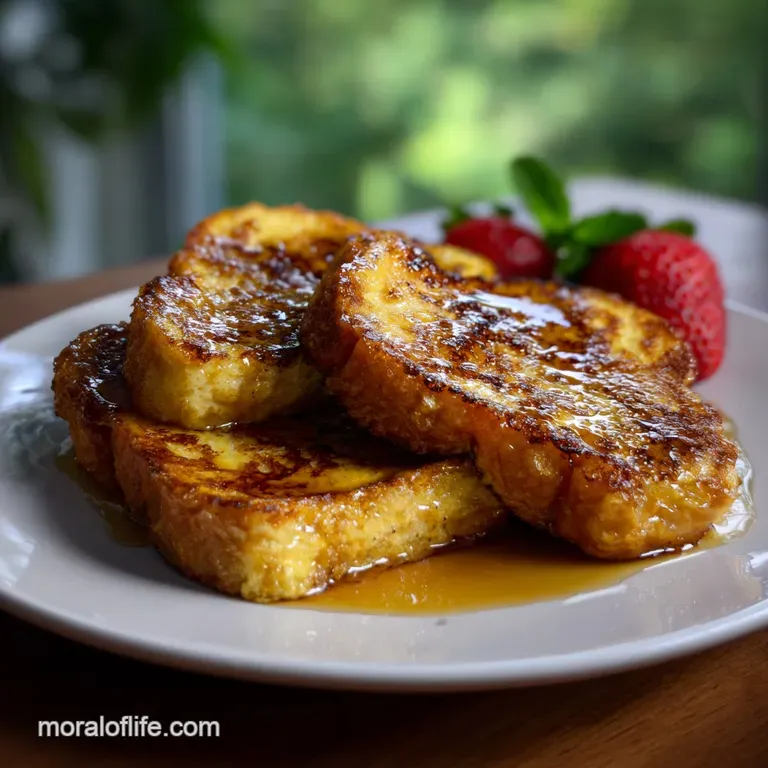
French Toast is a balance of moisture and heat. If you find your bread is falling apart before it hits the pan, your bread is likely too fresh. Fresh bread has too much internal moisture to absorb the custard effectively.
Why Your Bread is Soggy in the Middle
When the heat is too high, the exterior sugars burn before the internal egg proteins can coagulate. This results in a "lava" center of raw custard, ruining the potential for perfect French Toast.
| Problem | Root Cause | The Fix | Pro Protocol |
|---|---|---|---|
| Burnt crust, raw center | Pan temperature exceeded 375°F | Lower heat to medium low immediately | Use a thermometer to keep pan at 350°F |
| Bread falling apart | Over saturation/Fresh bread | Use stale bread or toast lightly in oven first | Slice bread 1 inch thick for structural integrity |
| Greasy texture | Pan was not hot enough when adding bread | Wait for butter foam to subside before dropping bread | Listen for the "initial sizzle" to confirm sear |
⚗️ The Scaling Lab: Thermodynamics of the Double Batch
- Flavor Saturation: If doubling to 8 servings, scale the cinnamon and nutmeg to 1.5x (not 2x). Spices can become overpowering and bitter when doubled linearly, affecting the final flavor of the larger French Toast batch.
- The Evaporation Paradox: When making a large amount of custard in one bowl, the surface area limits the "dip." Use a wide, flat baking dish rather than a deep bowl to ensure even access for all 8 slices of French Toast.
- Thermal Mass Recovery: When cooking for a crowd, the pan loses heat with every new batch. Mandatory instruction: Wipe the pan clean between batches and allow it to sit empty for 60 seconds to regain its thermal energy before adding fresh butter.
- The Square Cube Law: A larger batch of soaked bread waiting on a tray will continue to soften at the bottom. Use a wire cooling rack over a sheet pan to allow air circulation, preventing the bottom slices from becoming waterlogged by gravity.
Flavor Architecture and Contextual Adaptation
French Toast is a blank canvas. While the brioche version is the gold standard for a dependable morning, you can swap elements based on what you have in the pantry.
| Original Ingredient | Substitute | Why It Works |
|---|---|---|
| Whole Milk | Full fat Coconut Milk | Same fat content but adds nutty/tropical notes. Note: Adds coconut aroma. |
| Brioche | Sourdough (thick cut) | Adds a pleasant tang to offset the sugar. Note: Requires a longer soak (30s). |
| Granulated Sugar | Brown Sugar | Adds molasses notes for a deeper, toffee like crust. |
Stovetop vs. Oven (Casserole Style)
| Feature | Stovetop (This Recipe) | Oven (Casserole/Bake) |
|---|---|---|
| Texture | Shattering crust, custard center the goal for this style of French Toast | Uniformly soft, bread pudding texture |
| Speed | 15 minutes cook time | 45 60 minutes cook time |
| Effort | Active flipping required | Hands off after assembly |
Chef's Note: If you want a "Shatter Crisp" crust on your French Toast, sprinkle a tiny pinch of extra sugar directly onto the soaked bread just before it hits the pan. It creates a bruleed effect that is incredible.
Debunking the Myths of the Morning Soak
- Myth: You must soak the bread overnight.
- Truth: Overnight soaking often leads to a structural collapse of the gluten network, resulting in a mushy mess. A 15 30 second soak is peak for 1 inch thick brioche intended for French Toast.
- Myth: Only stale bread works for French Toast.
- Truth: While stale bread is ideal because it's "thirsty," you can use fresh bread if you lightly toast it in a 300°F oven for 5 minutes to drive off surface moisture.
- Myth: More eggs make it better.
- Truth: Too many eggs result in a "rubbery" texture. The 1:4 milk-to-egg ratio (1 cup milk to 4 eggs) is the scientific sweet spot for a creamy custard foundation for your French Toast.
Preservation Protocols and Zero Waste Transformation
Storage: Store leftover slices in an airtight container in the fridge for up to 3 days. To reheat, avoid the microwave; it will make the bread rubbery. Instead, pop them in a toaster or a 350°F air fryer for 3 minutes to regain the crisp edges of your reheated French Toast.
Freezing: This recipe freezes beautifully. Flash freeze slices on a parchment lined tray for 1 hour, then transfer to a freezer bag for up to 2 months. Reheat directly from frozen in a toaster oven to enjoy quality French Toast later.
💡 ZERO WASTE PHILOSOPHY: Don't discard the leftover custard in the bowl. Transform: Whisk in a tablespoon of flour and a pinch of baking powder to create a "scrambled pancake" or "Dutch Baby" base in a small skillet.
Science: The egg and milk proteins are still perfectly viable; adding a starch thickener turns the liquid into a secondary breakfast treat.
The Final Aesthetic: Texture and Temperature Pairing
Decision Shortcut: If you want Maximum Crunch, use a mix of butter and neutral oil in a cast iron skillet for your French Toast.
If you want Deep Custard, soak for 30 seconds and finish the thick slices in a 350°F oven for 5 minutes after searing. If you want Lower Sugar, omit the sugar from the custard and rely on a final dusting of powdered sugar or fresh berries.
The best way to serve this is immediately. The contrast between the hot, sizzling toast and a cold pat of Kerrygold butter or a drizzle of room temperature maple syrup is vital. For a "Masterclass" presentation, add a pinch of lemon zest to the custard; the citric acid cuts through the heavy lipids of the brioche and milk, brightening the entire flavor profile.
This French Toast isn't just a meal; it’s a dependable, repeatable win for any morning. Repeat with confidence.
Recipe FAQs
how to make french toast?
Dip 1 inch thick bread (like brioche) for 15-30 seconds per side in an egg/milk custard. Sear in a butter/oil mixture over medium low heat for 3-4 minutes per side until mahogany brown and the center is set.
how to make french toast easy?
Use stale, thick cut bread dipped quickly. Stale bread absorbs evenly without disintegrating, allowing a faster, more reliable sear time. Avoid overcrowding the pan to maintain pan temperature.
how to make french toast without milk?
Use heavy cream or half and-half. Cream has a higher fat content, which thickens the custard, compensating for the missing liquid volume. The final result will be richer and set slower due to higher lipid content.
how to make french toast without eggs?
Use mashed banana or silken tofu blended with starch. Eggs provide structural protein and emulsification; replacements must bind the starches. Blend 1/2 cup silken tofu with 1/4 cup almond milk and 1 tbsp cornstarch for a binder.
how to make french toast in the oven?
Assemble like a strata, bake at 350°F for 45 minutes. The oven method results in a softer, bread pudding texture, unlike the crispy sear of stovetop cooking. Sear first for best results before baking to set the crust.
Why is my French toast soggy in the middle?
Heat was too high, burning the exterior prematurely. High initial heat causes the exterior sugars to caramelize before the internal egg proteins can coagulate past 145°F.
- Preheat skillet low and slow
- Use a 1 inch thick bread slice
- Ensure custard is fully whisked
Stovetop vs. Oven method for French Toast?
Stovetop yields a shattering crust and custardy interior. The direct, high contact heat initiates the Maillard reaction quickly, forming a firm exterior shell that locks moisture inside. Oven baking yields a uniformly soft, cake like texture typical of bread pudding.
Perfect French Toast Recipe
Ingredients:
Instructions:
Nutrition Facts:
| Calories | 493 kcal |
|---|---|
| Protein | 16.5 g |
| Fat | 26.5 g |
| Carbs | 49.6 g |
| Fiber | 1.8 g |
| Sugar | 11.4 g |
| Sodium | 385 mg |
