Puerto Rican Rice: Fluffy & Crispy
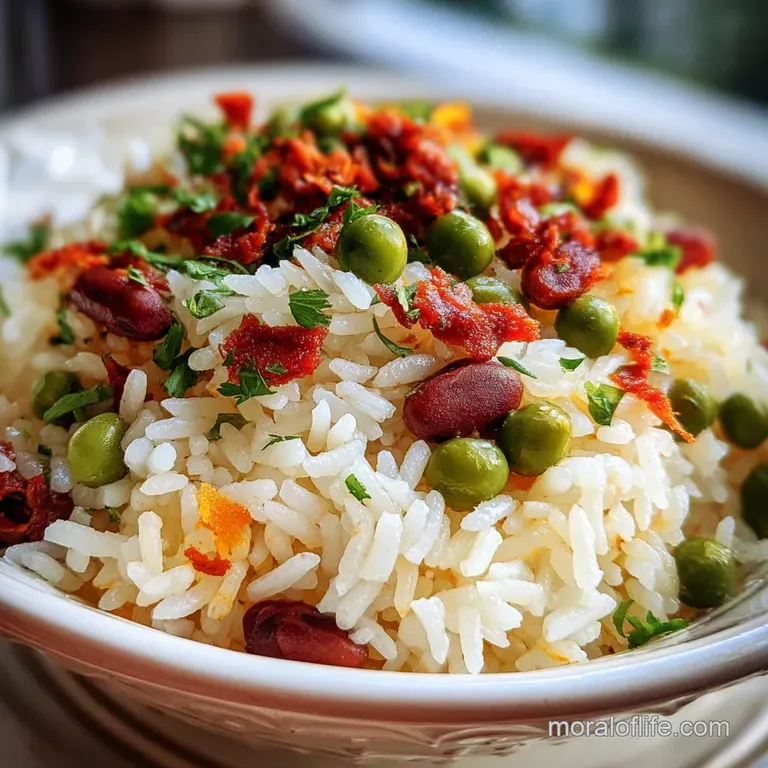
- Time: Active 15 minutes, Passive 35 minutes, Total 50 minutes
- Flavor/Texture Hook: Aromatic, savory grains with a shatter crisp golden crust
- Perfect for: Dependable family dinners and weekend meal prep
- Key Techniques Explained
- Recipe Specs and Timing
- The Component Analysis Deep Dive
- Shopping List Breakdown
- Selecting the Right Kitchen Tools
- Simple Steps for Reliable Results
- Avoiding Common Kitchen Technical Disasters
- Flexible Flavor Swaps and Twists
- Smart Storage and Leftover Ideas
- Side Dishes for a Complete Meal
- Myth: You Need a Special Pot
- Myth: Washing Rice Removes Nutrients
- Puerto Rican Rice FAQs
- 📝 Recipe Card
The sizzle of sofrito hitting hot olive oil is the official soundtrack of my kitchen every Tuesday. There is something about that specific aroma the herbaceous cilantro mixed with the punch of garlic and sweet peppers that makes the whole house feel steady and warm.
I remember the first time I tried making this for my family; I was so worried about burning the bottom of the pot that I kept stirring it. My grandmother almost chased me out of the kitchen with a wooden spoon! She taught me that the "burn" is actually the best part.
That golden, crackling layer at the bottom, the pegao, is what everyone fights over at the table. It took me a few tries (and a few pots of mushy rice) to realize that this isn't just about cooking grains; it is about building layers of flavor that actually soak into the rice rather than just sitting on top.
We are talking about a dependable, comforting meal that feels special but fits right into a normal weeknight.
This isn't a dish where you want to overcomplicate things with fancy gadgets. You just need a solid pot, some pantry staples, and a little bit of patience. We've all had those days where we want a meal that feels like a hug, and honestly, this Rican Rice is exactly that.
It's the kind of recipe you'll find yourself repeating with confidence once you see how those simple ingredients transform into something so unctuous and vibrant.
Key Techniques Explained
The Starch Oil Barrier: Coating the medium grain rice in warm olive oil and sofrito before adding liquid creates a hydrophobic layer that prevents grains from bursting and becoming gummy. This ensures each grain stays distinct and velvety rather than clumping together into a mushy mass.
Mastering the Dextrinization Process
When you toast the rice in the oil for those first few minutes, you are actually performing a chemical process called dextrinization. The dry heat breaks down some of the starches into smaller components, which adds a nutty depth that raw boiling just cannot replicate.
It also helps the rice stand up to the long steaming process.
Leveraging the Maillard Reaction
The pegao, or the crispy bottom, is the result of the Maillard reaction and dehydration. As the water evaporates, the sugars in the tomato sauce and the starches in the rice caramelize against the hot surface of the pot.
If you stir too much, you break this contact and lose that shatter crisp texture that makes this dish iconic.
The Physics of Steaming
Once the lid goes on, you are switching from boiling to a pressurized steam environment. The bay leaf releases its essential oils more effectively in this humid setting, infusing the rice with a subtle, woody backnote.
Keeping the lid sealed is vital because any lost steam means undercooked, chalky centers in your rice grains.
| Method | Total Time | Texture | Best For |
|---|---|---|---|
| Stovetop (Caldero) | 50 minutes | Fluffy with crispy pegao | Authentic flavor and texture |
| Dutch Oven | 55 minutes | Very even cook, softer pegao | Reliable heat retention |
| Rice Cooker | 45 minutes | Uniformly soft, no pegao | Busy days with no monitoring |
It is worth noting that while a rice cooker is convenient, you will miss out on the varying textures that make this dish a favorite. If you love a one pot meal, this technique is a faster version of the soul warming Rice and Peas recipe that many of us grew up eating on Sundays.
Recipe Specs and Timing
To get this right every time, you need to respect the ratios. We are using 3 cups of medium grain white rice and 3 3/4 cups of low sodium chicken broth. This 1:1.25 ratio is the "sweet spot" for medium grain. If you use long grain, the rice will be too dry; if you use short grain, it'll turn into risotto. For an extra protein kick, I sometimes use the base of my Bone Broth Rice recipe to swap out the standard chicken broth, which adds even more body to the finished dish.
Chef Tip: Freeze your sofrito in ice cube trays! When you're ready to cook, just pop two or three cubes into the hot oil. It saves 15 minutes of prep and the flavor stays incredibly vibrant.
Another trick I learned the hard way is to rinse the rice until the water is clear, but then let it dry for a few minutes in a fine mesh strainer. If the rice is soaking wet when it hits the oil, it won't toast; it will just steam, and you'll lose that nutty flavor we're looking for.
The Component Analysis Deep Dive
| Component | Science Role | Pro Secret |
|---|---|---|
| Medium Grain Rice | Starch Balance | Rinse 3 times to remove excess surface amylopectin |
| Homemade Sofrito | Aromatic Base | Sizzle until the water evaporates and only oil remains |
| Pigeon Peas | Texture & Protein | Use the canning liquid for extra "earthy" flavor notes |
| Alcaparrado | Acid & Umami | Chop the olives small so you get a briny pop in every bite |
The alcaparrado is often the "forgotten" ingredient, but it provides the necessary acidity to cut through the richness of the olive oil and pigeon peas. Without that briny kick from the capers and olives, the dish can feel a bit one note.
Shopping List Breakdown
For a dependable result, stick to these specific items. We are making 7 servings, so this is a great recipe for a family or for someone who loves leftovers for lunch the next day.
- 1/2 cup homemade sofrito (120g)Why this? The foundation of all flavor; use fresh peppers and culantro.
- 3 cups medium grain white rice (600g)Why this? Provides the perfect chew and starch level for pegao.
- 1 can pigeon peas (15 oz / 250g drained)Why this? Traditional gandules add a distinct nutty, earthy flavor.
- 3 3/4 cups low sodium chicken broth (885ml)Why this? Controls salt levels while adding deep savory notes.
- 2 tbsp olive oil (30ml)Why this? Conducts heat to toast the rice and prevents sticking.
- 1/4 cup low sodium tomato sauce (60ml)Why this? Adds color and a hint of sweetness to balance the brine.
- 2 tbsp alcaparrado (30g)Why this? Olives and capers provide essential acidic highlights.
- 1 1/2 tsp homemade sazónWhy this? Achiote and cumin give the rice its signature sunset hue.
- 1 tsp adobo seasoningWhy this? The "all in-one" salt and garlic punch for seasoning.
- 1 whole bay leafWhy this? Adds a subtle herbal layer that deepens as it steams.
| Original Ingredient | Substitute | Why It Works |
|---|---|---|
| Pigeon Peas | Pink Beans | Similar creamy texture, though flavor is slightly sweeter |
| Sofrito | Pesto + Garlic | Mimics the herb/garlic base. Note: Changes flavor profile significantly |
| Chicken Broth | Vegetable Broth | Maintains liquid ratio while making the dish vegetarian |
| Medium Grain Rice | Basmati Rice | Stays fluffy. Note: Requires 10% less liquid and won't form pegao |
If you find yourself missing some of these ingredients, don't panic. This dish is forgiving. Just remember that the rice to liquid ratio is the most important part of the equation.
Selecting the Right Kitchen Tools
You don't need a high end French oven to make this happen, though a heavy bottomed pot is your best friend here. A traditional "caldero" is an aluminum pot used specifically for this in Puerto Rico. It heats up quickly and cools down slowly, which is exactly what you want for a steady simmer.
If you don't have one, a cast iron Dutch oven or even a deep stainless steel skillet with a tight fitting lid will work perfectly.
Avoid thin, cheap pots if you can. They tend to have "hot spots" that will burn the rice in one corner while leaving the rest raw. Also, make sure your lid actually seals. If steam is escaping from the sides, your rice will end up "amogollado" (which is the Puerto Rican word for mushy and sticky).
If your lid is a bit loose, place a sheet of aluminum foil or even a clean kitchen towel (carefully!) over the pot before putting the lid on to create a tighter seal.
Simple Steps for Reliable Results
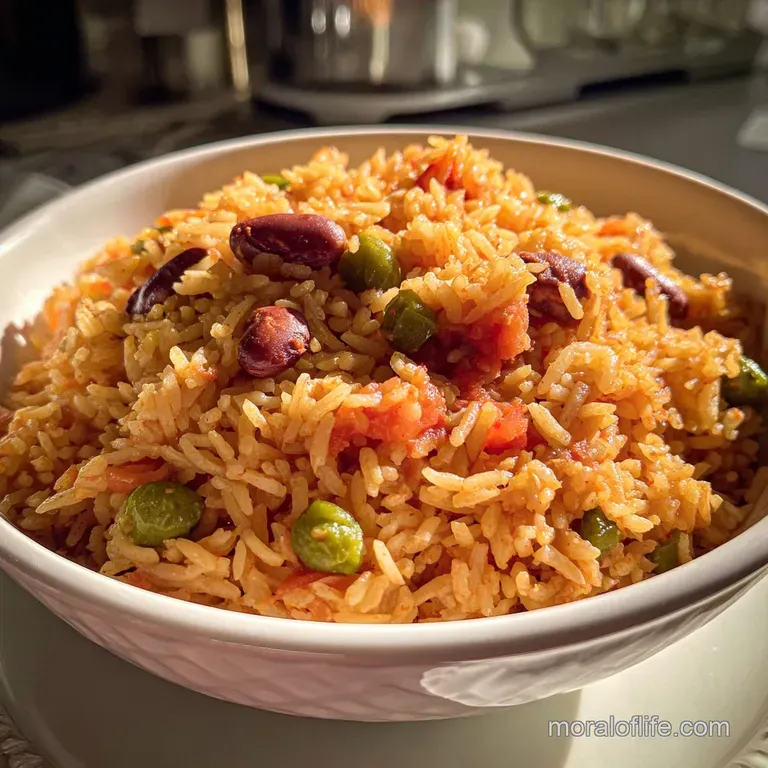
- Heat the oil. Add 2 tbsp olive oil to your pot over medium heat until it shimmers and swirls easily.
- Sizzle the aromatics. Stir in 1/2 cup sofrito and 1/4 cup tomato sauce. Note: This creates the flavor base.
- Season the base. Add 1 1/2 tsp sazón, 1 tsp adobo, 2 tbsp alcaparrado, and the bay leaf until the fragrance fills the room.
- Incorporate the peas. Pour in the drained pigeon peas and stir for 2 minutes until they are coated in the bright orange oil.
- Toast the grains. Add 3 cups rinsed medium grain rice. Note: Stir constantly for 3 minutes to coat every grain in oil.
- Add the liquid. Pour in 3 3/4 cups chicken broth and bring to a rolling boil until large bubbles break the surface.
- Reduce and absorb. Let the liquid cook down over medium high heat (uncovered) until the water level drops below the rice.
- The first fold. Use a large spoon to move the rice from the edges to the center once, then turn heat to low.
- Seal and steam. Cover tightly and cook for 20 minutes. Do not lift the lid during this time.
- The final fluff. Turn off the heat, let it sit for 5 minutes, then fluff with a fork until the grains are light and airy.
Avoiding Common Kitchen Technical Disasters
The most common heartbreak with Puerto Rican Rice is ending up with a pot of mush. This usually happens because there was too much liquid or the rice was stirred too frequently during the boiling phase. Another issue is "hard rice," where the grains are still chalky in the middle.
This is almost always due to lifting the lid too early and letting the steam escape.
Why Your Rice Is Mushy
If your grains have lost their shape and turned into a paste, the starch has over gelatinized. This happens if you start with cold broth or if you don't toast the rice properly in the oil first. The oil coating acts as a shield, slowing down the water absorption so the grains cook evenly from the outside in.
Rescuing Under Cooked Rice
If you taste a grain at the end of 20 minutes and it's still hard, don't keep the heat on high. Instead, sprinkle 2 tablespoons of warm water over the top, replace the lid tightly, and let it sit on the lowest possible heat for another 5 to 7 minutes.
The residual steam will usually finish the job without burning the bottom.
| Problem | Root Cause | Solution |
|---|---|---|
| Rice is sticky/clumpy | Excess surface starch | Rinse rice until water is clear before cooking |
| Bottom is burnt/black | Heat was too high | Use a heat diffuser or lower the flame once lid is on |
| Grains are unevenly cooked | Peeking/Lifting lid | Keep the lid sealed for the full 20 minutes |
Common Mistakes Checklist
- ✓ Never skip the rice toasting step; it is the secret to separate, velvety grains.
- ✓ Don't use a pot that is too large; the steam needs to be concentrated around the rice.
- ✓ Avoid low-fat substitutes for the oil; the fat is what carries the flavor of the sazón.
- ✓ Use medium grain rice only; long grain won't give you the right "bite."
- ✓ Let the rice rest for 5 minutes after turning off the heat to finish the steam cycle.
Flexible Flavor Swaps and Twists
If you want to change things up, this recipe is a fantastic canvas. For a lean protein boost, you can sauté diced chicken breast or even shrimp right into the sofrito at the beginning. Just make sure to brown them quickly so they don't overcook during the 20 minute rice steam.
The Vegan Variation
This dish is very easy to make vegan. Simply swap the chicken broth for a rich vegetable stock or even water with a bit of extra salt and a splash of soy sauce for umami. The pigeon peas already provide a good amount of plant based protein, making it a complete meal on its own. It pairs beautifully with a side of Mexican Street Corn recipe if you want a fusion style dinner.
Whole Grain Alternative
Using brown rice is possible, but it requires a significant change in liquid and time. You will need to increase the broth to 4.5 cups and the steaming time to about 45 minutes.
Note that the texture will be much chewier and you won't get the same style of pegao, but it's a great high fiber option for a normal Tuesday night.
Smart Storage and Leftover Ideas
One of the best things about making a big pot of Puerto Rican Rice is that it tastes even better the next day. The spices have more time to meld, and the rice firms up, making it perfect for other dishes.
- Fridge: Store in an airtight container for up to 4 days.
- Freezer: You can freeze this rice for up to 3 months. I recommend freezing it in individual portions in freezer bags. Press the air out and lay them flat so they defrost quickly.
- Reheating: To keep it from drying out, add a teaspoon of water or broth before microwaving. Or, better yet, reheat it in a skillet with a little oil to get those crispy edges back.
Zero Waste Tip: If you have leftover rice that’s getting a bit dry, make Arroz Mamposteao. Sauté some onions, peppers, and maybe some leftover beans in a pan, toss in the rice, and fry it all together until it’s hot and slightly charred.
It’s like a Puerto Rican version of fried rice and it's absolutely incredible. Also, don't throw away the cilantro stems when making sofrito they actually have more flavor than the leaves!
Side Dishes for a Complete Meal
While this rice is a star on its own, it usually plays the role of the ultimate sidekick. In a traditional Puerto Rican household, you’d almost always see this served with "amarillos" (sweet fried plantains). The sugar in the plantains balances the salty, briny notes of the rice perfectly.
If you are looking for something lighter, a simple avocado salad with red onions and a lime vinaigrette is the way to go. The creaminess of the avocado acts like a sauce for the rice. For a meatier meal, try serving it alongside some slow roasted pork (pernil) or even a simple grilled chicken.
The rice is robust enough to handle heavy meats but simple enough not to overwhelm a light piece of fish.
Myth: You Need a Special Pot
Many people think you cannot make authentic Puerto Rican Rice without a seasoned aluminum caldero. While a caldero is the traditional choice because of how it handles heat, it is a myth that you can't get a great result in a modern Dutch oven.
The real "magic" isn't the metal; it's the moisture control and the fat to starch ratio. If you have a heavy pot with a tight lid, you can make world class rice anywhere.
Myth: Washing Rice Removes Nutrients
While washing rice does remove some surface added vitamins, in the context of this dish, washing is non negotiable for texture. The goal is to remove the excess starch that causes the grains to stick together and become gummy.
The flavor and satisfaction of a perfectly fluffy pot of rice far outweigh the minor loss of surface nutrients, which you are getting back anyway from the pigeon peas and sofrito.
Puerto Rican Rice FAQs
What is Puerto Rican rice made of?
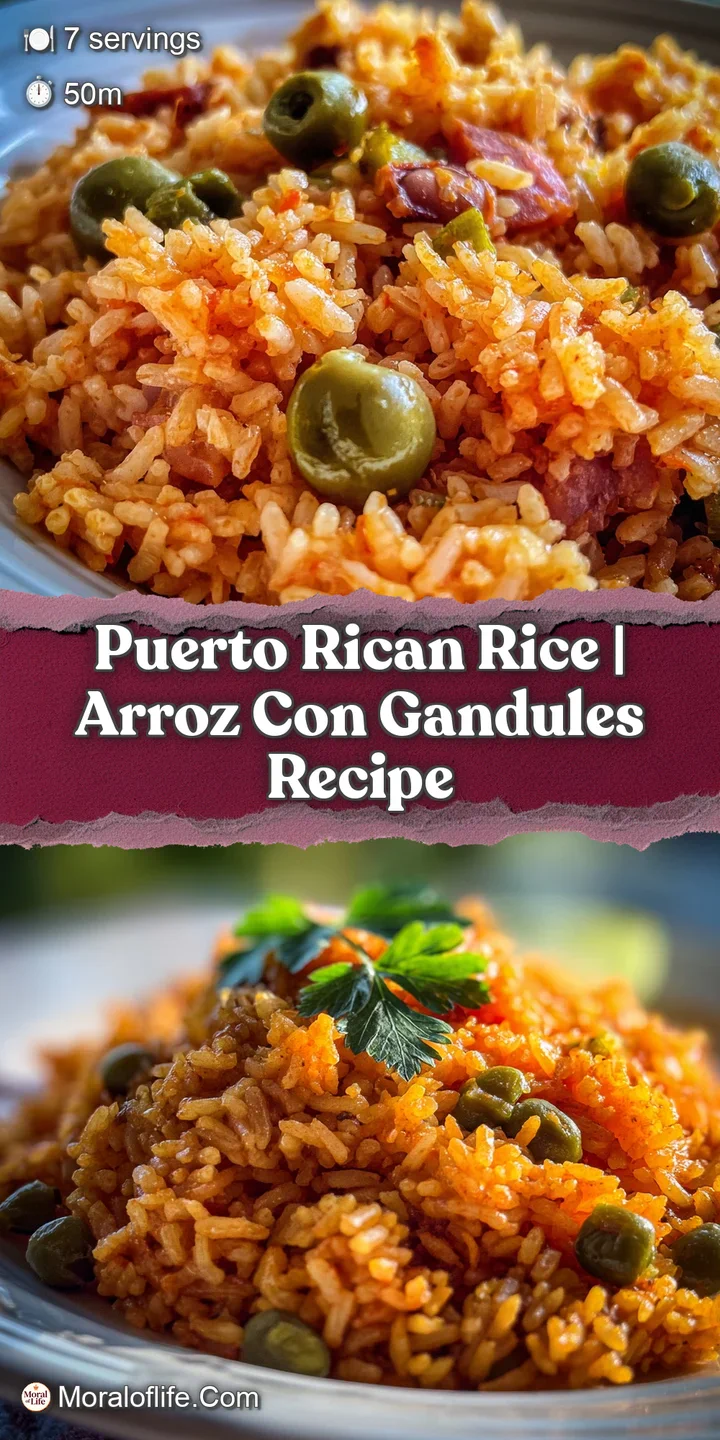
It's a flavorful one-pot rice dish. Puerto Rican rice, or arroz blanco, is typically made with medium grain white rice, olive oil, sofrito (a flavor base of aromatics), pigeon peas, and seasoned with adobo and sazón for color and taste.
What kind of rice is used in Puerto Rico?
Medium grain white rice is traditional. This type of rice has a good starch balance that yields fluffy, distinct grains, perfect for absorbing flavors and developing the coveted crispy bottom layer known as pegao.
Why is Puerto Rican rice so good?
It's a combination of technique and aromatics. The unique flavor comes from toasting the rice in oil and sofrito before adding liquid, creating layers of savory depth, and the magical crispy bottom, pegao, adds a delightful texture.
Is Puerto Rican rice the same as Spanish rice?
No, they are distinct dishes. While both are rice preparations, Spanish rice typically includes tomatoes and other vegetables, giving it a reddish hue and a different flavor profile.
Puerto Rican rice is usually white or very lightly colored by sazón and focuses on the flavor of the sofrito and the texture of the rice itself.
How do I get the crispy bottom layer (pegao)?
Allow the rice to cook undisturbed on low heat. The pegao forms through caramelization and dehydration as the water evaporates from the bottom layer of rice. Avoid stirring too much once the lid is on to let this magical crust develop.
Can I make Puerto Rican rice vegan?
Yes, it's easily adaptable. Simply substitute the chicken broth with a flavorful vegetable broth or water seasoned with extra salt and a dash of soy sauce for umami. It pairs wonderfully with a side of Mexican Street Corn recipe for a vibrant meal.
What is the best pot for making Puerto Rican rice?
A heavy bottomed pot is ideal. While a traditional caldero is preferred for its even heat distribution, a cast iron Dutch oven or a deep, heavy skillet with a tight fitting lid will also yield excellent results and help develop that crucial pegao.
Puerto Rican Rice
Ingredients:
Instructions:
Nutrition Facts:
| Calories | 409 kcal |
|---|---|
| Protein | 9.8 g |
| Fat | 5.0 g |
| Carbs | 77.9 g |
| Fiber | 3.8 g |
| Sugar | 1.2 g |
| Sodium | 514 mg |
