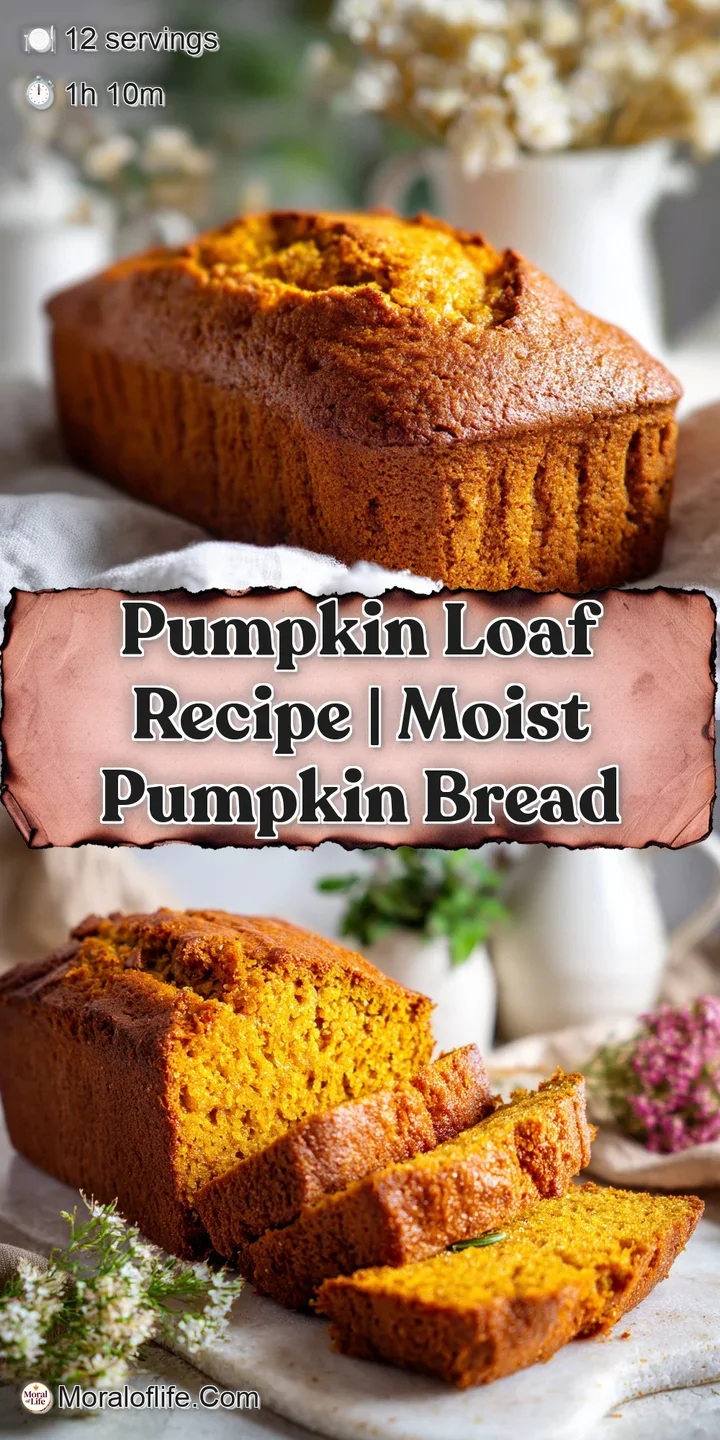
Moist Pumpkin Loaf Recipe
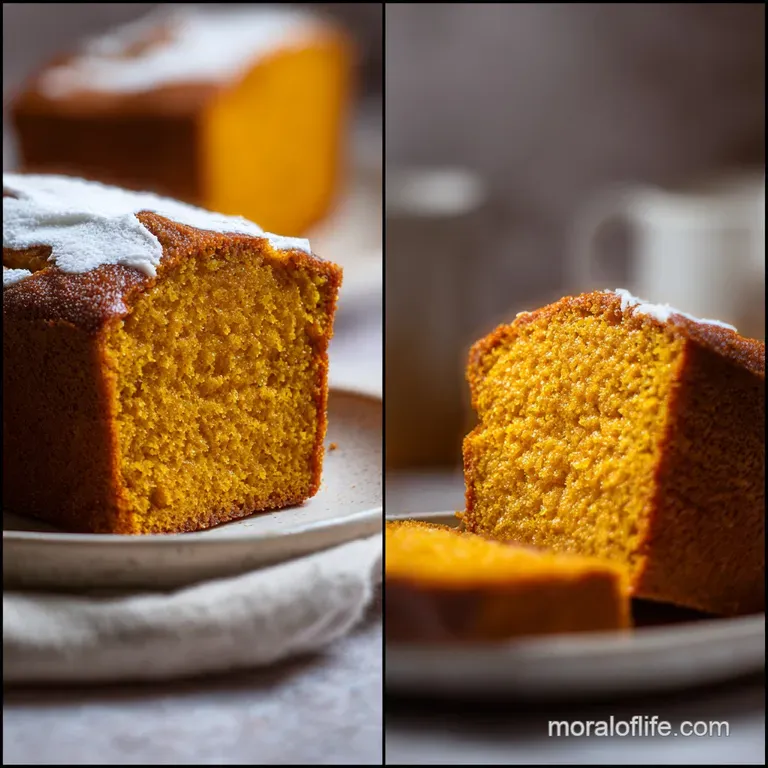
- Time: Active 10 minutes, Passive 60 minutes, Total 70 minutes
- Flavor/Texture Hook: Spiced, moist, and tender with a velvety crumb
- Perfect for: Weekend brunch, coffee pairings, or a crowd-pleasing gift
- Creating a Moist Pumpkin Loaf Recipe
- Essential Recipe Specifications
- Choosing Your Quality Ingredients
- Essential Kitchen Gear Needed
- Master the Mixing Technique
- Pro Tips for Better Baking
- Creative Flavor and Texture Swaps
- Proper Storage and Freezing Methods
- Three Levels of Dessert Presentation
- Debunking Baking Myths
- Pumpkin Loaf Recipe FAQs
- 📝 Recipe Card
Creating a Moist Pumpkin Loaf Recipe
The first time I really nailed this pumpkin loaf recipe, it wasn't because of some fancy technique. It was a Tuesday in October, the kind of afternoon where the rain hits the window in a steady rhythm and the house feels just a bit too quiet. I decided to pull out my whisk, not for a project, but for comfort.
As the scent of ground cloves and cinnamon started to bloom in the warm air of the kitchen, I realized that the best bakes don't come from stress they come from understanding the ingredients.
I’ve had my share of kitchen heartbreaks with quick breads. I’ve pulled loaves out that looked gorgeous on top but were basically wet sponges in the middle. I’ve had "healthy" versions that tasted like spiced cardboard. This recipe is the result of those mistakes.
It is the loaf that actually works every single time, whether you are a seasoned baker or someone who just bought their first loaf pan. We are going for that specific, coffee shop style density heavy enough to feel substantial, but with a crumb that seems to melt when it hits your tongue.
The magic happens when the pumpkin puree meets the neutral oil. Unlike butter, which can make a cake feel firm when it cools, oil keeps this loaf incredibly supple even after three days on the counter. We aren't looking for a light, airy sponge here. We want a rich, dark, and deeply spiced treat that holds its shape under a thick layer of cream cheese icing. If you love these cozy flavors, you might also enjoy the warm spices in my Baked Apples Recipe.
Essential Recipe Specifications
The Chemistry of the Crumb: This loaf relies on the hygroscopic nature of brown sugar to pull moisture into the crumb while the baking soda reacts with the acidic pumpkin to create a lift that isn't too bubbly. The result is a tight, moist structure that doesn't crumble when sliced thin.
| Method | Time | Texture | Best For |
|---|---|---|---|
| Whisk by Hand | 10 mins | Dense and fudgy | Quick weeknight baking |
| Stand Mixer | 5 mins | Slightly lighter/cake like | Large batches for gifting |
| Food Processor | 3 mins | Ultra smooth/emulsified | Busy mornings |
Choosing the right method depends on your desired texture. Hand whisking is my favorite because it prevents over mixing, which is the number one reason quick breads turn out tough. By keeping the gluten development low, we ensure that the loaf stays tender rather than rubbery.
For those looking for a different citrus profile in their bakes, the Orange Pound Cake Recipe uses similar fat emulsification logic to achieve a moist finish.
Choosing Your Quality Ingredients
Understanding what goes into your bowl is the first step toward a successful bake. We aren't just tossing things together; we are building a foundation of flavor and structure.
| Ingredient | Science Role | Pro Secret |
|---|---|---|
| Canned Pumpkin | Provides moisture and acidity | Blot with paper towels for a deeper flavor |
| Neutral Oil | Keeps crumb tender at all temps | Use avocado oil for a buttery mouthfeel |
| Brown Sugar | Adds moisture and molasses notes | Pack it tight to ensure correct weight |
| Baking Soda | Provides lift and browning | Sift it to avoid metallic clumps |
The ingredients below are carefully measured to give you the best result. Using a scale for the flour and pumpkin is the most reliable way to avoid a dry loaf.
- 1.75 cups (220g) all purpose flour: Why this? Provides the structural backbone without being too heavy. (Substitute: 1:1 gluten-free flour blend)
- 1 tsp baking soda: Why this? Reacts with the pumpkin to create a steady rise. (Substitute: 3 tsp baking powder)
- 0.5 tsp baking powder: Why this? Acts as a backup leavener for extra height. (Substitute: 0.25 tsp extra baking soda + 0.5 tsp lemon juice)
- 0.5 tsp salt: Why this? Sharpens the sweetness and the spice profile. (Substitute: Sea salt)
- 1.5 tsp ground cinnamon: Why this? The primary aromatic driver of the loaf. (Substitute: Pumpkin pie spice)
- 0.5 tsp ground nutmeg: Why this? Adds an earthy, woody depth. (Substitute: Mace)
- 0.25 tsp ground cloves: Why this? Provides that signature "warm" winter scent. (Substitute: Allspice)
- 0.25 tsp ground ginger: Why this? Adds a subtle, sharp bite to the finish. (Substitute: Fresh grated ginger)
- 1 cup (225g) canned pumpkin puree: Why this? Do not use pumpkin pie filling; it has too much sugar. (Substitute: Roasted butternut squash puree)
- 0.5 cup (100g) granulated sugar: Why this? Helps create a slightly crisp exterior crust. (Substitute: Cane sugar)
- 0.5 cup (100g) light brown sugar, packed: Why this? The molasses keeps the interior humid. (Substitute: Dark brown sugar for more caramel flavor)
- 2 large eggs, room temperature: Why this? Emulsifies the fats and liquids smoothly. (Substitute: 0.5 cup unsweetened applesauce)
- 0.5 cup (120ml) neutral oil: Why this? Ensures the loaf stays moist for days. (Substitute: Melted coconut oil)
- 0.25 cup (60ml) milk: Why this? Thins the batter just enough for a smooth pour. (Substitute: Almond or oat milk)
- 1 tsp vanilla extract: Why this? Rounds out the spices with floral notes. (Substitute: Vanilla bean paste)
For the Optional Cream Cheese Icing:4 oz (115g) cream cheese, softened2 tbsp unsalted butter, softened1 cup (120g) powdered sugar0.5 tsp vanilla extract
Essential Kitchen Gear Needed
You don't need a professional bakery to turn out a beautiful loaf. However, a few specific tools will make your life much easier and the results more consistent.
- 9x5 inch loaf pan: This is the standard size. If you use an 8.5x4.5 inch pan, the loaf will be taller but may need an extra 5-10 minutes of baking time.
- Whisk and Spatula: Use the whisk for the wet ingredients to get them smooth, and switch to the spatula for the dry ingredients to prevent over mixing.
- Parchment Paper: Leave an overhang on the long sides. This "sling" allows you to lift the loaf out effortlessly without the bottom sticking.
- Wire Cooling Rack: Essential for preventing a soggy bottom. Air needs to circulate under the hot pan and the loaf.
| Comparison | Prep Time | Result |
|---|---|---|
| Canned Puree | 0 mins | Consistent moisture and reliable spice balance |
| Fresh Roasted | 60 mins | More vegetal flavor; needs draining to avoid sogginess |
Using canned puree is actually my preference here. It is steamed and concentrated, which means you get more pumpkin flavor per gram than fresh pumpkin, which often contains a lot of water.
Master the Mixing Technique
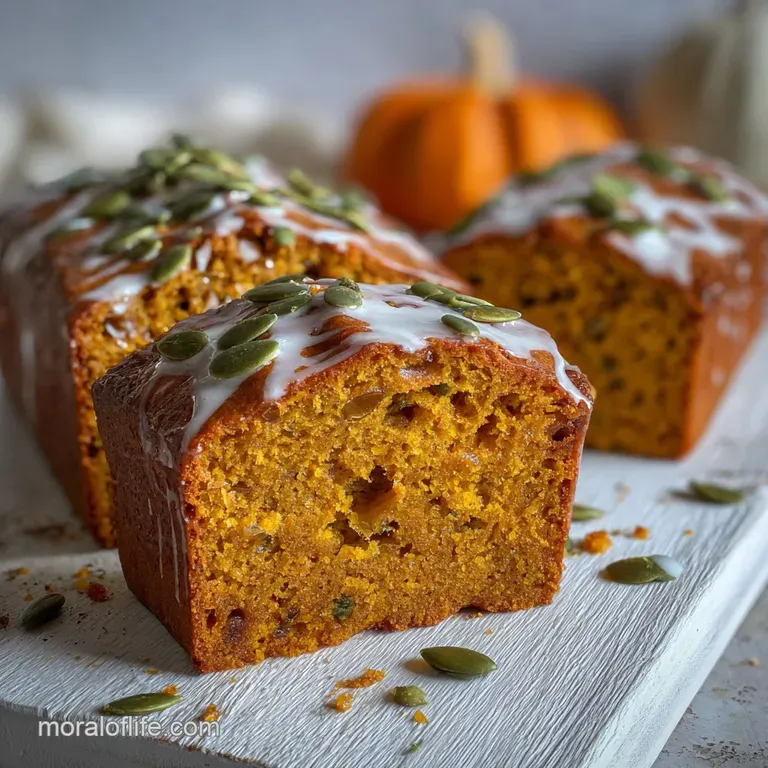
- Prep the Foundation. Preheat your oven to 175°C (350°F) and line your loaf pan with parchment paper. Note: Using a parchment sling makes removal much safer for the tender crumb.
- Sift the Dry. In a medium bowl, whisk together the flour, baking soda, baking powder, salt, cinnamon, nutmeg, cloves, and ginger until the color is uniform and no lumps remain.
- Emulsify the Wet. In a large bowl, whisk the pumpkin puree, granulated sugar, and brown sugar together until the mixture looks glossy and smooth.
- Add the Liquids. Whisk in the eggs one at a time, then slowly stream in the oil, milk, and vanilla until completely combined and no oil streaks show.
- Incorporate the Aromatics. Gently fold the dry ingredients into the wet ingredients using a spatula. Note: Stop as soon as the last streak of flour disappears to keep the bread tender.
- The Final Pour. Transfer the batter into the prepared pan and smooth the top with your spatula until it reaches the corners evenly.
- The Low and Slow Bake. Place the pan in the center of the oven and bake for 60 minutes until a skewer inserted in the center comes out clean or with just a few moist crumbs.
- The Cooling Window. Let the loaf sit in the pan for 15 minutes until the structure sets, then lift it out using the parchment sling.
- Prepare the Icing. Beat the cream cheese and butter until smooth, then sift in the powdered sugar and vanilla until the frosting is velvety and thick.
- The Final Touch. Spread the icing over the completely cooled loaf until it drips slightly down the sides.
Chef's Tip: Freeze your butter for 10 minutes before making the icing. Grating the slightly chilled butter into the cream cheese results in an ultra stable frosting that won't slide off a slightly warm loaf.
Pro Tips for Better Baking
Achieving the perfect rise and texture is often about what you don't do. The biggest pitfall in any quick bread is the temptation to keep stirring.
Preventing Gummy Textures
A gummy layer at the bottom of your loaf usually happens because the oven temperature was too low or the batter sat for too long before going into the oven. Once your baking soda hits the wet ingredients, the chemical reaction starts. You want that reaction to happen inside the hot oven, not on your counter.
Achieving the Perfect Crack
That iconic split down the middle of a pumpkin loaf is a sign of a good bake. If you want to "force" a professional looking crack, take a knife dipped in melted butter and draw a shallow line down the center of the batter right before putting it in the oven.
| Problem | Root Cause | Solution |
|---|---|---|
| Sunken Middle | Underbaked or too much leavener | Check temp with a probe; it should be 95°C |
| Dry Crumb | Too much flour or overbaked | Spoon and level flour; don't scoop directly |
| Tough Texture | Over mixing the batter | Use a spatula, not a whisk, for the final mix |
Common Mistakes Checklist:
- ✓ Check that your baking soda is fresh (it should bubble when dropped in vinegar)
- ✓ Use room temperature eggs to ensure the oil emulsifies correctly
- ✓ Don't open the oven door during the first 45 minutes of baking
- ✓ Let the loaf cool completely before icing, or it will melt into a mess
- ✓ Measure your pumpkin puree by weight to avoid excess moisture
Creative Flavor and Texture Swaps
The beauty of this base recipe is how well it handles additions. You can lean into the classic profile or take it in a completely different direction.
- The Chocolate Twist: Fold in 120g of dark chocolate chips. The bitterness of the cocoa balances the sweetness of the pumpkin perfectly.
- The Crunchy Topper: Skip the icing and sprinkle a handful of raw pepitas (pumpkin seeds) and a tablespoon of turbinado sugar over the batter before baking.
- The Healthy Swap: Replace half the all purpose flour with whole wheat pastry flour. It adds a nutty depth without making the loaf feel like a brick.
If you are looking for a more traditional holiday feel, you might consider trying a Rosca de Reyes recipe, which also emphasizes a beautiful, enriched dough structure.
If you want X, do Y: If you want a Starbucks style loaf, add extra ginger and a thick layer of salted pumpkin seeds on top. If you want a gluten-free version, use a high-quality 1:1 blend and let the batter rest for 15 minutes before baking.
If you want a dairy-free loaf, swap the milk for coconut milk and use a vegan butter substitute for the icing.
Proper Storage and Freezing Methods
Storage: This loaf is even better on day two. Keep it in an airtight container at room temperature for up to 3 days. If you've added the cream cheese icing, it must be stored in the fridge. It will stay moist in the refrigerator for up to 6 days.
Freezing: You can freeze the entire loaf or individual slices. Wrap the un iced loaf tightly in plastic wrap, then a layer of aluminum foil. It will stay fresh for up to 3 months.
To reheat, thaw at room temperature or pop a single slice in a toaster oven for 5 minutes at 150°C.
Zero Waste Tip: If you have half a can of pumpkin left over, don't throw it out! It can be stirred into oatmeal, used to thicken a vegetable curry, or even mixed into a Earthy Sweetness recipe for a hit of vitamin A.
Three Levels of Dessert Presentation
How you serve this loaf can change the entire experience. Whether it's a casual snack or a dinner party dessert, here is how to level up.
Simple: The Rustic Slice
Cut a thick, generous slice and serve it slightly warm. No icing, no fuss. This is perfect for a rainy morning with a cup of black coffee. The focus here is entirely on the spice and the tender crumb.
Polished: The Bakery Drizzle
Apply the cream cheese icing using a piping bag or a spoon to create controlled drips down the sides. Sprinkle a tiny bit of extra cinnamon or pumpkin pie spice over the top for a pop of color. This looks beautiful on a wooden serving board.
Restaurant: The Griddled Brioche Style
Take a slice of the un iced loaf and sear it in a pan with a little bit of butter until the edges are crispy and caramelized. Serve it with a dollop of cold whipped cream and a sprinkle of toasted pecans. The contrast between the hot, crispy exterior and the soft, cool cream is legendary.
| Level | Element | Sensory Goal |
|---|---|---|
| Simple | Plain slice | Focus on warm aroma |
| Polished | Thick icing | Creamy vs Spicy balance |
| Restaurant | Pan seared | Crispy edges / Velvet center |
Debunking Baking Myths
Myth 1: "Pumpkin pie filling is a shortcut for puree." Truth: This is a recipe for disaster. Pie filling contains spices, milk solids, and massive amounts of sugar. Using it will throw off the liquid to dry ratio and your loaf will likely never set in the middle.
Myth 2: "More spice makes a better loaf." Truth: Spices like cloves and nutmeg are incredibly powerful. If you double them, they can become medicinal and overpowering. The ratios in this pumpkin loaf recipe are designed to be "present" without being aggressive.
Myth 3: "You must use butter for flavor." Truth: In quick breads, oil is often superior. While butter adds a great flavor, its water content can lead to more gluten development, making the loaf tougher.
Oil is 100% fat, which coats the flour proteins more effectively, ensuring a shatter free, tender slice.
Pumpkin Loaf Recipe FAQs
What are common pumpkin bread mistakes?
Overmixing the batter is the biggest mistake. This develops too much gluten, leading to a tough, rubbery loaf instead of a tender crumb. Also, ensure your baking soda is fresh; old leaveners won't give adequate lift.
How to make pumpkin bread more flavorful?
Enhance spices and add richness. Don't be afraid to increase cinnamon, nutmeg, and cloves slightly, or try adding a pinch of cardamom. Folding in chocolate chips or a swirl of caramel can also boost flavor.
Can I use canned pumpkin pie filling instead of pumpkin puree?
No, never use pumpkin pie filling. It contains added sugars, spices, and dairy, which will drastically alter the recipe's balance and result in a gummy, overly sweet loaf that won't bake properly.
Does Joanna Gaines have a pumpkin bread recipe?
Joanna Gaines has not released a specific pumpkin bread recipe that is widely known, though she often features seasonal bakes on Magnolia Network. Her general approach emphasizes simple, wholesome ingredients.
Why is my pumpkin bread dense and gummy?
This usually means it was underbaked or overmixed. Ensure your oven temperature is accurate and that you've only mixed the batter until just combined. If using canned pumpkin, blotting it dry can also help prevent excess moisture.
How do I get a nice crack on top of my pumpkin bread?
Score the top of the batter before baking. A shallow cut down the center with a knife dipped in melted butter will encourage a controlled, professional looking crack as the loaf bakes and expands.
Can I substitute oil with butter in pumpkin bread?
Yes, but the texture will change. While butter adds flavor, its water content can lead to more gluten development, resulting in a tougher loaf. Oil is preferred for maintaining a tender, moist crumb, similar to how neutral oils ensure a supple texture in recipes like our Banana Bread: The Moist & Easy Recipe.
Pumpkin Loaf Recipe
Ingredients:
Instructions:
Nutrition Facts:
| Calories | 320 kcal |
|---|---|
| Protein | 3.8 g |
| Fat | 15.5 g |
| Carbs | 42.7 g |
| Fiber | 1.2 g |
| Sugar | 27.4 g |
| Sodium | 245 mg |
