Salted Apple Fritters: Crispy & Tart
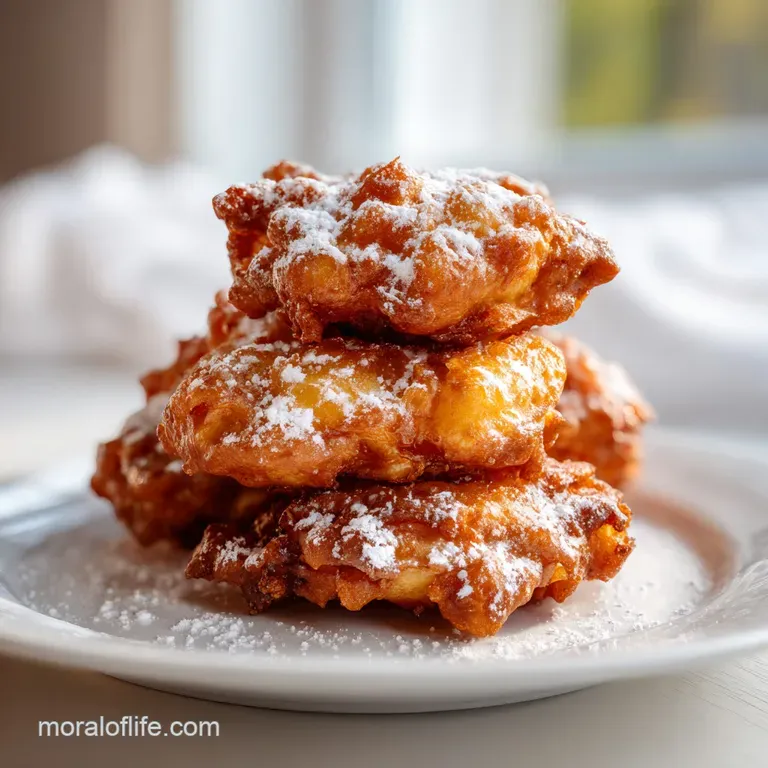
- Time: Active 15 minutes, Passive 15 minutes, Total 30 minutes
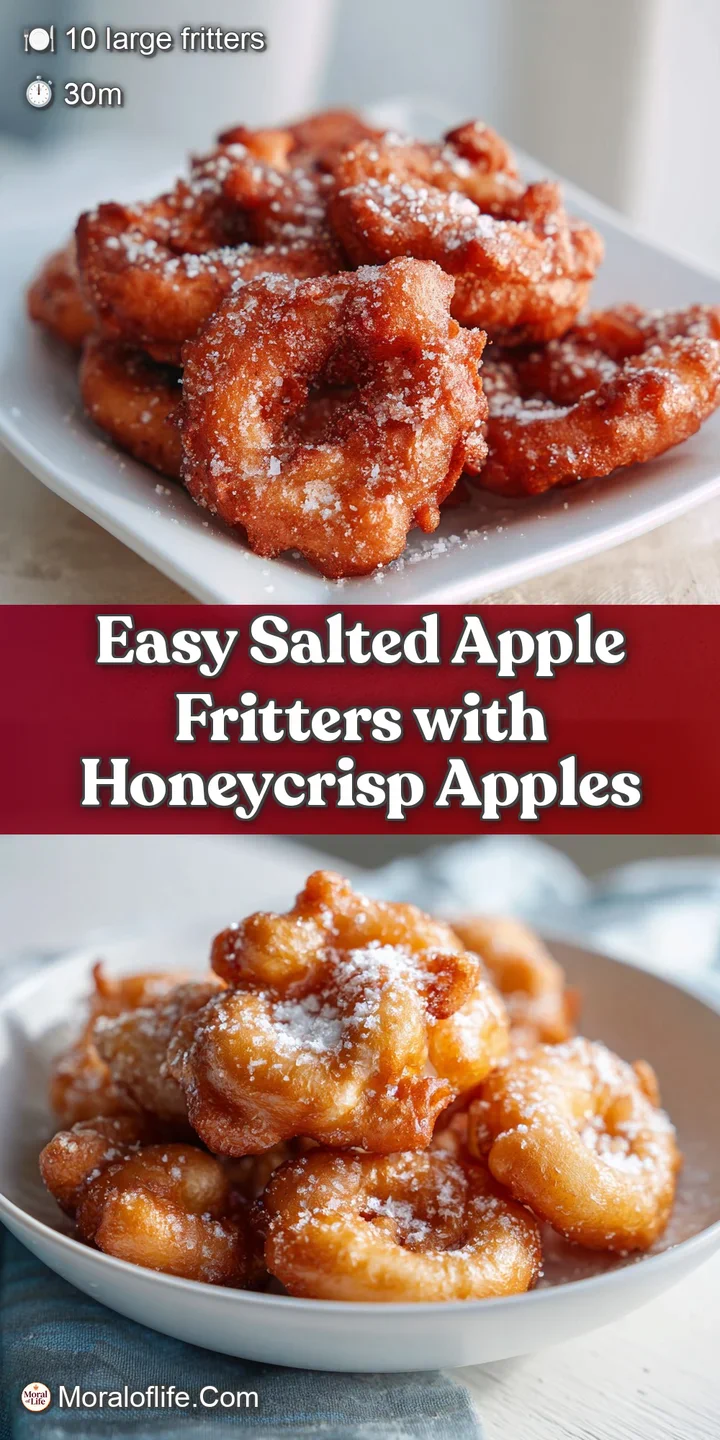
- Flavor/Texture Hook: Shatter crisp crust with tart, tender fruit
- Perfect for: Autumn brunch or cozy weekend treats
- The Ultimate Salted Apple Fritters Recipe
- The Thermodynamics of Fruit Batter
- Ingredient Deep Dive Analysis
- The Components You Will Need
- Tools For Fritter Success
- Step By Step Fritter Method
- Solving Common Fritter Failures
- Creative Ways To Customize
- Kitchen Wisdom and Myths
- Proper Storage And Reuse
- What Pairs With Salty Sweet
- Recipe FAQs
- 📝 Recipe Card
The Ultimate Salted Apple Fritters Recipe
The first time I tried making these, the kitchen smelled like a dream but the fritters looked like sad, soggy pancakes. I’d used too much milk and hadn’t waited for the oil to hit that sweet spot of heat.
There is nothing worse than biting into a doughy center when you were expecting that iconic bakery crunch. I spent that entire Saturday morning tweaking the flour ratio until I finally heard that glorious sizzle that meant I’d nailed it.
Now, every time I drop a scoop of this batter into the oil, I wait for that specific moment when the edges turn a deep mahogany. It’s a sensory rush. The aroma of cinnamon hitting hot fat is enough to bring everyone into the kitchen before I’ve even whisked the glaze.
These aren't your typical greasy donuts; they are fruit forward, salty sweet masterpieces that have ruined store-bought versions for me forever.
We are going for a texture that is light but substantial. By using Honeycrisp apples, we ensure the fruit keeps its bite instead of turning into mush. When you finish them with that flaked sea salt over the warm maple glaze, it creates a contrast that makes you want to reach for just one more.
Trust me, you'll want to make a double batch because they disappear in minutes.
The Thermodynamics of Fruit Batter
Starch Gelatinization: High heat causes the flour's starch to set instantly around the steam releasing apples, creating a sturdy but airy lattice. This structure prevents the fritter from collapsing or absorbing excess oil during the fry.
Leavening Expansion: The baking powder reacts twice - once when hitting the wet ingredients and again when the heat of the oil hits the batter. This dual expansion ensures the interior stays light and velvety rather than dense and cake like.
| Cook Method | Time | Texture | Best For |
|---|---|---|---|
| Shallow Fry | 4 minutes | Shatter crisp crust | Traditional bakery results |
| Air Fryer | 12 minutes | Soft and cakey | Low oil daily snacking |
| Deep Fry | 3 minutes | Uniformly golden | Large party batches |
Choosing the right method depends on how much you value that specific "snap" of the crust. While the air fryer is convenient, it lacks the Maillard reaction depth that shallow frying provides. For the most authentic experience, stick to the stovetop and use a heavy bottomed pan to maintain a steady temperature.
Ingredient Deep Dive Analysis
| Ingredient | Science Role | Pro Secret |
|---|---|---|
| Honeycrisp Apples | Structural Integrity | Dice them small for even cooking |
| Baking Powder | Aeration Agent | Check freshness by bubbling in water |
| Whole Milk | Moisture and Fat | Use room temperature to avoid clumping |
| All Purpose Flour | Gluten Framework | Sift to ensure a lump free batter |
The choice of apple is more than just flavor; it's about water content. Honeycrisp or Granny Smith apples are ideal because they hold their shape under intense heat. If you use a softer apple like a McIntosh, you’ll end up with a jammy interior that can make the fritter feel undercooked even when it isn't.
The Components You Will Need
To get started, gather these items. If you're missing something, don't panic - I've listed the best alternatives that won't ruin the vibe.
- 2 large Honeycrisp apples (approx. 400g): Peeled and diced into 1/2 inch cubes. Why this? High acidity and firm texture withstand frying.
- Substitute: Granny Smith apples for a tarter profile.
- 1.5 cups (190g) All purpose flour: The base for our structure. Why this? Provides the right gluten balance for a soft crumb.
- Substitute: 1:1 gluten-free baking blend (ensure it has xanthan gum).
- 2 tbsp (25g) Granulated sugar: Adds just enough sweetness to the dough.
- Substitute: Brown sugar for a deeper, molasses like undertone.
- 1.5 tsp Baking powder: Our primary lifting agent.
- 0.5 tsp Ground cinnamon: For that classic autumnal warmth.
- 0.25 tsp Nutmeg: Adds a subtle earthy complexity.
- 0.5 tsp Fine sea salt: Enhances the apple and spice flavors.
- 0.33 cup (80ml) Whole milk: Provides fat and hydration.
- Substitute: Oat milk for a nutty, dairy-free alternative.
- 1 large Egg: Binds the batter and adds richness.
- 1 tsp Vanilla extract: Rounds out the sweetness.
- 1 cup (120g) Powdered sugar: Sifted for the smoothest glaze.
- 2 tbsp (30ml) Pure maple syrup: The star of the salted finish.
- 2 tbsp (30ml) Hot water: To thin the glaze to a dipping consistency.
- 0.5 tsp Flaked sea salt: For that crucial crunchy, salty finish.
- 2 cups neutral oil: Such as grapeseed or canola, for frying.
Tools For Fritter Success
You don't need a professional kitchen, but a few specific tools make this much easier. A cast iron skillet is my favorite because it holds heat beautifully, preventing the oil temperature from dipping when you add the cold batter.
This is a trick I learned from my grandmother - her fritters were never greasy because the pan stayed hot.
You will also want a digital thermometer. Guessing the oil temperature is the fastest way to get burnt outsides and raw insides. Aim for 175°C (350°F). If you go higher, they brown too fast; lower, and they soak up oil like a sponge.
Finally,, a wire cooling rack is better than paper towels. Air needs to circulate around the fritter to keep it from steaming itself into sogginess.
step-by-step Fritter Method
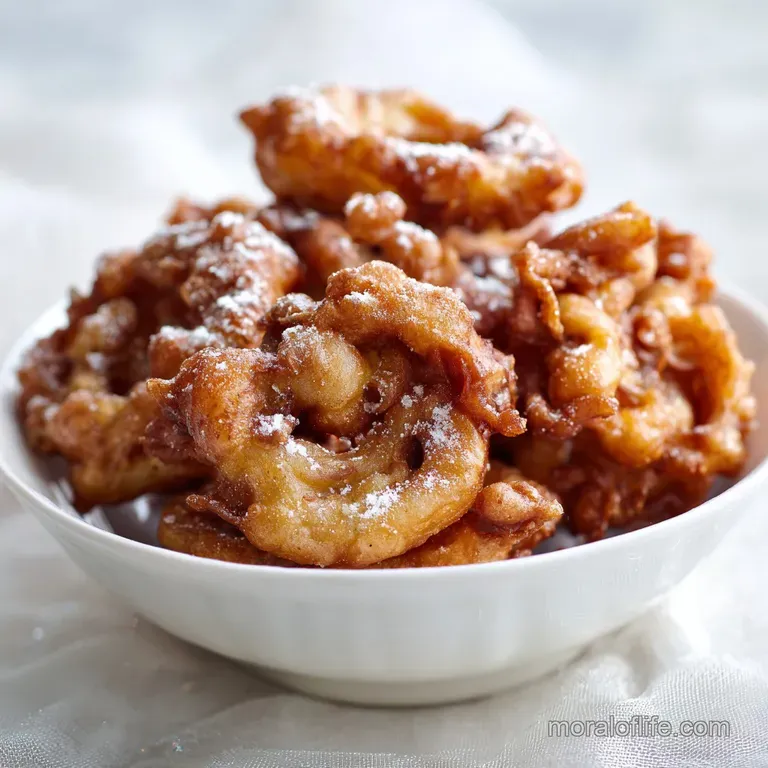
- Prep the fruit. Peel and dice the Honeycrisp apples into 1/2 inch cubes, ensuring they are uniform. Note: Small cubes cook through faster than large chunks.
- Combine dry ingredients. Whisk the flour, sugar, baking powder, cinnamon, nutmeg, and fine salt in a large bowl.
- Mix wet ingredients. Beat the egg, milk, and vanilla in a separate jug until fully combined and pale yellow.
- Form the batter. Pour the wet mix into the dry and fold gently with a fork. Note: Stop as soon as the flour streaks disappear to keep it tender.
- Fold in apples. Toss the diced apples into the batter, ensuring every piece is lightly coated.
- Heat the oil. Bring 2 cups of neutral oil to 175°C (350°F) in a heavy bottomed skillet until a drop of batter sizzles instantly.
- Fry the batches. Drop 1/4 cup scoops of batter into the oil, flattening slightly with the back of the spoon.
- Monitor the color. Cook for 2 minutes per side until deep mahogany and crackling.
- Glaze the fritters. Whisk the powdered sugar, maple syrup, and hot water until velvety and pourable.
- Add the finish. Dip the warm fritters into the glaze and immediately sprinkle with flaked sea salt.
Solving Common Fritter Failures
If your first batch doesn't turn out quite right, it's usually a matter of temperature or moisture. One mistake I once made was washing the diced apples and not drying them - the extra water thinned the batter and made a mess.
If you notice your apples are very juicy, pat them dry with a clean kitchen towel before folding them in.
Much like the technique used in my Recipe for Fried Apples, the goal is to manage the fruit's moisture so it doesn't dilute the glaze or the dough. If the batter seems too thin, add a tablespoon of flour at a time until it holds its shape on a spoon.
Why Your Fritters Are Greasy
If the oil isn't hot enough, the batter will absorb the fat before the outer crust can seal. This usually happens if you overcrowd the pan. Fry only 3 or 4 at a time to keep the oil temperature stable.
| Problem | Root Cause | Solution |
|---|---|---|
| Raw Center | Oil too hot | Lower heat and cook longer |
| Flat Fritters | Overmixed batter | Fold gently until just combined |
| Soggy Crust | Steaming on towels | Use a wire rack for cooling |
Another common hurdle is the "tapered" cook, where the outside is dark but the middle is gummy. This is the classic sign of high heat. If your oil is smoking, it’s definitely too hot. Pull the pan off the heat for a minute to let it settle before continuing.
Common Mistakes Checklist
- ✓ Pat apples completely dry after dicing to prevent a runny batter.
- ✓ Use a thermometer to maintain a steady 175°C oil temperature.
- ✓ Don't overmix the batter; a few lumps are actually okay.
- ✓ Let the fritters drain on a wire rack, not directly on paper.
- ✓ Apply the glaze while the fritters are still warm for better adhesion.
Creative Ways To Customize
Scaling this recipe is straightforward as long as you watch the leavening. If you're doubling the batch for a crowd, keep your spice levels at 1.5x rather than a full 2x to prevent the nutmeg from becoming overpowering.
For smaller portions, you can halve everything easily, though you’ll need to beat the egg first and use roughly half of it.
For another decadent treat, try my Mountain Dew Apple Dumplings recipe if you want a version that uses a shortcut citrus soda for the sauce. If you want to customize these Salted Apple Fritters, consider adding a handful of toasted pecans for crunch or a dash of cardamom to the batter for a floral note.
| Feature | Premium Version | Budget Version | Flavor Impact |
|---|---|---|---|
| Sweetener | Pure Maple Syrup | Pancake Syrup | Deep caramel vs. simple sweet |
| Fat Source | Whole Milk | Water + Butter | Richness and crumb tenderness |
| Spice | Fresh Grated Nutmeg | Pre ground Nutmeg | Sharp aroma vs. subtle warmth |
The budget version still tastes incredible, but the pure maple syrup really makes that salted finish pop. If you're looking to save money, stick to a high-quality cinnamon, as that's the dominant flavor profile.
Kitchen Wisdom and Myths
One huge myth is that you need a deep fryer to get a crispy fritter. A standard skillet works just as well, provided you have at least 2 cm of oil depth. In fact, shallow frying allows you to flip the fritter and get a better look at the crust development.
Another misconception is that the glaze should be thick like frosting. A true fritter glaze should be thin and translucent, soaking slightly into the warm crust to create a "glassy" finish. If your glaze is too thick, just add a few more drops of hot water until it runs off the spoon easily.
Proper Storage And Reuse
Store any leftovers in an airtight container at room temperature for up to 2 days. To bring back that "shatter" crunch, avoid the microwave at all costs. Instead, pop them into a 180°C oven for 5 minutes. This will re crisp the exterior without drying out the apples.
For zero waste cooking, save the apple peels! You can simmer them with a bit of sugar and water to make a quick apple simple syrup for coffee, or toss them with cinnamon and bake them into "chips." If you have leftover glaze, it's brilliant drizzled over oatmeal or even used as a dip for pretzels.
What Pairs With Salty Sweet
These fritters are quite rich, so they pair best with something that has a bit of acidity or bitterness. A sharp, black coffee or a cold glass of apple cider works beautifully. If you're serving these for a fancy brunch, a side of Greek yogurt with a bit of lemon zest can help cut through the sweetness of the maple glaze.
If you’re in the mood for a full apple themed spread, you could serve these alongside a warm Baked Apples Recipe. The contrast between the soft, baked fruit and the crispy fried batter is a texture lover's dream. No matter how you serve them, the combination of warm spice, tart fruit, and that final hit of sea salt is always a winner.
Recipe FAQs
What are common fritter mistakes?
Oil temperature fluctuation and overmixing the batter are the most common issues. If the oil is too cool, the fritters absorb excess fat, making them greasy; if you overmix, the gluten develops, leading to a dense, tough texture instead of airy.
What are the best apples to use for apple fritters?
Honeycrisp or Granny Smith apples are the best choices. These varieties maintain their firm structure when exposed to high heat, preventing them from turning mushy inside your batter.
Why are my apple fritters not crispy?
No, the oil temperature was likely too low, or you let them steam after frying. If the oil is below 175°C (350°F), the crust can't set immediately, causing oil absorption; also, draining them on paper towels traps steam, which softens the exterior.
What are the ingredients in apple fritters?
The core ingredients are diced firm apples, all-purpose flour, sugar, baking powder, cinnamon, egg, and milk. The defining feature of this version is the addition of flaked sea salt over a maple glaze finish.
How to achieve the perfect shatteringly crisp crust on a fritter?
Maintain oil temperature strictly at 175°C (350°F) and fry in small batches. Overcrowding the pan causes the temperature to plummet, resulting in soggy absorption rather than a fast, crisp seal.
Is it true that I must use butter for the richest flavor in the batter?
No, whole milk is generally preferred for better frying performance. Whole milk introduces fat and moisture evenly, which aids in a tender crumb; using solid butter can sometimes introduce lumps that don't emulsify well into the wet mix.
How to stop my maple glaze from becoming runny?
Reduce the amount of hot water used to thin the powdered sugar. Start with just one teaspoon of water, whisking thoroughly, and only add more drop by drop until the glaze is pourable but still thick enough to cling to the warm apple pieces.
Salted Apple Fritters Recipe
Ingredients:
Instructions:
Nutrition Facts:
| Calories | 264 kcal |
|---|---|
| Protein | 3.6 g |
| Fat | 10.8 g |
| Carbs | 39.2 g |
| Fiber | 1.8 g |
| Sugar | 21.4 g |
| Sodium | 284 mg |
