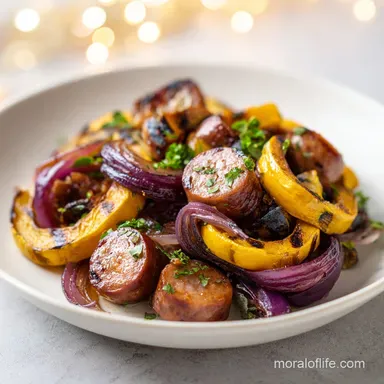
Sausage Butternut Squash: Roasted Sheet Pan

- Time: 15 min active + 30 min roasting = Total 45 mins
- Flavor/Texture Hook: Charred, salty sausage paired with velvety, maple glazed squash
- Perfect for: Weeknight dinner, meal prep, beginner friendly
Sausage Butternut Squash
The first thing you'll notice is that sharp, savory sizzle as the sausage hits the heat, followed quickly by the scent of maple and sage filling the kitchen. It's that specific smell that tells you dinner is actually going to be good.
I remember the first time I tried a version of this, I just threw everything on a small baking sheet and hoped for the best. I ended up with what I can only describe as a vegetable soup on a tray - the squash was mushy, the sausage was grey, and nothing had any color.
The problem was simple: I overcrowded the pan. When you pack ingredients too tightly, they release moisture that has nowhere to go, so they steam instead of roast. I spent a few weeks playing with pan sizes and temperatures until I found the sweet spot.
Now, this is a dependable recipe I repeat with confidence because it actually delivers those caramelized, browned edges we're all looking for.
You can expect a dish that balances the saltiness of smoked sausage with the natural sweetness of the squash. It's a hearty, comforting meal that doesn't require a mountain of dishes. Trust me on this - the lemon juice at the end is what makes it sing, cutting through the richness of the sausage and the maple syrup.
Why Most Recipes Fail
Most people treat a sheet pan like a storage bin, piling everything on top of each other. This is the biggest mistake. If the squash pieces are touching, they trap steam, which prevents the sugars in the maple syrup from caramelizing.
You want a single layer with a bit of breathing room so the hot air can circulate around every single piece.
Another common issue is the size mismatch. If you cut your sausage into thick chunks and your squash into tiny cubes, the squash will be a puree by the time the sausage is charred. Consistency is key here. By keeping the squash at a 3/4 inch cube, it matches the cooking time of the sliced sausage and the onion wedges.
Finally,, many recipes skip the acid. Without a hit of lemon juice or vinegar at the end, the dish can feel "heavy" or one dimensional. The acid wakes up the sage and the maple, making the whole thing taste bright rather than just salty and sweet.
Recipe Specs
When deciding how to cook this, you might wonder if the stovetop is faster. While a skillet can brown the sausage quickly, you lose the effortless nature of the oven. In a pan, you're constantly stirring to prevent the squash from sticking, whereas the oven does the heavy lifting for you.
| Method | Time | Texture | Best For |
|---|---|---|---|
| Oven Roast | 45 mins | Charred & Tender | Hands off cooking |
| Stovetop | 30 mins | Softer & Sautéed | Very small batches |
| Slow Cooker | 4 hours | Soft & Stewed | Set and forget |
This recipe is designed for a standard large sheet pan. If you're using a smaller pan, I strongly suggest roasting in two batches. It's better to spend an extra 30 minutes cooking than to end up with soggy vegetables.
The Building Blocks
The magic here happens because of how the ingredients interact under high heat. According to guides on roasting at Serious Eats, the key to browning vegetables is removing surface moisture and using enough fat to conduct heat.
- Sugar Caramelization
- The maple syrup doesn't just add sweetness; it helps the squash brown faster and creates a sticky glaze.
- Fat Distribution
- Olive oil coats the ingredients, ensuring the heat hits every surface evenly.
- Aromatic Infusion
- Sage and red pepper flakes infuse into the oil, flavoring the sausage and squash simultaneously.
- Acid Balance
- Lemon juice breaks down the heavy fats from the smoked sausage.
| Ingredient | Science Role | Pro Secret |
|---|---|---|
| Maple Syrup | Glazing agent | Use Grade A for a milder, cleaner sweetness |
| Smoked Sausage | Flavor base | Slice on a slight diagonal for more surface area to char |
| Butternut Squash | Bulk & Texture | Cube exactly to 3/4 inch for uniform doneness |
| Lemon Juice | pH Balance | Squeeze it over the pan immediately after removing from oven |
Essential Kitchen Tools

You don't need a fancy arsenal for this. A large rimmed baking sheet is the only non negotiable. I prefer a heavy duty aluminum one because it distributes heat more evenly than thin, cheap pans.
I also highly recommend parchment paper. It's not just about the cleanup - it prevents the maple syrup from sticking to the pan and burning, which can leave a bitter taste. A large mixing bowl is essential for tossing everything; trying to season the food directly on the pan often leads to uneven coating.
For the flipping process, a wide silicone spatula is your best friend. It lets you turn the squash cubes without breaking them apart. If you're struggling to peel the squash, a sturdy Y peeler is much safer and faster than using a knife.
Step-by-step Instructions
Let's crack on. Make sure your oven is fully preheated before you start tossing the ingredients, or you'll lose that initial sear.
- Preheat your oven to 400°F (200°C). Note: A hot oven is mandatory for roasting rather than steaming.
- In a large mixing bowl, toss the cubed squash, sliced sausage, and red onion wedges with olive oil, maple syrup, dried sage, salt, pepper, and red pepper flakes. Note: Mix until every piece is glistening.
- Spread the mixture in a single layer on a parchment lined sheet pan. Ensure there is space between pieces so they can roast.
- Bake for 15 minutes. Note: This sets the first layer of browning.
- Flip the ingredients halfway through with a spatula. Look for the sausage edges to be starting to crisp.
- Bake for another 15 minutes until the squash is fork tender and the sausage edges are charred.
- Remove the pan from the oven immediately.
- Drizzle with lemon juice while the pan is still sizzling.
- Sprinkle with fresh parsley and grated Parmesan cheese.
- Serve immediately while the cheese is just starting to melt.
Common Pitfalls
One of the biggest complaints with a Sausage Butternut Squash tray bake is when the squash stays hard while the sausage burns. This usually happens if the squash cubes are too large or if the oven temperature is too low.
If you see the sausage getting too dark, you can tent the pan with foil, but usually, adjusting the cube size is the real fix.
Why Your Squash is Mushy
This happens when you overcrowd the pan or use a "frozen" squash mix that has too much added water. The vegetables release steam, and instead of roasting, they boil in their own juices. Use fresh squash and give them space.
Why the Sausage is Burnt
If your sausage slices are too thin, they'll overcook before the squash is soft. Stick to 1/2 inch rounds. If you're using a very lean sausage, it may dry out, so ensure it's well coated in the oil and maple mixture.
| Problem | Root Cause | Solution |
|---|---|---|
| Soggy Vegetables | Overcrowded pan | Use two pans or roast in batches |
| Bland Flavor | Under seasoning | Add a pinch more salt before roasting |
| Burnt Syrup | Too much syrup | Stick to 1 tbsp; don't over glaze |
Checklist for Success:
- ✓ Squash is cut into uniform 3/4 inch cubes.
- ✓ Ingredients are spread in a single layer (no overlapping).
- ✓ Pan is parchment lined to prevent sticking.
- ✓ Lemon juice is added at the very end, not at the start.
- ✓ Sausage is flipped halfway through for even char.
Creative Flavor Twists
If you want to change things up, you can easily swap the flavor profile. I love using this as a base for different seasons. For a more autumn inspired version, replace the sage with fresh rosemary and add a few dried cranberries during the last 5 minutes of roasting.
For those who want something a bit more indulgent, you can toss the finished roast with some cooked gnocchi or pasta. If you're in the mood for something like my creamy sausage rigatoni, you can use this roasted mix as a chunky topping for a cream based pasta.
Diet Friendly Swaps
If you're avoiding dairy, skip the Parmesan and add a sprinkle of nutritional yeast for that nutty, salty finish. For a lower sugar version, replace the maple syrup with a tiny bit of honey or just omit it entirely - the squash is naturally sweet enough on its own.
Pairing Suggestions
This dish is a complete meal, but if you're feeding a crowd, it goes great with a side of crusty sourdough. For a holiday feel, I'd serve it alongside a buttery herb stuffing to lean into those cozy, earthy flavors.
Storage and Waste
Leftovers are actually great the next day. Store the roasted mix in an airtight container in the fridge for up to 4 days. When reheating, avoid the microwave if you can. Instead, pop it back in a toaster oven or a skillet over medium heat for 5 minutes.
This brings back the charred texture that a microwave usually turns into mush.
You can freeze this for up to 2 months, although the squash may lose a bit of its structural integrity. If you do freeze it, thaw it overnight in the fridge before reheating in the oven at 350°F (175°C).
To keep things zero waste, don't throw away the butternut squash peels. If you scrub the squash well, you can toss the peels in a bit of oil and salt and roast them right along with the main dish. They turn into salty, crispy chips that are surprisingly addictive.
Serving Suggestions
The best way to serve this is straight from the pan to a platter. To make it look a bit more "put together," I like to place the roast over a bed of fresh baby spinach. The heat from the vegetables wilts the spinach just enough to make it a great base.
Another great option is to serve it inside a roasted acorn squash bowl. Just halve an acorn squash, roast it separately, and scoop this Sausage Butternut Squash mixture right into the center. Top it with an extra pinch of Parmesan and a crack of black pepper.
For a more balanced plate, add a dollop of Greek yogurt or sour cream on the side. The coolness of the cream balances the heat from the red pepper flakes and the richness of the smoked sausage, making every bite feel a bit more refreshing.
Recipe FAQs
How long can I store leftovers in the fridge?
Up to 4 days. Store the roasted mixture in an airtight container to maintain quality.
Is it true that I can crowd the sheet pan to save time?
No, this is a common misconception. Crowding the pan leads to steaming rather than roasting, which prevents the ingredients from browning.
How to reheat the roast without it getting mushy?
Use a toaster oven or a skillet over medium heat for 30 minutes. This restores the charred texture that microwaves typically destroy.
How to ensure the squash and sausage cook evenly?
Cut the squash into 3/4-inch pieces and sausage into 1/2-inch rounds. Flip the mixture halfway through the 25–30 minute roasting period.
Can I freeze this dish for later use?
Yes, for up to 2 months. Thaw the dish overnight in the fridge and reheat in the oven at 350°F (175°C).
What should I serve with this roasted mix?
A rich pasta side complements the flavors. This pairs perfectly with a cream cheese alfredo for a more filling dinner.
Does the oven need to be fully preheated?
Yes, it is mandatory. Starting at a full 400°F (200°C) ensures the ingredients sear immediately rather than steaming.
Sausage Butternut Squash for 4 Servings