Vidalia Onion Dressing
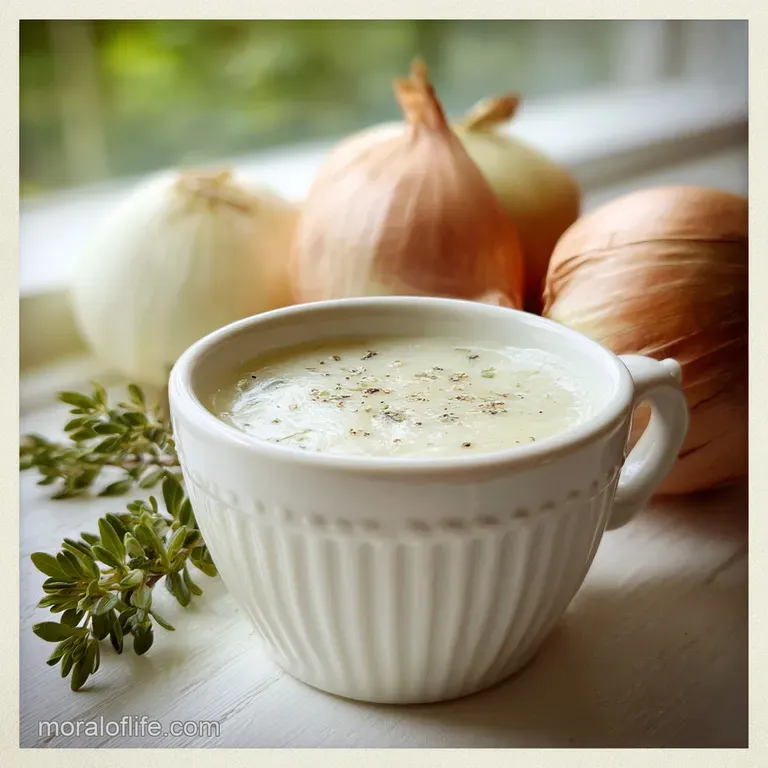
- Time: Active 10 minutes, Passive 0 minutes, Total 10 minutes
- Flavor/Texture Hook: Creamy yet light with a sharp, sweet, and velvety finish
- Perfect for: Weeknight meal prep, summer potlucks, and brightening up grilled proteins
- Create a Fresh Homemade Vidalia Onion Dressing
- Essential Planning for Weekly Prep
- Analyzing the Primary Ingredients
- Essential Tools for Smooth Blending
- Step-by-Step Emulsion Technique
- Troubleshooting Texture and Flavor Issues
- Flavor Variations for Every Season
- Storage and Zero Waste Methods
- Serving Ideas for Your Dressing
- Vidalia Onion Dressing FAQs
- 📝 Recipe Card
That first sharp, sweet hit of a freshly sliced Vidalia onion is the official start of summer in my house. I used to rely on the bottled stuff, specifically that Vidalia onion dressing Virginia brand we all see at the store, but once I started making it from scratch, there was no going back.
The difference between shelf stable and fresh is like comparing a grainy photo to a high definition movie, the flavors just pop in a way that pre packaged versions can't touch.
We've all been there, staring at a head of lettuce on a busy weeknight, wishing for a dressing that doesn't taste like chemicals or pure corn syrup. This Vidalia Onion Dressing is my secret weapon for those moments.
It's incredibly dependable, coming together in less time than it takes to find your car keys, and it uses ingredients you likely already have tucked away in your cupboards.
Honestly, don't even bother with the low-fat versions or the "onion flavored" shortcuts. We're going for a genuine, homemade feel here that focuses on the actual vegetable. This isn't just a topping, it's a way to rescue boring greens or add a silky layer of flavor to a hearty chicken salad.
Trust me on this, once you see how easy it is to emulsify this into a smooth, pourable gold, you'll be a convert too.
Create a Fresh Homemade Vidalia Onion Dressing
Understanding the chemistry behind a good vinaigrette helps you repeat it with confidence every single time. It's not just about mixing oil and vinegar, it's about managing how those molecules interact so you don't end up with a greasy mess at the bottom of the bowl.
The Science of Why it Works
- Lipid Emulsification: The Dijon mustard acts as a surfactant, bridging the gap between water based vinegar and oil to create a stable, creamy suspension.
- Volatile Sulfur Reduction: Vidalia onions have a lower pyruvate content than standard yellow onions, which prevents the sharp, stinging "bite" and allows the sweetness to lead.
- Acid Sugar Synergy: The apple cider vinegar provides acetic acid that breaks down the honey's complex sugars, creating a balanced pH that brightens the palate without being cloyingly sweet.
Chef's Tip: For an even deeper flavor profile, freeze your Vidalia onion for 10 minutes before roughly chopping it. This slightly breaks the cell walls, releasing more of those sweet juices during the blending process without making the onion mushy.
Another trick I learned after a few failed attempts is to add a tiny pinch of espresso powder if you're using this as a marinade for beef. While not in the base recipe for salads, it acts like a hidden bass note that deepens the savory qualities of the onion. But for our classic version, we stick to the celery seed.
It provides that specific, nostalgic "deli" aroma that makes this dressing feel authentic and professional.
Essential Planning for Weekly Prep
When you're looking for a dependable recipe, timing is everything. I like to make this on a Sunday evening so it's ready for the work week. The flavors actually improve after a night in the fridge, as the celery seeds soften and release their oils into the vinegar base.
| Feature | Specification | Detail |
|---|---|---|
| Active Prep | 10 minutes | Peeling, chopping, and blending |
| Servings | 12 servings | Roughly 1.5 to 2 tablespoons per person |
| Consistency | Velvety Emulsion | Smooth and pourable, not oily |
If you're wondering about the "fresh vs shortcut" debate, I've done the legwork for you. I once tried using dried onion flakes in a pinch, and let me tell you, it was a disaster. The texture was gritty and the flavor was flat. Always stick to the fresh bulb for that signature sweetness.
| Fresh Vidalia | Bottled Shortcut | The Trade off |
|---|---|---|
| Flavor | Bright, sweet, complex | Muted, often overly sugary |
| Texture | Silky and fresh | Thickened with gums/starch |
| Shelf Life | 10 days (fridge) | 6 months (pantry) |
Analyzing the Primary Ingredients
Choosing the right components is the difference between a "good" dressing and a "repeat with confidence" staple. Not all oils or vinegars are created equal, especially when they are the stars of the show.
Component Analysis
| Ingredient | Science Role | Pro Secret |
|---|---|---|
| Vidalia Onion | Low sulfur base | Choose heavy, firm onions for maximum juice content. |
| Apple Cider Vinegar | Acetic acid source | Use the "with the mother" version for a rounder, less harsh tang. |
| Dijon Mustard | Primary Emulsifier | Never use yellow mustard; the spice profile is too distracting here. |
| Honey | Glucose/Fructose balance | Microwave for 5 seconds to make it pourable and easier to blend. |
The Acidic Foundation
The choice of apple cider vinegar isn't accidental. While white vinegar is too aggressive and balsamic is too dark, apple cider vinegar provides a fruity undertone that complements the natural sugars in the Vidalia. It helps to "cook" the raw onion slightly as it sits, mellowing the flavors into a cohesive unit.
Balancing Sweetness and Salt
We use sea salt because the larger crystals dissolve more predictably into the vinegar before the oil is added. If you use standard table salt, start with a little less, as the finer grain can make the dressing taste overly sharp very quickly.
The honey provides the necessary viscosity to help the dressing cling to your salad leaves rather than sliding off to the bottom.
Essential Tools for Smooth Blending
You don't need a professional kitchen, but a few specific tools make this "normal Tuesday" prep much easier. I've tried whisking this by hand, and while it's possible, your arm will definitely feel it the next day.
- High Speed Blender: This is the best way to get that "shatter smooth" consistency where the onion disappears into the liquid.
- Glass Mason Jar: Perfect for both mixing (if using an immersion blender) and storing.
- Digital Scale: I prefer weighing the onion (about 150 grams for 1 cup chopped) to ensure the ratio of vegetable to oil is consistent.
For a Permanent Emulsion
Using an immersion blender is my favorite method. It allows you to control the vortex of the liquid. If you pour the oil in a slow, steady stream while the blades are spinning, you create smaller fat droplets. This results in a "velvety" mouthfeel that doesn't separate even after sitting in the fridge for a few hours.
Preserving Vital Nutrients
When blending, try not to let the motor run so long that the dressing gets hot. Heat can oxidize the neutral oils and dull the bright notes of the cider vinegar. Use short pulses once the onion is broken down to keep everything cool and fresh.
step-by-step Emulsion Technique
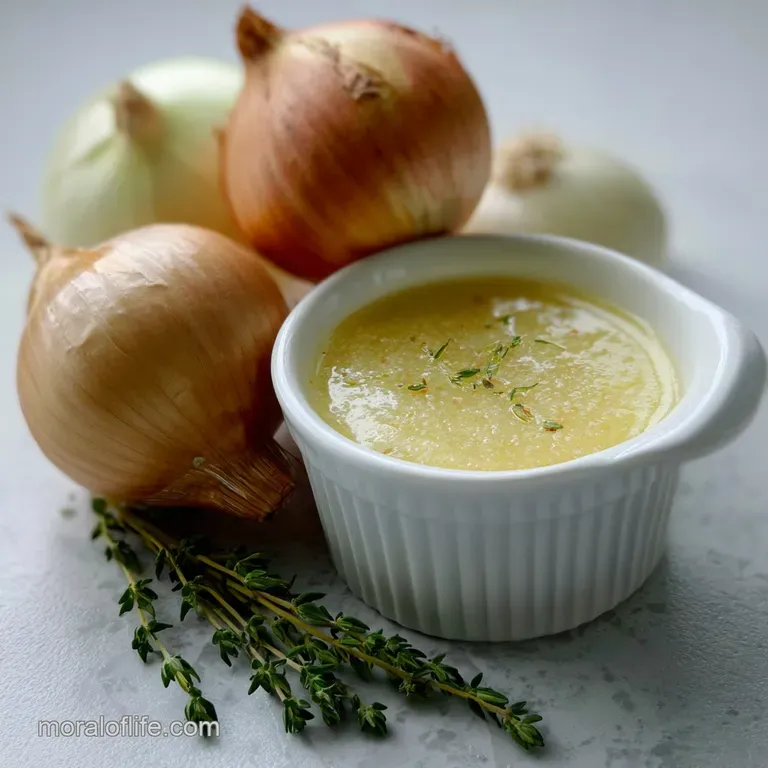
Let's crack on with the actual process. This is a "no cook" recipe, but the order of operations matters significantly for the final texture.
- Prep the onion. Peel and roughly chop 1 cup Vidalia onion. Note: Small chunks blend faster and more evenly.
- Combine the base. Place the onion, 0.5 cup apple cider vinegar, 3 tbsp honey, and 1 tbsp Dijon mustard into the blender.
- Season the mix. Add 1 tsp sea salt, 0.5 tsp fresh cracked black pepper, and 0.5 tsp celery seed.
- Initial liquefaction. Pulse the blender 5-7 times until the onion is a smooth puree.
- Start the emulsion. Set the blender to a low medium speed.
- Slow drizzle. Slowly pour in the 0.75 cup neutral oil in a thin, continuous stream. Note: This allows the mustard to coat the oil droplets.
- Monitor the thickening. Continue blending for 30 seconds until the mixture looks opaque and creamy.
- The taste test. Dip a leaf of lettuce into the dressing to check the balance.
- Final adjustment. Add a pinch more salt if the vinegar is too dominant.
- Transfer and chill. Pour into a jar and refrigerate for at least 1 hour until the flavors are fully married.
Troubleshooting Texture and Flavor Issues
Even the most dependable recipes can hit a snag. Maybe your onion was particularly watery, or perhaps you poured the oil a little too fast. Don't toss it out just yet, most issues are easily fixed with a little kitchen logic.
Preventing a Bitter Finish
If your dressing tastes slightly bitter, it's usually because the onion was older or the oil has started to oxidize. You can counteract this by adding a tiny pinch of sugar or a teaspoon of heavy cream. The fat in the cream coats the tongue and masks the bitter notes.
Fixing a Broken Dressing
A "broken" dressing is when you see streaks of oil floating on top of the vinegar base. This happens when the emulsion fails. To fix this, put a fresh teaspoon of Dijon mustard in a clean bowl and slowly whisk the broken dressing into it, one tablespoon at a time, until it re emulsifies.
| Problem | Root Cause | Solution |
|---|---|---|
| Separating | Added oil too fast | Whisk in a fresh tsp of mustard. |
| Too Thin | Not enough onion bulk | Blend in 1/4 cup more onion. |
| Overly Sour | Low honey content | Add 1 tsp honey and re blend. |
But what about the sogginess? If you find your salad gets soggy too fast, it's likely because the dressing is too thin. Ensure your oil to vinegar ratio is correct. The 0.75 cup oil to 0.5 cup vinegar is the sweet spot for a dressing that coats without drowning the greens.
Flavor Variations for Every Season
This Vidalia Onion Dressing is a great canvas. Once you have the base down, you can pivot the flavor profile to match whatever is growing in your garden or sitting in your crisper drawer.
Finding a Suitable Substitute
If you can't find Vidalia onions (they have a short season!), you need a substitute that won't overwhelm the other ingredients. I've found that a mix of shallots and a pinch of sugar works best.
| Original Ingredient | Substitute | Why It Works |
|---|---|---|
| Vidalia Onion | Walla Walla Onion | Similar low sulfur content and sweetness. |
| Neutral Oil | Extra Virgin Olive Oil | Adds a peppery note. Note: May solidify in the fridge. |
| Honey | Maple Syrup | Provides a deeper, woody sweetness. |
A quick paragraph about oil: I generally recommend avocado or grapeseed oil because they have a neutral flavor. If you use a high-quality olive oil, it's "delicious" (oops, let's say "complex"), but it will turn into a solid block in the fridge.
If that happens, just let it sit on the counter for 15 minutes before serving.
Adding Fresh Herbs
If you want to move away from the "sweet vidalia onion dressing" vibe and toward something more savory, add a handful of fresh dill or chives at the very end. Pulse them in just enough to chop them but not so much that the whole dressing turns green.
This is particularly good if you're making a vidalia onion dressing corn chicken salad.
Storage and Zero Waste Methods
This dressing is a meal prep dream. Because of the high acid content from the apple cider vinegar, it stays fresh longer than dairy based dressings.
- Fridge: Store in an airtight glass jar for up to 10 days. Give it a good shake before each use.
- Freezer: I don't recommend freezing this dressing. The emulsion will completely break upon thawing, leaving you with a grainy, separated mess.
- Zero Waste: If you have a few tablespoons left in the jar that you can't scrape out, don't wash them away! Toss a handful of warm, cooked potatoes or some shredded rotisserie chicken directly into the jar to pick up every last bit of flavor.
If you find yourself with half a Vidalia onion leftover, don't let it sit in the fridge to dry out. Slice it paper thin, quick pickle it in a bit of the apple cider vinegar and salt, and use it as a crunchy topper for your salads alongside the dressing. It's a "no waste" win that adds another layer of texture.
Serving Ideas for Your Dressing
While we often think of this solely as a salad topper, "recipes with vidalia onion dressing" can span the entire menu. It's effectively a sweet and sour marinade that works wonders on proteins.
The Iconic Corn Chicken Salad
This is my absolute favorite way to use this recipe. Mix shredded chicken, charred corn kernels, black beans, and diced red bell pepper. Toss it generously with the dressing. The sweetness of the corn mirrors the onion in the dressing, while the vinegar cuts through the richness of the chicken.
It's a staple for my family's summer gatherings.
Grilling with Onion Dressing
- If you want a glaze
- Brush the dressing on pork chops during the last 5 minutes of grilling. The honey will caramelize into a sticky, savory crust.
- If you want a dip
- Mix 1/4 cup of the dressing with 1/2 cup of Greek yogurt for a zippy vegetable dip.
- If you want a slaw
- Shred a head of cabbage and let it sit in the dressing for 30 minutes before serving.
There is a certain comfort in knowing you have a jar of this in the fridge. It represents a bit of planning that pays off when the workday gets long and the kitchen feels like a chore.
Whether you're making a "homemade vidalia onion dressing" for a fancy Sunday roast or just drizzling it over some sliced tomatoes for a quick lunch, it's a recipe that never lets you down. Right then, let's get those blenders spinning!
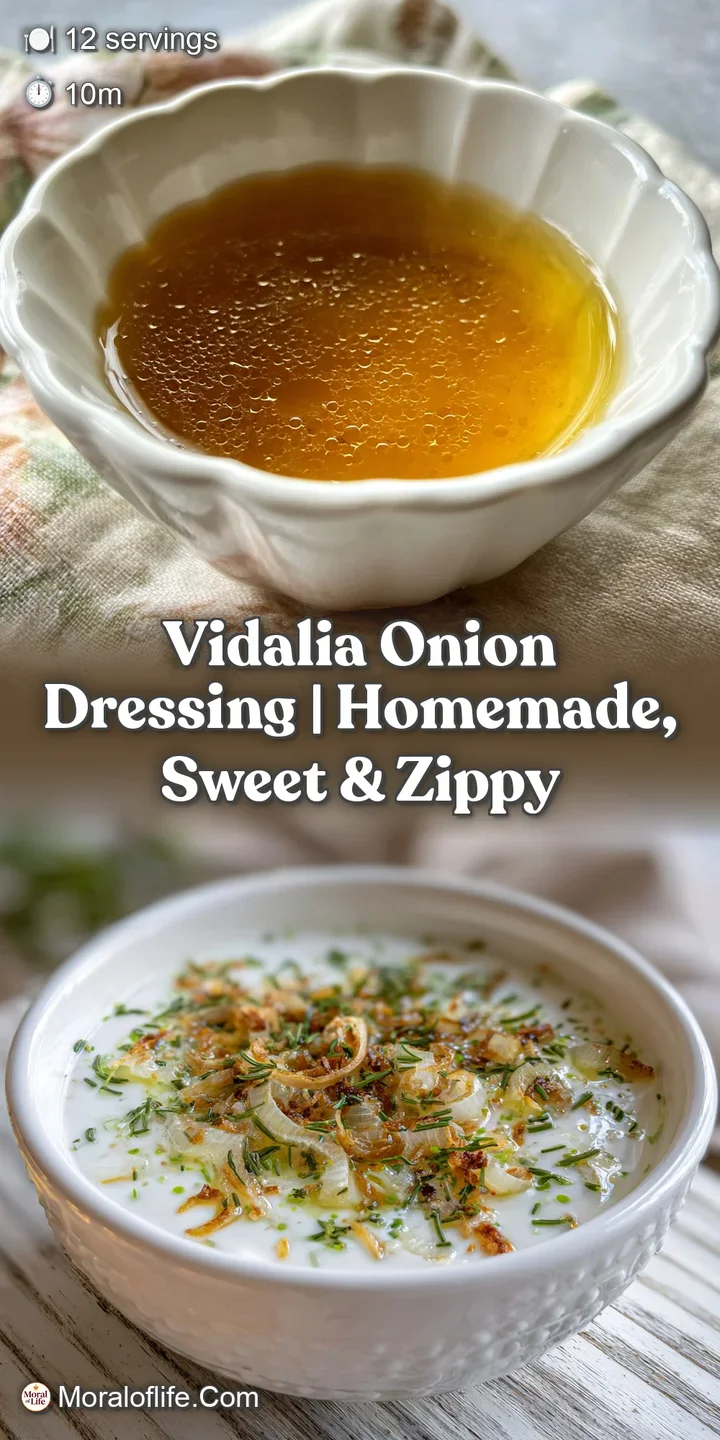
Vidalia Onion Dressing FAQs
What are the ingredients in Vidalia onion dressing?
A blend of sweet Vidalia onions, apple cider vinegar, honey, Dijon mustard, neutral oil, salt, pepper, and celery seed. This combination creates a creamy, tangy, and slightly sweet flavor profile that is the hallmark of this dressing.
What do you do with Vidalia onion dressing?
Use it as a versatile salad dressing, marinade, or dip. It's excellent on green salads, grain bowls, and as a binder for chicken salads. You can also brush it on grilled meats like pork chops for a sweet glaze.
What does Vidalia onion dressing taste like?
It tastes sweet, tangy, and slightly peppery with a creamy, velvety texture. The natural sweetness of the Vidalia onion is balanced by the bright acidity of the apple cider vinegar and the subtle spice of the Dijon mustard.
What is the healthiest dressing to put on your salad?
Homemade dressings like this Vidalia onion dressing, made with whole ingredients and controlled oil content, are generally healthier. They allow you to avoid added sugars, artificial preservatives, and excessive sodium often found in store-bought options.
Can I make Vidalia onion dressing ahead of time?
Yes, it's best made ahead of time for optimal flavor. The dressing can be prepared up to 3 days in advance, and its flavors will continue to meld and deepen in the refrigerator.
How long does homemade Vidalia onion dressing last?
Store it in an airtight glass jar in the refrigerator for up to 10 days. The high acidity from the vinegar helps preserve it longer than dairy based dressings.
Can I substitute the Vidalia onions in this dressing?
Yes, if Vidalia onions are unavailable, Walla Walla onions are a good substitute due to their similar low sulfur content and sweetness. You can also try a mix of shallots with a touch of sugar to replicate the flavor profile.
Vidalia Onion Dressing
Ingredients:
Instructions:
Nutrition Facts:
| Calories | 144 kcal |
|---|---|
| Protein | 0.2 g |
| Fat | 13.6 g |
| Carbs | 5.6 g |
| Fiber | 0.2 g |
| Sugar | 5.0 g |
| Sodium | 207 mg |
