Korean Cabbage Kimchi Recipe
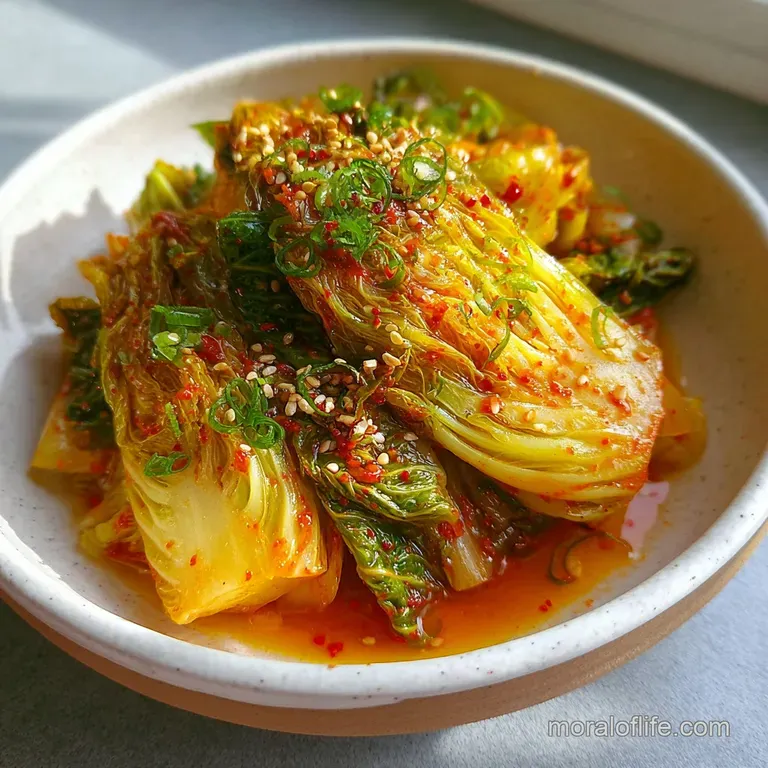
- Time: Active 45 minutes, Passive 2 hours, Total 2 hours 45 mins
- Flavor/Texture Hook: Pungent, spicy, and satisfyingly crunchy
- Perfect for: Probiotic rich meal prep and authentic Korean BBQ nights
- Traditional Flavors in My Homemade Korean Cabbage Kimchi
- Why This Fermentation Method Works
- The Science of the Crunch
- Essential Specs for Fermenting Success
- The Essential Building Blocks
- The Tools for the Job
- Bringing the Kimchi Together
- Pro Tips & Pitfalls
- Making the Recipe Your Own
- Common Fermentation Myths
- Preservation and Zero Waste
- Perfect Pairing Ideas
- Recipe FAQs
- 📝 Recipe Card
Traditional Flavors in My Homemade Korean Cabbage Kimchi
The first time I tried to make this, I didn't realize how much the cabbage would shrink. I stood over a massive bowl of 5.5 lbs of Napa cabbage, convinced I'd be eating kimchi for a year.
But then the salt did its magic, the leaves wilted into a velvety texture, and the aroma of garlic and ginger started to fill my tiny kitchen. There is nothing like that first "shatter" of a perfectly fermented leaf against your teeth it's a bright, spicy wake up call for your taste buds.
I've learned the hard way that you can't rush the brine. One Tuesday, I tried to cut the wilting time in half, and let's just say the resulting texture was more "sad salad" than "crispy ferment." We want that dependable, deeply layered flavor that only comes from a bit of patience and a lot of red pepper flakes.
This is the recipe I repeat with confidence every time my fridge starts looking a bit empty.
It's a comforting ritual. Peeling back the cabbage leaves, massaging in the crimson paste, and tucking the jars away like little science experiments. Don't worry if you've never fermented anything before; we're going to walk through it step-by-step.
It’s much easier than it looks, and once you taste the difference between homemade and store-bought, there is no going back.
Why This Fermentation Method Works
- The Osmosis Draw: Coarse Korean sea salt pulls moisture out of the cabbage cells, breaking down the rigid structure so it can absorb the spice paste without becoming watery.
- Starch Suspension: The sweet rice flour porridge acts as a "glue," ensuring the heavy red pepper flakes and aromatics cling to every single crevice of the leaf.
- Lactic Acid Production: Natural sugars in the onion and carrots feed the beneficial bacteria, creating that signature "fizzy" tang that preserves the vegetables safely.
| Method | Time | Texture | Best For |
|---|---|---|---|
| Traditional | 2 days+ | Deeply tangy, fizzy | Slow cooked stews and rice bowls |
| Fresh (Geotjeori) | 30 mins | Crisp, salad like | Topping for grilled meats or noodles |
| Quick Shortcut | 1 hour | Mild, soft | Last minute weeknight side dishes |
Selecting the right method depends on your patience. While the fresh version is great for a normal Tuesday, the traditional fermented version is what gives you that authentic, complex punch. If you find yourself craving something warm after all this prep, this Stuffed Cabbage Soup recipe is a fantastic way to use up any extra cabbage heads you might have lying around.
The Science of the Crunch
This specific technique relies on Pectin Stabilization, where the calcium in the sea salt reinforces the vegetable's cell walls while the low pH of fermentation prevents them from turning to mush. It's the difference between a crisp bite and a soggy mess.
Essential Specs for Fermenting Success
| Ingredient | Science Role | Pro Secret |
|---|---|---|
| Napa Cabbage | Structural base | Look for heavy, dense heads with tightly packed leaves for the best crunch. |
| Korean Sea Salt | Moisture extractor | Use coarse "Arak sogeum" rather than table salt to avoid an over salted, bitter finish. |
| Gochugaru | Flavor & Color | This isn't just heat; it provides a smoky sweetness that standard chili flakes lack. |
| Sweet Rice Flour | Microbial fuel | This creates the "porridge" that feeds the bacteria and thickens the sauce beautifully. |
The interaction between the sea salt and the cabbage is the most critical phase. If you use too much salt, you'll kill the good bacteria; too little, and the cabbage will rot instead of fermenting.
It is a delicate balance that sounds intimidating but becomes second nature once you see the leaves start to soften and bend without snapping.
The Essential Building Blocks
To make this Korean Cabbage Kimchi, you'll need these specific items. I've included some swaps if your local market is short on supplies, but try to stick to the traditional stuff for the most dependable results.
- 2 large heads of Napa Cabbage (approx. 5.5 lbs)Why this? The thin leaves absorb the brine much better than round green cabbage.
- Sub: Savoy cabbage (Note: Texture will be significantly tougher).
- 0.5 cup Coarse Korean Sea SaltWhy this? It dissolves slowly and has a cleaner mineral profile.
- Sub: Kosher salt (use slightly less by volume).
- 2 tbsp Sweet Rice FlourWhy this? Creates the sticky base for the paste.
- Sub: All purpose flour (Note: Results in a less glossy, duller sauce).
- 1 cup GochugaruWhy this? Provides the iconic crimson color and mild, smoky heat.
- Sub: A mix of paprika and cayenne (Note: Will lack the authentic depth).
- 0.5 cup Fish SauceWhy this? The primary source of savory umami.
- Sub: Soy sauce for a vegan version.
- 2 tbsp Saeu jeot (Salted shrimp)Why this? Adds a complex, funky fermented undertone.
- Sub: Extra fish sauce or minced anchovies.
- 1 lb Korean Radish (Mu)Why this? Stays crunchy even after weeks of fermentation.
- Sub: Daikon radish.
The Tools for the Job
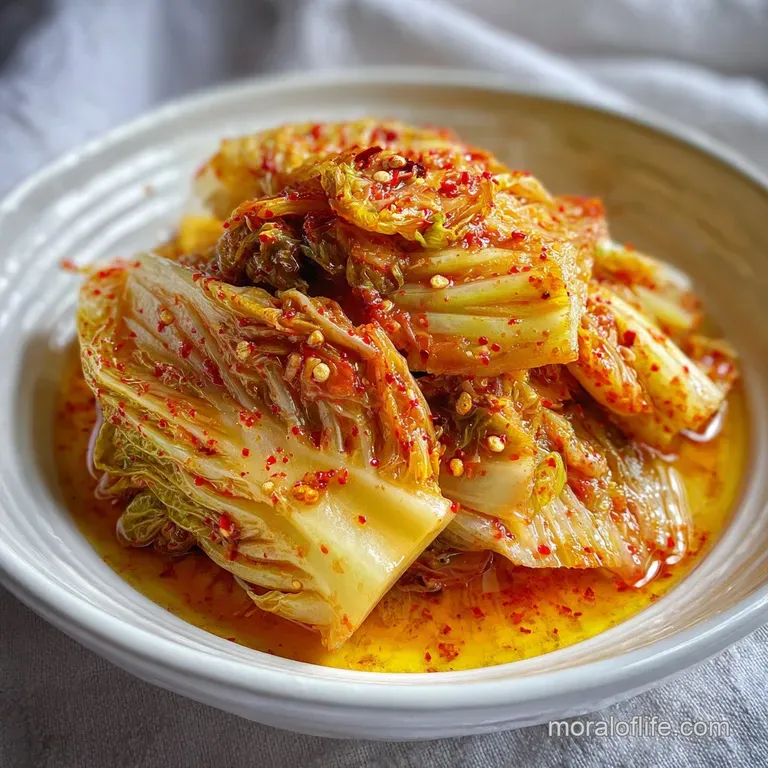
You don't need fancy gadgets, but a few specific things make this a lot cleaner. I once tried mixing the paste with my bare hands don't do that. The chili will stain your skin and sting for hours.
- Extra large mixing bowl: You need room to toss 5.5 lbs of cabbage without it flying across the counter.
- Disposable kitchen gloves: Essential for spreading the red pepper paste.
- Large glass jars: Half gallon mason jars work perfectly for storage.
- Small saucepan: To cook the rice flour porridge.
- Colander: For rinsing the cabbage thoroughly.
Bringing the Kimchi Together
Step 1: The Cabbage Wilt
Split the 2 large heads of Napa Cabbage lengthwise into quarters. Cut a small slit at the base and pull them apart by hand to keep the leaf tips intact. Sprinkle the 0.5 cup of sea salt between every single leaf, focusing on the thick white parts.
Let this sit for 2 hours, tossing every 30 minutes.
Step 2: The Rice Porridge
While the cabbage wilts, mix 1.5 cups water with 2 tbsp sweet rice flour in a saucepan. Whisk constantly over medium heat until it bubbles and turns into a translucent, thick paste. Stir in 1 tbsp sugar and cook for 1 more minute until it's glossy and thick. Let it cool completely.
Step 3: The Paste Base
In a large bowl, combine the cooled porridge with 1 cup Gochugaru, 0.5 cup fish sauce, and 2 tbsp minced Saeu jeot. Add 0.5 cup minced garlic, 1 tsp grated ginger, and the minced white onion. Whisk until it looks like a thick, vibrant red sludge.
Step 4: Prep the Veggies
Julienne the 1 lb Korean radish and 0.5 cup carrots into matchsticks. Cut the green onions into 2 inch lengths. Toss these into the red paste and mix well.
Step 5: The Rinse
By now, the cabbage should be flexible enough to bend without breaking. Rinse it 3 times in cold water to remove excess salt. Squeeze the leaves firmly to remove as much water as possible. Note: Excess water will dilute your flavors and lead to a thin sauce.
Step 6: The Application
Put on your gloves. Take a cabbage quarter and spread a generous amount of the paste over every leaf, starting from the outermost and working your way in. Ensure the radish and carrots are tucked between the layers.
Step 7: Packing the Jars
Fold the cabbage quarters into neat bundles and pack them tightly into clean glass jars. Press down firmly to remove air pockets. Leave at least 2 inches of headspace at the top. Sizzle note: If you press down and see small bubbles rising, that's a good sign!
Step 8: The Ferment
Wipe the rims and close the lids. Leave the jars on your counter at room temperature for 24 to 48 hours. You’ll know it’s ready when you see tiny bubbles and the scent becomes pleasantly sour. Move to the fridge after that.
Pro Tips & Pitfalls
One of the biggest mistakes is not rinsing the cabbage enough. If you skip the triple rinse, your Korean Cabbage Kimchi will be so salty it’s almost inedible. Also, make sure that rice porridge is stone cold before adding the garlic and ginger, or you’ll "cook" the aromatics and lose that fresh punch.
Why Your Kimchi Isn't Perfect
| Problem | Root Cause | Solution |
|---|---|---|
| Too Salty | Insufficient rinsing | Rinse 3-4 times next time; for now, add more radish to absorb salt. |
| Soft/Mushy | Temperature too high | Ferment in a cooler spot or move to the fridge earlier. |
| Bitter Aftertaste | Low quality salt | Ensure you use Korean sea salt (Arak sogeum) specifically. |
Common Mistakes Checklist
- ✓ Did you use coarse salt? (Fine salt dissolves too fast and oversifts the leaves).
- ✓ Did you wait for the porridge to cool? (Heat kills the vibrant color of the Gochugaru).
- ✓ Is the cabbage squeezed dry? (Water is the enemy of a thick, velvety sauce).
- ✓ Did you leave headspace in the jar? (Fermentation creates gas; it needs room to breathe).
- ✓ Are you wearing gloves? (Trust me, your hands will thank you later).
Making the Recipe Your Own
If you're cooking for a smaller household, you can easily halve this recipe. Just beat one egg and use half if you were making a smaller batch of something else, but here, just use 1 large head of cabbage and cut all other ingredients by exactly 50%.
When scaling up for a big party or gift giving, keep the salt and spices at 1.5x the original ratio rather than doubling them completely. This prevents the "spice creep" where the heat becomes overwhelming. For a different texture entirely, you might enjoy the caramelized notes found in a Recipe for Cabbage Steaks, which is a great way to use up a third head of cabbage if you bought too many.
Chef's Tip: If you want a vegan version, swap the fish sauce for high-quality soy sauce and the salted shrimp for 1 tablespoon of miso paste. It adds that necessary fermented depth without the seafood.
Common Fermentation Myths
"Kimchi will explode if you don't 'burp' the jar." While gas does build up, most modern mason jars will vent slightly on their own, or the liquid will simply leak out. You should open the jar once a day during the counter ferment to press the cabbage down, but it's rarely a "bomb" situation.
"You need a special starter culture." Nope! The bacteria required for fermentation are already living on the cabbage leaves and in the air of your kitchen. The salt simply creates the environment where the "good guys" win and the "bad guys" can't grow.
It’s a natural process that humans have used for thousands of years.
| Fresh Kimchi | Shortcut Version |
|---|---|
| Uses 5.5 lbs fresh Napa cabbage | Often uses pre cut cabbage |
| Requires 2 hour salt wilt | Uses 15 minute quick salt |
| Full porridge base for "glue" | May use water or no thickener |
Preservation and Zero Waste
Storage: Keep your finished kimchi in the fridge. It will technically last for up to 6 months, though the texture gets softer and the flavor becomes much more sour after the 2 month mark.
Always use a clean fork to take some out; introducing new bacteria from your mouth or other foods will make it spoil faster.
Zero Waste: Never throw away the kimchi juice! Once you finish the cabbage, that leftover brine is liquid gold. I use it to flavor fried rice, add a kick to bloody marys, or as a base for a spicy stew. You can also freeze the brine in ice cube trays and drop a cube into your ramen for an instant flavor upgrade. If you have leftover red pepper flakes, they are the secret to a perfect Red Pepper Paste recipe which can be stored in the pantry for months.
Perfect Pairing Ideas
For a comforting lunch, I love serving a bowl of steaming white rice with a generous heap of cold kimchi on top. The contrast between the hot grain and the cold, spicy cabbage is unbeatable. It’s also the essential side dish for any grilled pork belly (Samgyeopsal).
The acidity cuts right through the fat, making every bite feel fresh.
If you’re feeling adventurous, try chopping up your older, more sour kimchi and folding it into a pancake batter. It’s a dependable way to turn "old" cabbage into a crispy, savory treat for a normal Tuesday night.
The way the fermented juice caramelizes in the pan is honestly one of the best smells in the world.

Recipe FAQs
Should I rinse the cabbage after salting?
Yes, absolutely necessary. Rinse the wilted cabbage thoroughly three times in cold water to remove excess salt.
Can I use regular table salt instead of coarse Korean sea salt?
No, stick to coarse sea salt. Fine table salt dissolves too quickly and can result in an overly bitter or salty flavor profile.
How long should the cabbage sit out to wilt before rinsing?
Allow the cabbage to wilt for 2 hours. Toss it every 30 minutes to ensure the salt draws moisture out evenly from all leaves.
How do I ensure the red pepper paste sticks to the leaves?
Cook the sweet rice flour into a cooled, thick porridge first. This starchy base acts as a crucial binding agent that adheres the Gochugaru paste to the cabbage.
Is it true that using a non-Korean radish will affect the crunch?
No, this is a common misconception. Daikon radish is an acceptable substitute, although the traditional Korean radish holds its crunch slightly better post fermentation.
How long should the kimchi ferment at room temperature before refrigeration?
Ferment the packed jars on the counter for 24 to 48 hours. Look for visible small bubbles and a pleasant sour aroma as indicators it is ready for the cold.
How can I make this kimchi recipe vegan?
Substitute the fish sauce with soy sauce and the salted shrimp with miso paste. Using 1 extra tablespoon of miso will help replace that necessary umami depth.
Korean Cabbage Kimchi Recipe
Ingredients:
Instructions:
Nutrition Facts:
| Calories | 33 kcal |
|---|---|
| Protein | 2.0 g |
| Fat | 0.5 g |
| Carbs | 6.1 g |
| Fiber | 1.8 g |
| Sugar | 2.1 g |
| Sodium | 397 mg |
