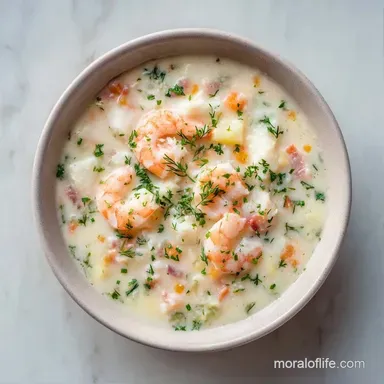
Old Fashioned Mixed Seafood Clam Chowder

- Time: 15 min active + 35 min cook
- Flavor/Texture Hook: Creamy and chunky with a hint of Old Bay
- Perfect for: A cozy weeknight dinner or a rainy weekend
- Mixed Seafood Clam Chowder
- Why This Recipe Hits Home
- The Pantry and Fridge List
- Gear You'll Actually Use
- The Step-by-Step Process
- Fixing Common Chowder Issues
- Troubleshooting Common Issues
- Personalizing Your Seafood Mix
- Scaling the Batch
- Seafood Soup Myths
- Storing and Warming Leftovers
- Best Ways to Serve This
- Critical Sodium Level
- Recipe FAQs
- 📝 Recipe Card
Mixed Seafood Clam Chowder
Ever wonder why some chowders taste like a salty ocean breeze while others just taste like cream and potatoes? I used to think it was all about using fresh caught clams from a boat, but it's actually about how you build the base. If you just dump everything in a pot, the seafood gets rubbery and the broth stays thin.
The trick is all in the timing. You want the potatoes to be soft and the base to be thick before the seafood even touches the pan. That's how you get a Mixed Seafood Clam Chowder that feels hearty but doesn't overcook the delicate shrimp.
I've made this for a few family gatherings, and it's always the first thing to disappear. It's not about being fancy, it's just about getting the ratios right so every spoonful has a bit of everything.
Why This Recipe Hits Home
- The Roux Base: Cooking flour in butter for 2 minutes removes that raw taste and creates a thick, velvety texture.
- Staggered Seafood: Adding the fish and shrimp at the very end prevents them from shrinking into tiny, tough bits.
- Potato Choice: Yukon Golds hold their shape better than Russets, so you get distinct cubes instead of a mashed potato soup.
The logic here is simple. We build a thick sauce first, simmer the hearty veg, and then gently poach the proteins in the hot liquid.
| Method | Time | Texture | Best For |
|---|---|---|---|
| Stovetop | 50 min | Thick & Creamy | Standard weeknight dinner |
| Oven Slow | 2 hours | Softer & Blended | Large crowds/low effort |
The Pantry and Fridge List
Why These Ingredients Work
| Ingredient | What It Does | Best Swap |
|---|---|---|
| Unsalted Butter | Creates the roux and adds richness | Olive oil (less creamy) |
| Yukon Gold Potatoes | Adds body and a buttery flavor | Red potatoes (firmer) |
| Heavy Cream | Stabilizes the soup and adds thickness | Whole milk + 1 tbsp butter |
| Seafood Stock | Deepens the oceanic saltiness | Clam juice from the cans |
Full Shopping List
- 2 cans (14 oz / 397g each) chopped clams with juice Why this? Consistent salt levels and budget-friendly
- 1 lb (450g) raw shrimp, peeled and deveined Why this? Quick cooking time
- 1 lb (450g) firm white fish (Cod or Halibut), cut into 1 inch chunks Why this? Doesn't fall apart easily
- 1 tsp (5g) old bay seasoning Why this? Classic seafood punch
- 4 tbsp (55g) unsalted butter
- 1 medium (150g) yellow onion, finely diced
- 2 stalks (60g) celery, diced
- 3 cloves (15g) garlic, minced
- 3 medium (450g) Yukon Gold potatoes, peeled and cubed into ½ inch pieces
- ¼ cup (30g) all purpose flour
- 2 cups (480ml) seafood stock or clam juice
- 2 cups (480ml) heavy cream
- 1 bay leaf
- ½ tsp (3g) dried thyme
- salt to taste
- black pepper to taste
Note: If you decide to use fresh clams, make sure you scrub them well to get rid of any grit before steaming.
Gear You'll Actually Use
You don't need a professional kitchen for this, but a heavy bottomed pot is a must. I use a Dutch oven because it distributes heat evenly and doesn't let the cream scorch on the bottom.
A whisk is also helpful for the stock phase. It helps break up any flour clumps that might have formed during the roux process. A sharp chef's knife is the only other real requirement for getting those potatoes into uniform ½ inch cubes.
The step-by-step Process
- Melt the butter over medium heat in a Dutch oven. Add the diced onion and celery, stirring frequently for 5–7 minutes until the onions become translucent and soft. Stir in the minced garlic and cook for 60 seconds until fragrant.
- Sprinkle the flour over the sautéed vegetables. Stir constantly for 2 minutes until the mixture forms a thick, golden paste. Note: This cooks out the raw flour taste.
- Slowly pour in the seafood stock and clam juice. Whisk or stir vigorously until no lumps remain.
- Add the cubed potatoes, bay leaf, and dried thyme. Bring the mixture to a gentle simmer, then reduce heat to low. Cover and cook for 12–15 minutes until the potatoes are fork tender.
- Stir in the heavy cream and Old Bay seasoning. Note: Don't let it boil hard after adding the cream or it might separate.
- Gently fold in the white fish and shrimp. Simmer uncovered for 5–7 minutes until the seafood is just cooked through and opaque.
- Remove the bay leaf. Taste and add salt or black pepper as needed.
- Ladle the Mixed Seafood Clam Chowder into bowls immediately while hot.
Fixing Common Chowder Issues
It's easy to overdo the heat with seafood. The most common issue I see is the "rubber band" effect where the shrimp get too tough. This happens when the soup boils too hard after the protein is added.
If your soup feels a bit off, don't panic. Most issues with a Mixed Seafood Clam Chowder are easy to fix with a little bit of heat adjustment or a splash of liquid. If you're in a huge rush and can't spend 50 minutes, you might prefer a 15 minute clam chowder instead.
Troubleshooting Common Issues

| Issue | Solution |
|---|---|
| Why Your Soup is Thin | This usually happens if the roux wasn't cooked long enough or if you added too much stock. You can simmer it uncovered for another 10 minutes to reduce the liquid. |
| Why Your Seafood is Rubber | You likely boiled the soup after adding the shrimp. Seafood only needs a gentle simmer to cook. |
| Why the Base is Lumpy | The flour wasn't whisked in properly. You can fix this by passing the base through a strainer or using an immersion blender before adding the seafood. |
Personalizing Your Seafood Mix
I like to keep this recipe dependable, but you can definitely swap the proteins. If you have leftover seafood from a seafood boil, you can toss some of those shrimp or crab legs into the pot.
Decision Shortcut: If you want more smoke, add 2 strips of diced bacon at the start. If you want it zestier, stir in a squeeze of fresh lemon juice right before serving. If you're avoiding dairy, use full fat coconut milk for a different but creamy vibe.
For a budget-friendly version of this Mixed Seafood Clam Chowder, use a frozen mixed seafood blend. It's often cheaper than buying three separate types of fresh fish and shrimp. Just make sure to thaw it and pat it dry before adding it to the pot.
Scaling the Batch
When you're making this for a crowd, don't just double everything blindly. I've found that liquids don't always need a full 2x increase because there's less evaporation in a larger pot.
Scaling Down (½ Batch): Use a smaller pot to prevent the liquid from evaporating too quickly. Reduce the potato simmering time by about 20% since smaller cubes cook faster.
Scaling Up (2x-4x Batch): Increase the salt and Old Bay to only 1.5x first, then taste. You can always add more, but you can't take it out. Work in batches when searing the vegetables if your pot isn't huge.
Seafood Soup Myths
Myth: Searing seafood seals in the juices. It doesn't. Searing adds flavor through browning, but it doesn't create a waterproof seal. In this Mixed Seafood Clam Chowder, we poach the seafood to keep it tender.
Myth: Canned clams are "cheating" and taste bad. Actually, canned clams are often more consistent in salt and flavor. They provide a great base that doesn't overpower the other seafood.
Myth: You must use a blender for a thick chowder. You don't. A proper roux (butter and flour) provides plenty of thickness without turning your chunky soup into a puree.
Storing and Warming Leftovers
This Mixed Seafood Clam Chowder stays good in the fridge for about 3 days. Keep it in an airtight container. I don't recommend freezing it because the potatoes can get a grainy texture and the cream might separate when thawed.
To reheat, do it on the stove over low heat. Add a splash of milk or water to loosen it up, as the potatoes will absorb more liquid as they sit. Stir gently so you don't break the fish chunks.
For zero waste, save any leftover clam juice from the cans. It's a great base for a quick seafood risotto or you can freeze it in ice cube trays to add a punch of flavor to other sauces.
Best Ways to Serve This
The classic way to serve this is in a sourdough bread bowl, but that's a lot of work. I usually stick to a thick slice of toasted rye or salted oyster crackers.
For a fresh complement, pair the soup with a crisp green salad. The acidity of a vinaigrette cuts through the richness of the heavy cream. If you're feeling fancy, a side of steamed asparagus also works well.
Just remember to serve it immediately. The longer it sits, the more the potatoes soak up the broth, and you'll end up with something closer to a stew than a soup. Enjoy your Mixed Seafood Clam Chowder while it's hot and creamy.
Critical Sodium Level
1150 mg 1150 mg of sodium per serving (50% 50% of daily value)
The American Heart Association recommends a daily limit of 2,300mg of sodium, with an ideal limit of 1,500mg for most adults to reduce the risk of cardiovascular disease.
Tips to Reduce Sodium in Your Seafood Chowder
-
Swap the Stock-30%
Replace the standard seafood stock or clam juice with a low-sodium version or a homemade unsalted fish stock.
-
Omit Added Salt-25%
Completely remove the 'salt to taste' from the recipe, as the canned clams and seasonings provide ample sodium.
-
Rinse Canned Clams-20%
Drain and rinse the canned chopped clams under cold water to remove the high-sodium brine before adding them to the pot.
-
Modify the Seasoning-20%
Replace Old Bay seasoning with a salt-free seafood blend or a mix of paprika, garlic powder, and cayenne pepper.
-
Enhance with Acid
Add fresh lemon juice or zest and chopped fresh parsley at the end to brighten the flavor without adding any salt.
Recipe FAQs
What is the difference between clam chowder and seafood chowder?
Seafood chowder incorporates a wider variety of proteins. While clam chowder focuses primarily on clams, mixed seafood versions add shrimp and white fish to create a more complex flavor profile.
What three ingredients must a chowder have to be considered a chowder?
A thickener, a creamy base, and a seafood protein. These three elements combined create the hearty, velvety consistency that defines a traditional chowder.
How to make the best seafood chowder?
Sauté aromatics in butter and create a roux before adding liquids. Cooking the flour for two minutes removes the raw taste and ensures the base is thick and smooth.
What is the secret to good clam chowder?
Gentle simmering of the seafood. Boiling the shrimp and white fish makes them rubbery; adding them at the very end ensures they stay tender. If you enjoyed balancing savory notes here, see how we apply a similar logic in our party-ready meatballs.
How can you make different types of clam chowder?
Swap the heavy cream for milk or adjust the seafood ratio. You can emphasize the white fish or increase the amount of clams to customize the heartiness of the soup.
How to make clam chowder at home?
Melt butter in a Dutch oven and sauté onion and celery. Stir in flour to make a golden paste, then gradually whisk in seafood stock and heavy cream before simmering your potatoes and seafood.
Is it true that you can freeze seafood chowder for later use?
No, this is a common misconception. Freezing causes the Yukon Gold potatoes to develop a grainy texture and the heavy cream to separate upon thawing.
Mixed Seafood Clam Chowder: One-Pot