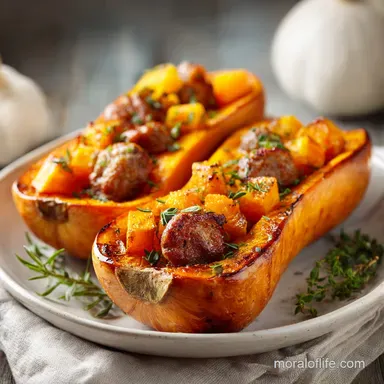
Sausage Stuffed Butternut Squash: Roasted and Hearty

- Time:15 minutes active + 40 minutes cooking = 55 minutes total
- Flavor/Texture Hook: Velvety squash paired with crispy, browned sausage and bubbly cheese
- Perfect for: A dependable weeknight dinner or a cozy autumn gathering
Easy Sausage Stuffed Butternut Squash
That first hit of smell when the Italian sausage hits the hot skillet is honestly the best part of my day. It's that savory, garlic heavy aroma that fills the whole house and tells everyone dinner is actually happening.
I remember one Tuesday when I tried to rush this by microwaving the squash first, and let me tell you, it was a disaster. The texture was mushy, and it lacked that deep, roasted sweetness that only a hot oven can provide.
Once I stopped taking shortcuts with the roasting process, this became my go to comfort meal. There's something about the way the mozzarella bubbles and browns under the broiler that just feels like a hug on a plate. It's a reliable dish that doesn't require a million pans, which means less cleanup for us.
We're looking at a meal that balances the sweetness of the butternut squash with the saltiness of the meat. It's filling, hearty, and looks way more impressive than it actually is to put together. Trust me on this, your family will think you spent hours on it, but we both know it's just smart roasting.
Why This Method Works
I've spent a lot of time wondering why some stuffed vegetables taste bland while others pop. It usually comes down to how we handle the moisture and the heat.
- over High heat Roasting: Cooking at 200°C ensures the natural sugars in the squash caramelize quickly, creating a deep sweetness.
- Fat Absorption: Using cooked brown rice allows the grains to soak up the rendered sausage fat, which carries all the flavor.
- Textural Contrast: By browning the sausage until it's actually crispy before adding the spinach, we avoid a "mushy" filling.
- Cavity Creation: Scooping out the center and mixing it back into the filling keeps the squash flavor consistent throughout the whole bite.
| Method | Roast Time | Texture | Best For |
|---|---|---|---|
| Fast (Microwave) | 10 mins | Soft/Watery | Extreme rush |
| Classic (Oven) | 30 mins | Velvety/Caramelized | Flavor & Texture |
| Slow (Slow Cooker) | 4 hours | Very Soft | Set and forget |
Right then, it's worth noting that the oven method is the only way to get that "shatter" effect on the cheese topping. If you've ever tried the microwave version, you know it's just not the same.
Component Analysis
When you're putting this together, each ingredient has a specific job. It's not just about filling the squash; it's about balancing the salt and the sweet.
| Ingredient | Science Role | Pro Secret |
|---|---|---|
| Butternut Squash | Natural Sugar Base | Roast cut side down for better browning |
| Italian Sausage | Fat and Umami | Don't crowd the pan or it will steam instead of brown |
| Brown Rice | Structural Binder | Use cold, day old rice for better texture |
| Mozzarella | Salt/Binding Agent | Use low moisture blocks and grate them yourself |
The Essential Ingredients
You don't need anything fancy here, just a few staples from the grocery store. Make sure your squash are roughly the same size so they cook evenly.
- 2 small butternut squashes (approx. 900g total), halved lengthwise Why this? Provides a natural, edible bowl
- 3 tbsp (45ml) olive oil Why this? High smoke point for roasting
- 1 tsp (6g) kosher salt Why this? Enhances the sweetness of the squash
- 1/2 tsp (3g) cracked black pepper Why this? Adds a subtle woody heat
- 1 lb (450g) bulk Italian sausage Why this? Strong flavor profile that cuts through the squash
- 1 medium (110g) yellow onion, finely diced Why this? Adds a savory, aromatic base
- 3 cloves (15g) garlic, minced Why this? Essential pungent depth
- 2 cups (60g) fresh baby spinach, chopped Why this? Adds color and a hint of earthiness
- 2 cups (300g) cooked brown rice Why this? Hearty texture and nutty flavor
- 1 cup (115g) shredded mozzarella cheese Why this? Classic melt and pull
Ingredient Swaps
| Original Ingredient | Substitute | Why It Works |
|---|---|---|
| Brown Rice | Quinoa | Higher protein. Note: Slightly nuttier taste |
| Italian Sausage | Ground Turkey + Fennel | Leaner option. Note: Needs extra salt/fat |
| Mozzarella | Gruyère | More pungent. Note: Much richer flavor profile |
| Spinach | Kale | Heartier leaf. Note: Needs longer to sauté |
If you find yourself craving something different, you can always pivot. For example, if you're in the mood for pasta instead, my Sausage Rigatoni recipe uses similar flavor profiles but in a completely different format.
Kitchen Gear Needed
You don't need a professional kitchen for this. A few basic tools will do the trick.
- Large rimmed baking sheet (essential for catching any oil drips)
- Large skillet or frying pan (cast iron is great here for a better sear)
- Small mixing bowl
- Sharp chef's knife
- Sturdy spoon or spatula for breaking up the meat
Step by step Guide
Let's crack on. Follow these steps, and you'll have a dependable dinner on the table in under an hour.
- Preheat your oven to 200°C (400°F). Brush the cut sides of your halved squashes with 2 tbsp of the olive oil and season them with salt and pepper. Place them cut side down on your baking sheet and roast for 25-30 minutes until the flesh is tender when pierced with a fork.
- While the squash is roasting, heat the remaining 1 tbsp of olive oil in your skillet over medium high heat. Add the Italian sausage, breaking it apart with your spoon until it's browned and crispy. Note: Let the meat sit for 2 minutes before stirring to get a better crust.
- Toss in the diced onion and sauté for 5 minutes until they look translucent. Stir in the minced garlic and chopped spinach, cooking just until the spinach wilts.
- Take the squashes out of the oven and flip them over. Use a spoon to scoop out about 1 inch of the flesh to make a cavity, but be careful not to poke through the bottom.
- Roughly chop that scooped out squash and stir it right into your sausage mixture along with the cooked brown rice.
- Scoop the filling into the squash cavities, packing it in firmly. Top each with a generous handful of shredded mozzarella.
- Turn your oven to broil and cook for 3-5 minutes until the cheese is bubbling and golden brown.
- Let them rest for 5 minutes before serving. Note: This keeps the filling from sliding out when you cut into it.
Fixing Common Issues

Even the best of us mess up sometimes. I've dealt with soggy squash and bland fillings more times than I'd like to admit. Most of these problems come down to moisture management. According to Serious Eats, managing the surface moisture of vegetables is key to getting a proper roast.
Squash Still Hard
If your squash isn't tender after 30 minutes, it's usually because the squash was larger than expected or the oven temperature was off. Don't be afraid to leave them in for another 10 minutes.
Watery Filling
This usually happens if the spinach wasn't sautéed long enough or if the rice was too moist. Make sure the spinach is fully wilted and any excess liquid in the pan has evaporated before adding the rice.
Cheese Not Browning
If the cheese is melted but not brown, your broiler might be too low or the oven rack is too far down. Move the baking sheet to the top rack for the last 2 minutes.
| Problem | Root Cause | Solution |
|---|---|---|
| Mushy Squash | Overcooked/Microwaved | Stick to the 30 min roast time |
| Bland Filling | Lack of Salt | Add a pinch of salt to the rice/sausage mix |
| Filling Falls Out | Too Much Filling | Leave a 1/2 inch margin at the top |
Quick Success Checklist
- ✓ Oven preheated to exactly 200°C
- ✓ Sausage browned before adding vegetables
- ✓ Squash roasted cut side down
- ✓ Filling packed tightly into the cavity
- ✓ Cheese broiled until golden
Dietary Tweaks
Depending on who you're feeding, you might need to shift things around. This recipe is quite flexible, but some changes affect the outcome more than others.
Paleo & Whole30 Version
To make this an easy sausage stuffed butternut squash paleo whole30 meal, simply swap the brown rice for cauliflower rice. Omit the mozzarella cheese and replace it with a sprinkle of almond parmesan or just leave it off. Use a sausage brand that is certified sugar-free.
Plant Based Swap
For a vegan version, use a plant based Italian sausage and replace the mozzarella with a cashew based cheese or nutritional yeast. Instead of brown rice, you can use wild rice for a more robust texture.
Autumn Harvest Twist
If you want something a bit more "fancy," try a sausage stuffed butternut squash with spinach pecans and cranberries. Fold in 1/4 cup of dried cranberries and 1/4 cup of toasted pecans during step 5. This adds a lovely tartness and a shatter like crunch to the filling.
Scaling Guidelines
When you're cooking for a crowd, you can't just double everything blindly. Some things don't scale linearly.
Scaling Down (Half Batch) If you're only using one squash, keep the roasting temperature the same, but check for doneness 5 minutes early. For the egg or binder (if you add one), beat one egg and use half. Use a smaller skillet so the sausage doesn't spread too thin and burn.
Scaling Up (Double/Triple Batch) When doubling, do not double the salt and spices, start with 1.5x and taste as you go. The liquids (oil) can be reduced by about 10% because the meat will render plenty of its own fat.
Work in batches if your skillet is small; if you crowd the pan, the sausage will steam instead of browning, and you'll lose that crispy texture.
Squash Truths
There are a few things people always tell you about stuffed squash that just aren't true.
The "Seal" Myth: Some people say you need to sear the squash first to "seal in the flavor." That's not how it works. The flavor comes from the caramelization during the roast. Searing it in a pan first just adds extra work and more oil.
The "Peeled" Myth: You'll see some recipes telling you to peel the butternut squash before roasting. Don't do it. The skin acts as a structural support, keeping the squash from collapsing under the weight of the filling.
Storage and Waste
Don't let the leftovers go to waste. This dish actually holds up pretty well in the fridge.
Storage Store your leftovers in an airtight container in the fridge for up to 4 days. When reheating, I recommend using the oven or an air fryer at 175°C (350°F) for 10 minutes. The microwave works, but the squash can get a bit soft.
To fix this, add a tiny splash of water to the bottom of the dish to keep the rice moist.
Freezing You can freeze the cooked, stuffed squash (without the cheese) for up to 2 months. Wrap them tightly in foil and then a freezer bag. Thaw overnight in the fridge before adding fresh cheese and broiling.
Zero Waste Tips Don't throw away the squash seeds! Clean them, toss them with a bit of the leftover olive oil and salt, and roast them at 175°C for 15 minutes. They make a great snack. Also, the peelings can be tossed into a veggie stock pot for extra depth.
Tasty Pairing Ideas
Since this is a heavy, savory dish, you want sides that provide a bit of acidity or freshness to cut through the richness.
A simple arugula salad with a lemon vinaigrette is a great choice. The peppery greens balance the sweetness of the squash perfectly. If you're looking for something more substantial, this pairs beautifully with a Buttery Herb Stuffing for a full on harvest feast.
For those who love a creamy element on the side, a garlic infused sauce can work, though it might be overkill. If you're planning a larger menu, maybe save the heavy sauces for something like a Four Cheese Garlic Sauce served with crusty bread. Keep it simple, and let the sausage stuffed butternut squash be the star of the show.
High in Sodium
840 mg 840 mg of sodium per serving (37% 37% of daily value)
The American Heart Association recommends a limit of 2,300mg of sodium per day for most adults to maintain heart health.
Tips to Reduce Sodium
-
Swap the Sausage-30%
Replace the bulk Italian sausage with low-sodium sausage or ground turkey seasoned with fennel seeds and paprika to mimic the flavor.
-
Limit Added Salt-25%
Reduce or omit the kosher salt and use lemon juice or a splash of apple cider vinegar to brighten the flavors of the squash.
-
Check Your Rice-5%
Ensure the brown rice is cooked without added salt in the water, as pre-packaged or salted rice can add hidden sodium.
-
Enhance with Herbs
Increase the amount of cracked black pepper and add fresh sage, thyme, or rosemary to add depth without adding salt.
Recipe FAQs
Can I substitute the Italian sausage for another meat?
No, stick with Italian sausage. The specific seasoning of Italian sausage provides the primary flavor profile required for the stuffing.
How to stop the squash from collapsing while roasting?
Place the halved squashes cut-side down on the baking sheet. This ensures the base remains stable while the flesh softens.
How to reheat leftovers without the squash getting mushy?
Use an oven or air fryer at 350°F (175°C) for 10 minutes. This preserves the texture better than a microwave, which can make the squash too soft.
Is it true I must peel the butternut squash before roasting?
No, this is a common misconception. The skin is edible and helps the squash hold its shape during the roasting process.
How to get the sausage crispy?
Brown the meat in a skillet over medium-high heat, breaking it apart with a spoon. Continue cooking until the sausage is browned and crispy before adding the onion.
What should I serve with these stuffed squashes?
Pair them with a fresh, acidic side. If you enjoyed the roasting technique here, see how the same principle works in our slow roasted tomato recipe.
How to freeze the cooked stuffed squash?
Wrap the cooked squash without cheese tightly in foil, then place them in a freezer bag. They will keep for up to 2 months.
Sausage Stuffed Butternut Squash: Roasted