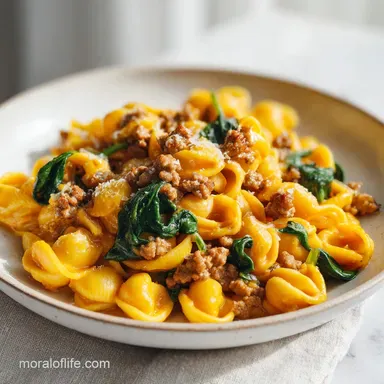
Butternut Squash Pasta with Sausage and Spinach
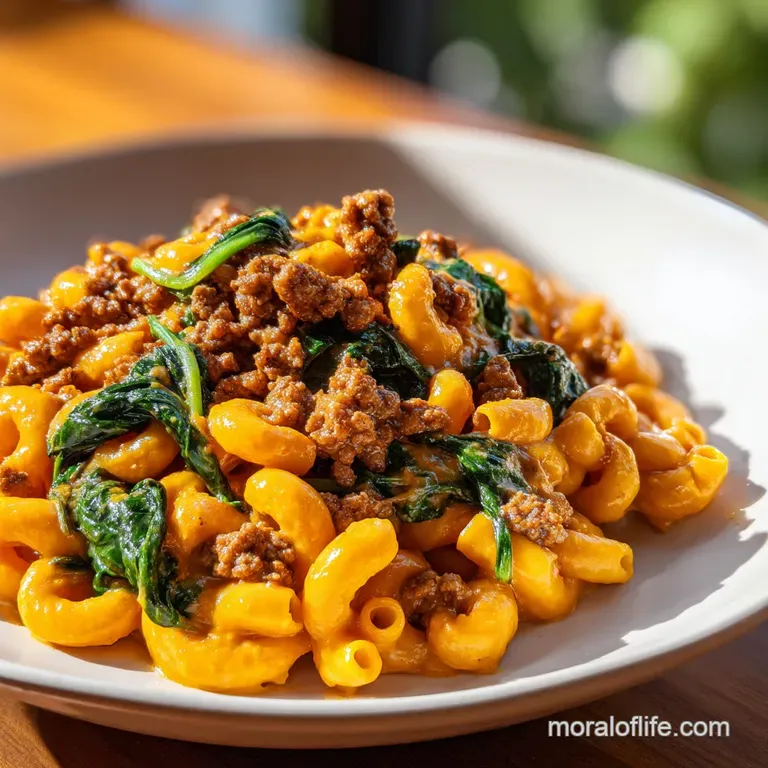
- Time: 15 min active + 35 min cooking = Total 50 min
- Flavor/Texture Hook: Glossy, mahogany roasted squash with a silky, nutmeg infused sauce
- Perfect for: Weeknight comfort dinner or a dependable meal prep win
- Creamy Butternut Squash Pasta with Sausage and Spinach
- The Logic Behind the Texture
- Squash Prep Shortcut Guide
- Component Analysis
- Essential Ingredients and Swaps
- Necessary Kitchen Tools
- Step by Step Cooking Flow
- Fixing Common Sauce Issues
- Troubleshooting Common Issues
- Adjusting the Portion Size
- Common Kitchen Misconceptions
- Storage and Waste Reduction
- The Best Side Pairings
- Recipe FAQs
- 📝 Recipe Card
The smell of browned sausage hitting a hot pan always reminds me of my first attempt at this. I remember trying to boil the squash to save time, but it turned into a bland, watery mush that disappeared into the sauce. It was a total letdown until I realized that roasting is the only way to go.
That sizzle of the sausage and the earthy aroma of nutmeg is what makes this house feel like a home.
This Creamy Butternut Squash Pasta with Sausage and Spinach is the ultimate comfort meal. It's a dish that doesn't try too hard but delivers a punch of flavor that hits all the right notes. You get the saltiness of the Italian sausage, the sweetness of the roasted squash, and a pop of freshness from the spinach.
Right then, let's get into it. We're looking at a flow that maximizes your time, so while the squash is getting those charred edges in the oven, we're prepping the pan. You'll end up with a meal that looks like it took hours, but it's actually a straightforward process we can repeat with confidence.
Creamy Butternut Squash Pasta with Sausage and Spinach
The beauty of this dish is how the different elements play off each other. You have the heavy cream providing a velvety backdrop, but the roasted squash adds a structural thickness that you just can't get from cream alone. It transforms a standard pasta into something that feels intentional and hearty.
I've found that using rigatoni or penne is a must here. You need those ridges and holes to trap the sauce and the little bits of sausage. If you use a smooth pasta, the sauce just slides off, and you miss out on that concentrated flavor in every bite.
It's a dependable recipe because it's forgiving. If your squash roasts a bit longer, it just gets sweeter. If you add a bit more spinach, it just gets healthier. The key is just keeping an eye on the heat so the cream doesn't break.
The Logic Behind the Texture
Understanding why this works helps you avoid the "mush factor." When we roast the squash at 200°C, we aren't just cooking it, we're caramelizing it. This prevents the vegetables from dissolving into the sauce, keeping those distinct, tender cubes.
Natural Thickening: The roasted squash partially breaks down when stirred, acting as a natural stabilizer for the cream. This prevents the sauce from being too runny without needing a flour roux.
The Emulsion Secret: By adding reserved pasta water, we introduce starches that bond the fats from the sausage and cream. This is a technique often discussed by experts at Serious Eats, ensuring the sauce clings to the pasta rather than pooling at the bottom of the bowl.
Flavor Layering: The nutmeg doesn't make it taste like a dessert; it acts as a bridge between the sweetness of the squash and the savory fat of the sausage. It's a subtle addition that makes the whole dish feel cohesive. If you love this kind of flavor profile, you might also enjoy my Butternut Squash Gnocchi which uses a similar roasting logic.
Squash Prep Shortcut Guide
Depending on how much time you have, you can change how you handle the squash. While fresh is the standard, there are ways to speed things up without losing the soul of the dish.
| Method | Time Impact | Texture Result | Best For |
|---|---|---|---|
| Fresh Cubed | Standard | Firm, caramelized edges | Maximum flavor |
| Pre Cut Bagged | Saves 10 mins | Slightly softer | Quick weeknights |
| Frozen Cubes | Saves 5 mins | Mushier, less char | Emergency meals |
I honestly suggest sticking with fresh if you can. The difference in the "mahogany" color of the edges is what gives the dish its depth. If you're using pre cut squash, just make sure it's patted dry before roasting, or it will steam instead of brown.
Component Analysis
Not every ingredient is just a filler. Each one has a specific job to do in the pan to ensure the final result is velvety and balanced.
| Ingredient | Science Role | Pro Secret |
|---|---|---|
| Butternut Squash | Natural Thickener | Roast until edges are dark brown |
| Heavy Cream | Fat Base | Simmer gently to avoid splitting |
| Parmesan Cheese | Salt & Binding | Use freshly grated for smoother melting |
| Pasta Water | Emulsifier | Starch bonds fat and water together |
The pasta water is the most skipped step in home cooking, but it's the difference between a "dry" pasta and a glossy one. Trust me on this, don't drain your pot completely.
Essential Ingredients and Swaps
Here is everything you need. I've listed some alternatives, but keep in mind that switching the fat source will change the feel of the sauce.
- 1 lb butternut squash, peeled and cubed into ½ inch pieces Why this? Provides the sweetness and base texture
- 2 tbsp olive oil Why this? High smoke point for roasting
- ½ tsp salt
- ¼ tsp black pepper
- 1 lb Italian sausage, casings removed Why this? Adds savory fat and protein
- 1 tbsp olive oil
- 3 cloves garlic, minced
- ½ small yellow onion, finely diced
- 12 oz rigatoni or penne pasta Why this? Ridges hold the thick sauce
- 1 cup heavy cream Why this? Creates the velvety mouthfeel
- ½ cup grated Parmesan cheese Why this? Adds umami and salt
- 3 cups fresh baby spinach Why this? Adds color and a fresh bitter note
- ¼ tsp ground nutmeg Why this? Enhances squash flavor
- ½ cup reserved pasta water Why this? The "glue" for the sauce
Substitution Table
| Original Ingredient | Substitute | Why It Works |
|---|---|---|
| Heavy Cream | Full fat Coconut Milk | Similar fat content. Note: Adds tropical notes, best for dairy-free |
| Italian Sausage | Ground Turkey + Fennel | Leaner protein. Note: Less fat means a thinner sauce |
| Rigatoni | gluten-free Penne | Similar shape. Note: Cook 1-2 mins less to avoid mush |
| Baby Spinach | Kale (chopped) | Similar nutrients. Note: Needs 3-4 mins more to soften |
Necessary Kitchen Tools
You don't need a professional kitchen for this, but a few specific tools make the flow much smoother.
- Large Baking Sheet: For the squash. Use a rimmed one so the oil doesn't drip.
- Large Pot: For the pasta. Give the noodles plenty of room to move.
- Wide Skillet: A 12 inch pan is best. You want plenty of surface area to brown the sausage without steaming it.
- Colander: For draining, but remember to scoop that water first.
- Wooden Spoon or Silicone Spatula: For scraping the "fond" (those brown bits) off the bottom of the pan.
Step by step Cooking Flow
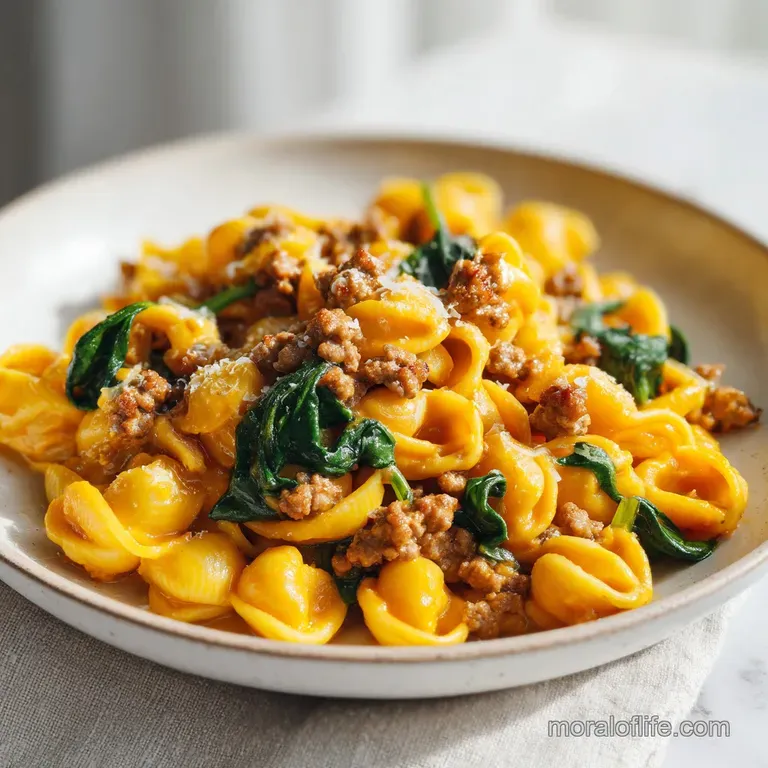
Follow this sequence to make sure everything hits the plate hot. The goal is to have the pasta and the squash finish at the same time.
Phase 1: Roasting the Gold
- Preheat the oven to 400°F (200°C).
- Toss the cubed butternut squash with 2 tablespoons of olive oil, salt, and pepper on a baking sheet.
- Spread in a single layer and bake for 20-25 minutes until the edges are mahogany colored and the insides are tender. Note: Don't crowd the pan or they won't brown.
Phase 2: Building the Flavor Base
- Bring a large pot of salted water to a boil and cook the pasta until al dente.
- Reserve ½ cup of pasta water before draining. Note: This is your insurance policy for the sauce.
- In a large skillet over medium high heat, add 1 tablespoon of olive oil and the Italian sausage.
- Break the meat apart with a spatula and cook until browned and crispy.
- Stir in the diced yellow onion and minced garlic, cooking for another 2-3 minutes until the onion is translucent and fragrant.
Phase 3: The Creamy Integration
- Reduce the heat to medium. Pour in the heavy cream and ground nutmeg, stirring to scrape up the browned bits from the bottom of the pan. Note: This is where the deep flavor lives.
- Stir in the grated Parmesan cheese until melted and smooth.
- Gently fold in the roasted butternut squash and the baby spinach.
- Once the spinach has just wilted, toss in the cooked pasta and the reserved pasta water, stirring until the sauce is a glossy glaze that clings to the pasta.
Chef's Note: If you want a deeper flavor, add a pinch of red pepper flakes when you sauté the garlic. It cuts through the richness of the cream beautifully.
Fixing Common Sauce Issues
Even the best home cooks hit a snag now and then. Most issues with this recipe come down to temperature or moisture.
Troubleshooting Common Issues
| Issue | Solution | ||
|---|---|---|---|
| Why Your Sauce Split | If you see little bubbles of oil separating from the cream, the heat was too high. This happens when the emulsion breaks. To fix it, stir in a splash more pasta water and lower the heat immediately. | ||
| Why Your Pasta is Dry | This usually happens if the pasta sits for a few minutes before serving. The noodles keep absorbing the sauce. The solution is to be generous with the reserved pasta water at the end. | ||
| Why Your Squash is Mushy | This is almost always due to overcrowding the baking sheet. If the squash pieces are touching, they steam instead of roast. Use two sheets if you have to. Troubleshooting Guide | Problem | Root Ca |
Adjusting the Portion Size
Scaling a creamy dish is a bit different than scaling a soup. You have to be careful with the liquids.
Scaling Down (Half Batch) If you're cooking for two, use a smaller skillet. Reduce the roasting time for the squash by about 5 minutes since there's less mass in the oven. For the pasta, use 6 oz and reserve only 1/4 cup of water.
Scaling Up (Double Batch) When doubling this recipe, don't just double the salt and nutmeg, start with 1.5x and taste. Use two baking sheets for the squash to ensure they roast and don't steam.
I recommend working in two batches for the sausage browning so you don't crowd the pan and end up with boiled meat.
If you find the double batch is getting too thick, you can add a tablespoon of butter at the end. This is a trick I use when making my Sausage Rigatoni to keep the sauce luxurious.
Common Kitchen Misconceptions
There are a few things people get wrong when making squash pasta. Let's clear those up.
"Boiling squash is faster and just as good." Not true. Boiling leaches out the flavor and creates a texture that is too soft. Roasting concentrates the natural sugars, which is essential for the contrast against the salty sausage.
"You need a roux for a creamy sauce." In this recipe, you don't. The combination of roasted squash and Parmesan cheese provides enough body. Adding a flour roux would make the sauce too heavy and mask the taste of the squash.
"Fresh pasta is mandatory for this." While fresh pasta is lovely, dried rigatoni actually holds up better in a thick, chunky sauce. It provides a more dependable "bite" that prevents the dish from feeling like a porridge.
Storage and Waste Reduction
This dish keeps surprisingly well, provided you handle the reheating correctly.
Storage Guidelines Place leftovers in an airtight container and keep them in the fridge for up to 3 days. Because of the cream and cheese, the sauce will thicken significantly as it cools. This is normal.
Freezing Tips I don't recommend freezing this recipe. The cream can separate and the spinach becomes watery upon thawing. If you must, freeze the roasted squash and cooked sausage separately, then assemble the sauce fresh.
Reheating Method Avoid the microwave if possible. Heat a small pan over medium low heat, add the pasta, and stir in a tablespoon of milk or water. This loosens the sauce and brings back that velvety texture without breaking the cream.
Zero Waste Tips Don't throw away the butternut squash peels! You can toss them on the baking sheet with the cubes; they turn into salty, crispy chips. Also, if you have leftover sausage, it's great tossed into a morning scramble.
The Best Side Pairings
Since this Creamy Butternut Squash Pasta with Sausage and Spinach is quite rich, you want sides that offer acidity or crunch to balance the plate.
A simple arugula salad with a lemon vinaigrette is the go to choice. The peppery greens and citrus cut right through the creaminess of the pasta. If you want something warm, roasted Brussels sprouts with a balsamic glaze provide a nice earthy contrast.
For bread, a crusty sourdough or a piece of garlic toast is great for mopping up the remaining sauce. Just keep it simple, the pasta is the star of the show here, so don't overcomplicate the sides. Trust me, a simple green salad is all you really need to make this a complete, dependable meal.
Recipe FAQs
Can I substitute the Italian sausage?
Yes, cooked chicken is a great alternative. For another creamy protein-based meal, try our chicken pesto pasta.
How long can I store leftovers in the fridge?
Keep them in an airtight container for up to 3 days. The sauce will thicken significantly as it cools due to the cream and cheese.
Why did my roasted butternut squash turn out mushy?
You likely overcrowded the baking sheet. Spread the cubes in a single layer to ensure they roast rather than steam.
What should I do if the cream sauce splits?
Stir in a splash of reserved pasta water and lower the heat immediately. This occurs when the heat is too high, causing the emulsion to break.
How to reheat this pasta without drying it out?
Heat on the stove over low heat with a splash of water. Avoid the microwave to prevent the cream from separating.
How to roast the butternut squash for the best color?
Bake at 400°F for 20-25 minutes. Roast until the edges are mahogany-colored and the insides are tender.
Is it true that this dish freezes well?
No, this is a common misconception. The cream can separate and the spinach often becomes watery upon thawing.
Butternut Squash Pasta for 4 Servings